Hot!
“Carefully recruit Technical University teachers to achieve vision of CBT”

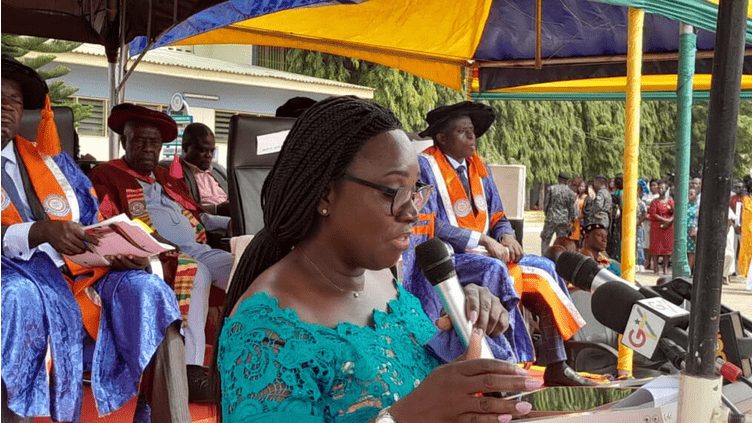
The Deputy Minister in-charge of Technical, Vocational Education and Training (TVET), Mrs Gifty Twum-Ampofo has called for a careful recruitment and training of technical university teachers to take up the vision of Competency-Based Training (CBT).
She said the kind of qualifications required for one to qualify for teaching in the technical universities must be more than obtaining a second university degree at the PhD level and added that such groups of teachers must appreciate that they were under obligation to produce task-oriented graduates.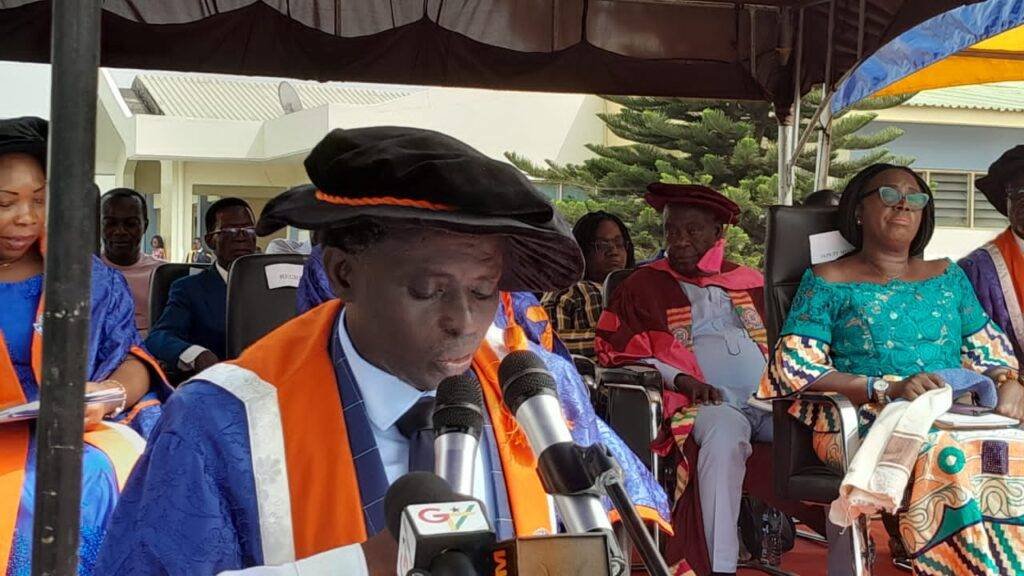
“It is not enough engaging the right kind of staff but such staff must undertake periodic re-orientation in the face of the fast-changing technological environment,” she stated.
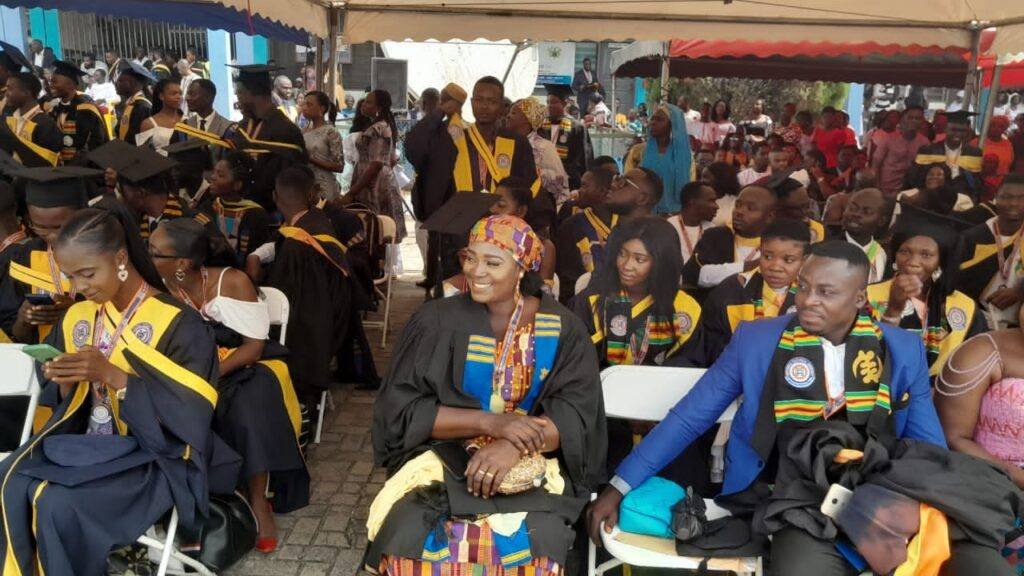
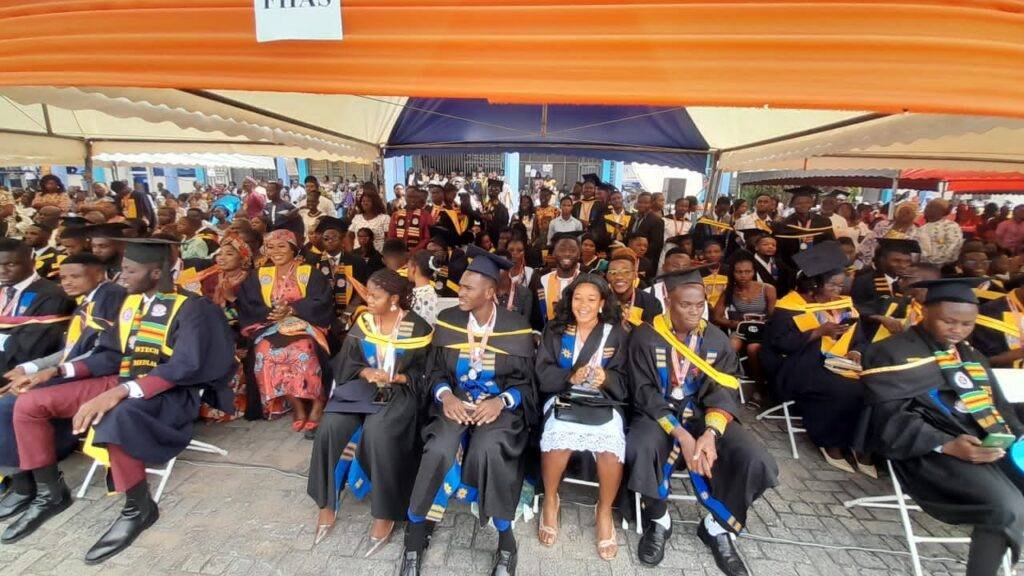
Mrs Gifty Twum-Ampofo was speaking in Koforidua at the 20th graduation ceremony of the Koforidua Technical University on the theme: Embracing New Technologies and Creative Thinking to Drive Positive Change.”
2, 398 graduated during the ceremony and were awarded with degrees and diplomas in various disciplines.
Mrs Twum-Ampofo stated that currently, one must obtain a minimum of a Master’s degree to become a lecturer in a technical university, adding that all they needed to do was to register with any university to obtain that qualification.
“The question is, have the universities been doing anything different to be able to turn out teachers with the requisite hands-on, task-oriented qualification that the Technical Universities so need to train their students?” she asked.
She stated that if the present crop of Technical University teachers were trained the way it was being done, “it is not likely that the achievable targets of CBT would be realized.
Mr Twum-Ampofo explained that there was a need for a thorough re-orientation of all technical university lecturers for practical, task-oriented and re-training to be able to fulfil the objectives of the CBT concepts.
She said the development of the TVET and technological education at the tertiary level may be elusive if not backed with collaborative efforts of the training institutions, technical universities and industry.
That, she said required the integration of knowledge and professional skills requirement in the curricula of technical universities, and technical vocational institutions.
“Practical attachment and exposure, and internship schemes are among the best ways in which TVET education can prepare graduates for the world of work and life,” she said.
She congratulated the graduates and hoped that their training would be an opening of a brighter future for them and their families.
The Chairman of the Governing Council of the KTU, Professor Samuel Apori said the government has made a massive investment in human, material and monetary resources for TVET to bridge the gap between academia and TVET.
He said the government’s effort was helping to confront equality among various persons either academic or vocational and technical programmes at secondary and technical institutions, to bring transformation in the livelihood of the Ghanaian populace, and hoped that management and other stakeholders in the designated technical universities, secondary schools would not defeat government’s laudable technical and vocational training.
For his part, the New Vice Chancellor of the Koforidua Technical University (KTU), Professor John Owusu stated that the University still faced infrastructural challenges and appealed to the government for a special GetFund allocation to younger technical universities to leapfrog their development and enable them to increase access to more prospective students in the region.
He also appealed to the municipal assemblies in the New Juaben Municipality to provide resources to help in the provision of infrastructure and academic facilities for the university.
From Ama Tekyiwaa Ampadu Agyeman, Koforidua


The Global Network of Export-Import Banks and Development Finance Institutions (G-NEXID) successfully held its sixth (6th) Exchange Programme, hosted by the Ghana Export – Import Bank (GEXIM) Bank in Accra from March 22 to 23 March.
The event brought together member institutions, partner organisations and Ghanaian public entities to advance dialogue on South-South trade, investment and development finance, while also creating opportunities for knowledge-sharing and institutional cooperation.
Organised as a capacity-building and networking platform, the 2026 edition of the G-NEXID Exchange focused on GEXIM’s experience in developing innovative solutions to promote intra-African and extra-African trade.
It also highlighted trade and investment opportunities in Ghana, particularly in the context of the African Continental Free Trade Area (AfCFTA) and broader national development initiatives.
The Exchange Programme forms part of G-NEXID’s mandate to foster cooperation among export-import banks and development finance institutions in support of South-South trade and investment.
This 6th edition follows earlier successful programmes hosted by India Exim Bank (2016), BNDES (2017), Indonesia Eximbank (2018), Afreximbank (2019) and Saudi EXIM Bank (2025).
On the first day, participants were presented with G-NEXID institutional information and received an update on the Network’s 2026 work programme.
There were a series of substantive presentations, including an overview of the Ghanaian economy by the Ministry of Finance, with particular attention to debt-related challenges; a presentation by the Ghana Investment Promotion Centre (GIPC), on investment opportunities in the country; and institutional presentations by GEXIM and Development Bank Ghana (DBG) on their respective mandates, initiatives, products and services.
Discussions during the sessions underscored strong interest in sector-focused webinars and business dialogues, particularly in agribusiness value chains such as poultry and rice.
Participants also emphasized the importance of continued information exchange and the sharing of best practices, especially in the area of guarantees.
The second day opened with a presentation on the 24-Hour Economy and Accelerated Export Development Programme, a national economic transformation strategy launched by President John Dramani Mahama in July 2025.
The initiative aims to enhance economic productivity through continuous industrial activity, accelerated export development and strategic import substitution.
As the programme is expected to mobilise both private and development capital, it presents concrete opportunities for G-NEXID members in areas such as co-financing, guarantees, trade finance and technical cooperation.
The programme also featured institutional presentations by guest organisations, namely the African Guarantee and Economic Cooperation Fund (FAGACE) and the West African Development Bank (BOAD), which shared their mandates, initiatives, products and services.
Following these exchanges, the G-NEXID Secretariat held bilateral discussions with both institutions as part of the Network’s ongoing membership drive.
Participants further benefited from a presentation by the Eastern and Southern African Trade and Development Bank (TDB), as well as a showcase of GEXIM’s key pipeline projects.
On the margins of the Exchange Programme, G-NEXID members also held their 20th Annual General Assembly Meeting to review progress and discuss strategic priorities.
Following the event, participants joined the GEXIM@10 International Conference, held from March 24-25, 2026 under the theme, “A Decade of Enabling Export Trade and Industrial Transformation: Resetting GEXIM for the Next Frontier.”
The conference provided an important platform for exploring how Ghana can strengthen its transition from a primary commodity exporter to a more competitive player in value-added trade and industrial development.
Source – G-NEXID
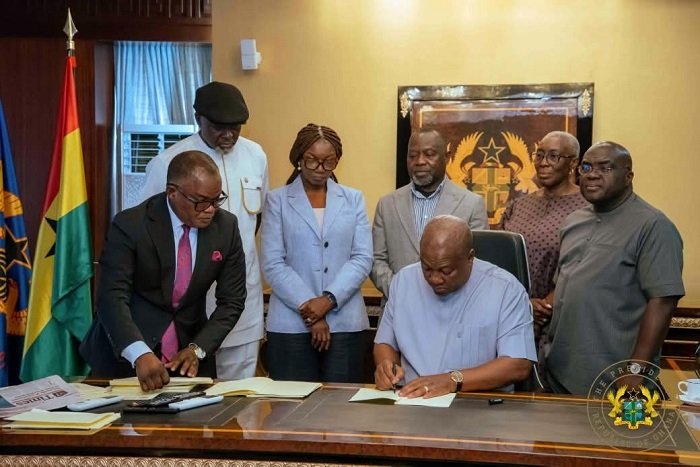
President John Dramani Mahama on Tuesday, March 31, 2026, signed five bills including three amendment bills passed by Parliament into law.
They are: Security and Intelligence Agencies Bill, 2025; University of Engineering and Agricultural Sciences Bill, 2025; Ghana Deposit Protection (Amendment) Bill, 2025; Growth and Sustainability Levy (Amendment) Bill, 2026; and Education Regulatory Bodies (Amendment) Bill, 2026.
In a brief remark after assenting to the bills, President Mahama explained that the Security and Intelligence Agencies Act, 2026, scraps the Office of Minister of National Security and frees the President’s to appoint any Minister to supervise the security agencies.
He said it also reverses the name of the office of National Intelligence Bureau (NIB), to the original name, Bureau of National Intelligence, (BNI).
This the President said, addresses the confusion between that security agency and a well-known Ghanaian financial institution, the National Investment Bank.
President Mahama also noted that the University of Engineering and Agricultural Sciences Act, 2026, establishes another University in the Eastern Region, at Bonsu, with three campuses – the main campus at Bonsu in the Eastern Region, with the second campus to be cited at Ohawu in the Oti Region.
The third, the Presdient assed will be located at Acherensua in the Ahafo Region.
Touching on the Amendment to the Growth and Sustainability Levy Act, the President said, “As you’re aware, the act was amended to increase it from 1% to 3%, and so this act reduces it again. That is the levy on mining companies. It reduces it again to 1%, because of the introduction of the sliding scale of royalties.”
He also spoke to the passage of the Government Education Regulatory Bodies Amendment Act, emphasising that amends Act 1023 to grant greater flexibility to private tertiary institutions and the option to Charter.
The Ghana Deposit Protection Amendment Act, the President concluded, is an amendment to an original act that was supposed to guarantee deposits held in commercial banks or financial institutions.
It basically expands protection to include mobile money wallets and other digital platforms, ensuring a wider scope of digital financial assets are secured.
The signing ceremony, was witnessed by the Clerk of Parliament, Mr. Ebenezer Ahumah Djietror, Secretary to the President, Dr Callistus Mahama, the Minister of Justice and Attorney General, Dr Dominic Akrutinga Ayine, Chief of Staff, Julius Debrah, Joyce Bawa Mogtari, a Senior Presidential Advisor and a Special Aide to the President, Finance Minister, Dr Cassiel Ato Baah Forson, and the Vice President, Professor Jane Naana Opoku Agyemang.