Editorial
Tackling the plastic waste menace at Ghana’s beaches

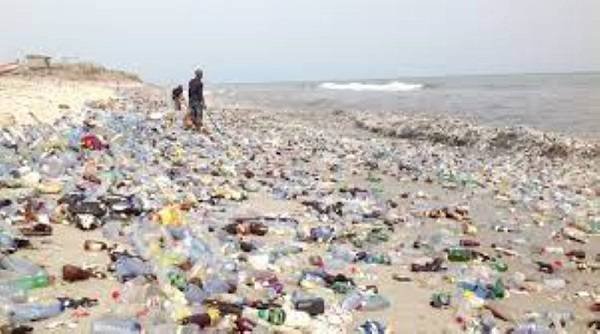
A section of the shore being filled with filt
Dear Editor,
Ghanaians love the beach, and for good reason. Whether it is lounging in the sun, swimming in the ocean, or appreciating the scen¬ery, there is something for everyone at the beach.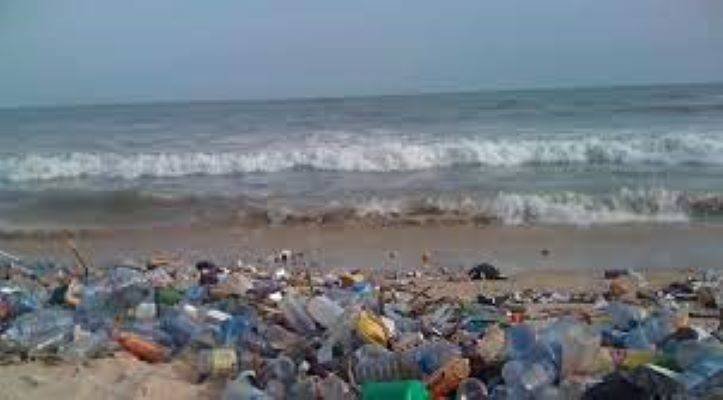
Unfortunately, many of the beaches in Ghana are not as clean and well-maintained as they should.
This letter seeks to look at why some of the beaches are in such a sorry state, and what can be done to bring cleanliness and harmony to our shores.
Many Ghanaians flock to the beach during festive seasons and holidays. However, despite the many visitors, our beaches are full of plastic waste and other forms of uncollected garbage.
This hardly denotes respect for Mother Nature, as the waste and pollution endangers marine life; something Ghana, as a country should be protecting.
Furthermore, these forms of pollution are not pretty to behold and can cause health hazards for people who swim, relax or sunbathe on the beach.
However, some beaches are kept clean and well-maintained. Some of the cleanest beaches in Ghana include La Beach, Coco Beach, and Bojo Beach.
The La Beach is one of the most popular beaches in Ghana, and it is known for its cleanliness and orderliness. Coco Beach is also a great place to visit for its clean sand, well-kept facilities, and organised management.
And, for an exclusive experience, Bojo Beach has one of the cleanest beaches and is often preferred over other beaches. It is a private beach that is accessible only on boats, which helps to keep it less crowded and more closely monitored.
To maintain a clean and better future, individuals should also take responsibility to keep our environment clean.
However, there is much more that needs to be done than just individual responsibility. Businesses, public or¬ganisations, and government entities need to work together to keep our beaches well-maintained.
Regular clean-up campaigns, recycling programmes, and conservation efforts can address the pollution and waste on the beaches.
There is also an urgent need for the creation and enforcement of more regulatory policies to govern sanitation at the beach.
Ghana’s beaches are valuable resources that must be preserved and maintained for generations to come.
By advocating for the cleanliness of our beaches, we can create a better future for ourselves and the environ¬ment. Let us work together and take individual responsibility to properly dispose of garbage and promote envi¬ronmental conservation practices.
While at it, individuals can also visit the clean beaches such as La Beach, Coco Beach, and Bojo Beach which have already exemplified such environmental conservation practices in their structure and management.
Fauzia Abdullai
Ghana Institute of Journalism (GIJ

Dear Editor
I wish to draw attention to the increasing number of children begging for alms on the streets of the capital.
This has become a common sight at traffic lights, markets and busy intersections.
Many of these children should be in school, but instead they spend long hours under the hot sun and in dangerous traffic.
Sadly, they are sometimes found in the company of their parents, the same people expected to ensure that these minors spend those hours in school.
These children are usually exposed to accidents, exploitation and abuse. The situation does not only affects their future but also reflects poorly on our society.
I appeal to parents and guardians to take greater responsibility for their children.
I also urge the government, the Department of Social Welfare and other relevant agencies to intensify efforts to rescue these children, provide them with education and support their families where necessary.
I also wish to employ the ‘Samaritans’ who gives money to these children to also spend a few seconds to ask these children why they beg for alms on the street and not going to school.
Getting these children off the street must now be seen as a shared responsibility.
Every child deserves a safe home, quality education and the opportunity to achieve their full potential. By working together, we can reduce street begging and give these children a brighter future.
From Eugene Ampiaw,
Dansoman

In addition to the severe flooding that Accra is already experiencing a major sanitation crisis is imminent as the Kpone dump approaches closure.
Currently, there are now just two significant disposal sites in the area: the Adepa dumpsite in the Ga West Municipal Assembly, which is close to Amasaman, and the Kpone Waste Landfill.
Inquiries so far, revealed that the Kpone site is almost at capacity and will likely close in the next six months. As a result, waste is accumulating at local markets and municipal collection points throughout the capital.
The situation has been made worse by the recent terrible floods, and immediate action is required to prevent the impending crisis.
The fundamental issue is that accumulating uncollected waste during rainy seasons poses significant threats to public health, including the possibility of cholera, typhoid, and malaria outbreaks.
Subsequent investigations showed that the Kpone plant, which was initially built to manage 500 tonnes of waste per day, has been handling almost twice that much, shortening its lifespan.
Many towns’ waste collection operations have been badly impacted by this looming shutdown, and the fact that Accra has few disposal choices is even more disturbing.
Now, waste collection vehicles face abnormally long queues at the Kpone site, and residents complain that most of the tricycles, referred to as “Aboboyaa,” leave rubbish uncollected in residential and commercial areas.
Although the Zoompak waste transfer station was authorised by the government to reopen in order to help manage daily waste volumes, it is still unable to handle the enormous volumes of waste generated every day.
According to Dr. Peter Kwesi Dagadu, Managing Director of the Landfills Company Limited, managing the capital’s expanding waste burden has become extremely difficult due to the scarcity of disposal facilities, especially in light of the city’s fast population increase and rising waste production.
As a result, the situation has put a great deal of strain on the infrastructure already in place and jeopardizes attempts to keep Accra’s waste management system sustainable and effective.
The Spectator agrees with him that new infrastructure for disposing of waste is desperately needed, as a change to a more environmentally friendly waste management techniques.
It is admirable that he suggests Ghana adopt recycling and garbage recovery as a long-term solution to the nation’s sanitation problems.
We therefore, implore the government to support this recycling objective by enacting strict laws, regulations, investments, and enforcement measures to enhance waste management nationwide.
In order to address the waste problem as quickly as possible, everyone must be involved, including private waste management companies, individuals, and households.