News
KATH Psychiatric unit cries for space

- /home/u249204778/domains/spectator.com.gh/public_html/wp-content/plugins/mvp-social-buttons/mvp-social-buttons.php on line 27
Warning: Trying to access array offset on false in /home/u249204778/domains/spectator.com.gh/public_html/wp-content/plugins/mvp-social-buttons/mvp-social-buttons.php on line 27
&description=KATH Psychiatric unit cries for space', 'pinterestShare', 'width=750,height=350'); return false;" title="Pin This Post">
- Share
- Tweet /home/u249204778/domains/spectator.com.gh/public_html/wp-content/plugins/mvp-social-buttons/mvp-social-buttons.php on line 72
Warning: Trying to access array offset on false in /home/u249204778/domains/spectator.com.gh/public_html/wp-content/plugins/mvp-social-buttons/mvp-social-buttons.php on line 72
&description=KATH Psychiatric unit cries for space', 'pinterestShare', 'width=750,height=350'); return false;" title="Pin This Post">
Inadequate space at the Psychiatric unit of the Komfo Anokye Teaching Hospital (KATH) is having a negative effect on quality healthcare.
The unit has been seeing about 15,000 patients, every year, but has space for only 11 beds, something that is hampering quality care delivery.
Doctors and nurses are sometimes forced to sit in the corridors to provide services.
This, according to the Head of the Psychiatric unit, Dr Ruth Owusu-Antwi, “is too bad for patient-doctor confidentiality”.
The unit, established in 1981, has not seen any expansion over the years, and the continued increase in admissions and Out-Patients Department (OPD) cases are putting intense pressure on it.
Doctors, she said, were often compelled to discharge patients earlier than they should – before their full recovery.
In a chat with this Paper, Dr Owusu-Antwi indicated that prior to the outbreak of the coronavirus and subsequent imposition of the lockdown, daily reported cases were between 12 and 15, but this has shot up to about 20 and 25 cases.
Making a passionate appeal to individuals and organisations to support the facility to complete an expansion project it had started, Dr Owusu-Antwi noted the unit had been recording more mental cases after the lifting of the partial lockdown in the greater Kumasi and other parts of Ghana.
Follow up cases had also increased to about 120 from the pre-lockdown figures which ranged between 80 and 100 cases.
She made reference to a recent study conducted at the Accra, Pantang and KATH Psychiatry, which showed that the latter “has the highest relapse rate” and said this was attributable to the situation where patients were made to go home when they were not fully recovered, and said “we need an expansion for quality health delivery”.
Dr Owusu-Antwi gave some causes of psychiatric problems as post-partum (depression that occurs after childbirth), psychosis, depression, anxiety disorder and substance dependency disorders.
She stressed the determination of the unit to continue to provide quality professional psychiatric services to improve the mental health of the people despite the constraints and called for more clinical psychologists to be employed by the government to assist in handling the rising cases of mental illness.
From Kingsley E. Hope, Kumasi

News
ProofreadChildren exposed to arts, culture early develops strong intellectual, communication skills – Acting E/R CNC Director


Toddlers from various kindergarten schools in the Eastern Region on Tuesday thrilled patrons with impressive cultural performances at this year’s Kindergarten festival organised by the Centre for National Culture (CNC) in Koforidua.
The children from the participating schools recited poetry, staged drama performances and performed a variety of traditional dances, including Kete, Kpatse, Borborbor and Apatampa, under the theme: ‘Little Stars: Celebrating Our Culture for Future Impact.’
Participating schools included Love Community Kindergarten, Koforidua Grammar School, Solomon School, Charles Wesley Academy, Unique Kiddie Care, Alpha Hills School, Assemblies of God Kindergarten, Brentford Academy, Liberty Academy, Berlin Academy, Bolders Journey School and New Dawn School.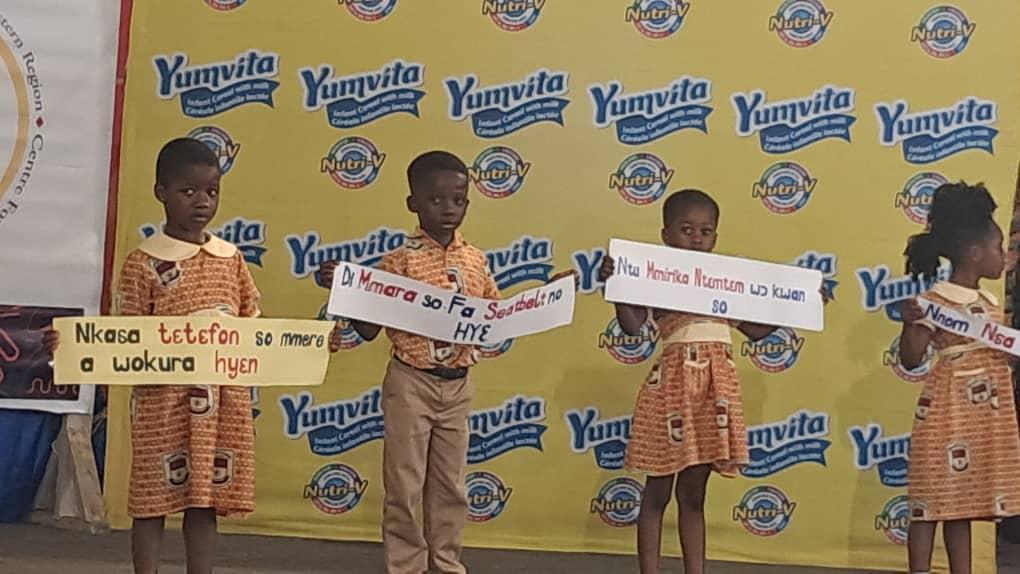
The Acting Eastern Regional Director of the CNC, Dr Salamatu Alhassan, said research had shown that children exposed to arts and culture from an early age developed strong intellectual and communication skills.
“These toddlers participating in this festival have the potential to be ahead of their peers because training in arts and culture broadens their minds and enhances their intelligence.
Dr Alhassan said, considering the numerous benefits of arts and cultural education, it was important to nurture children from an early age to become future ambassadors of Ghana’s rich cultural heritage and contributors to the country’s creative economy.
She said the CNC was mandated to promote Ghana’s arts and culture and assured that such festivals would continue to be organised regularly to provide more children with opportunities to develop their talents.
Dr Alhassan encouraged parents and teachers to support children to participate in cultural festivals and related activities to help build their confidence, creativity and appreciation of Ghanaian culture.
The Eastern Regional Director of the Department of Children, Mr Emmanuel Nana Osei, said exposing young children to Ghanaian culture through such festivals was essential because it helped them develop a strong sense of identity.
He said as future leaders, children needed to understand their cultural roots to develop a sense of belonging and appreciate the need to contribute meaningfully to national development.
Mr Osei also urged parents to encourage their children to participate in poetry, drama and traditional dance activities to nurture their talents and preserve Ghana’s cultural heritage.
From Ama Tekyiwaa Ampadu Agyeman, Koforidua
Adolescents have been urged to treat their teenage years with caution, with adolescence being compared to ‘an egg’ that can crack instantly from a single mistake.
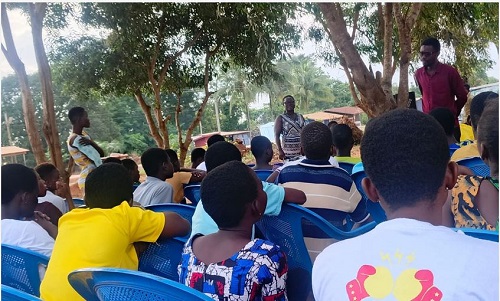
This came up during an engagement with adolescent boys and girls at Ave-Dakpa in the Akatsi North District under the project, ‘The Clinic Is Yours,’ an open day clinic, to invite adolescents and the youth to visit health facilities for free access to youth-friendly services.
It was organised by the United Nations Population Fund (UNFPA), the UN’s sexual and reproductive health agency in collaboration with the Planned Parenthood Association of Ghana (PPAG), which is also a leading volunteer-supported non-governmental organisation, focused on providing comprehensive Sexual and Reproductive Health and Rights (SRHR) information and services to young people in Ghana.
Madam Rosemary Addeh, the Midwife and In-charge of the Ave-Dakpa Health Centre, who facilitated the engagement, said adolescence was a period of rapid physical and brain development between childhood and adulthood, typically spanning the ages between 10 and 19, involving the search for social independence.
“Adolescence really is as fragile as an egg, and a single mistake can alter a young person’s future instantly.”
She explained that curiosity, peer pressure, and the desire to fit in made teenagers vulnerable and that the “egg once broken” by a crisis such as an unplanned pregnancy, the effects on a young person’s education, health and future were difficult to reverse.
The session highlighted the physical, mental, and social toll of teenage pregnancy, with other health risks cited including anaemia, malnutrition, early labour, and low birth-weight babies, because of immature physical development.
She said mentally, young mothers faced stress, depression and stigma, while socially many dropped out of school and faced long-term financial hardship.
To “handle the egg safely,” adolescents were advised to practice open communication with parents, seek comprehensive reproductive health education, set clear life goals, and build self- esteem to resist risky situations.
“When you access phone, use it for something profitable not pornographic materials. Also, access youth-friendly services. Get close to health workers on any information on SRHR, do not ask around to be deceived or misinformed as that can land you in trouble,” Madam Addeh advised.
Mr Delali Alex Dwomoh, the Physician Assistant and In-charge of Ave-Dakpa Health Centre, also addressed the group, assuring adolescents that health workers would not judge them.
“Take whatever you were told seriously. We will not be judgmental but will help you as young people to reach your full potential,” he assured them.
Mr Emmanuel Christopher Makam, the PPAG focal person for UNFPA Adolescent Girls Empowerment Project and Gender-based Violence Scale Up project for Volta Region, said the engagement formed part of ongoing efforts to equip adolescents with knowledge and support systems to navigate adolescence safely.–GNA