Features
The saga of being Ewe… (Part 4)

- /home/u249204778/domains/spectator.com.gh/public_html/wp-content/plugins/mvp-social-buttons/mvp-social-buttons.php on line 27
https://spectator.com.gh/wp-content/uploads/2022/07/Culture-Pix.jpg&description=The saga of being Ewe… (Part 4)', 'pinterestShare', 'width=750,height=350'); return false;" title="Pin This Post">
- Share
- Tweet /home/u249204778/domains/spectator.com.gh/public_html/wp-content/plugins/mvp-social-buttons/mvp-social-buttons.php on line 72
https://spectator.com.gh/wp-content/uploads/2022/07/Culture-Pix.jpg&description=The saga of being Ewe… (Part 4)', 'pinterestShare', 'width=750,height=350'); return false;" title="Pin This Post">
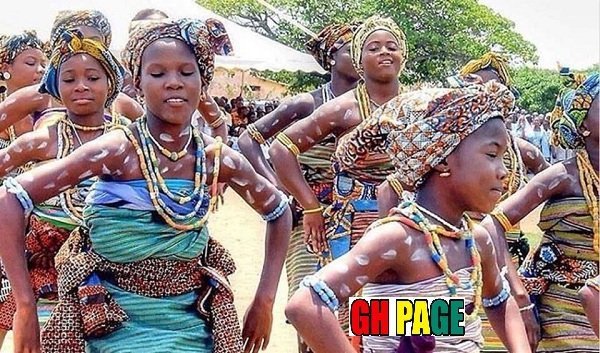
In this penultimate episode in the series I intend to address the Ewe directly. The final part will delve into the Komfo Anokye narrative.
I am accused of being a de-tribalised Ewe. To this, I plead guilty as charged. It is true I have more friends and acquaintances from other ethnic groups than from Ewe. It is not deliberate I drifted towards others in my professional career as I worked outside of Ewe land.
Apart from English, which is our official language, how often do you come across an Akan, Ga-Dangbe or Dagomba speaking another language other than their own among themselves? Virtually none. But it is common to see the Ewe speaking Twi, Fante, Ga among themselves. It beats my mind.
It is understandable if they are born out of mixed marriages where the choice is obvious. Sadly, a good number of my own siblings and cousins speak other languages among themselves. Because of this their own children follow in their footsteps to the extent that when I converse with some of them, their end of the conversation sounds Ewe patois.
Is it a lack of confidence in our identity as Ewe? Of course, no other reason can be adduced for this. Personally, I speak to friends in Twi, Fante, Ga and Guan when we meet, but never speak another language to my fellow Ewe, even de-tribalised as I am.
I have had colleagues lambast me at the workplace when I spoke Ewe to Ewe colleagues. Meanwhile, they were all comfortable speaking Akan among themselves. I am aware this happens in almost all workplaces. I do not yet know what accounts for this.
If we allow ourselves to be cowed by this behaviour of others, then we have the propensity to sell our birthright to others. We will then recoil into our closet and complain of discrimination. We can only be purchased at the price we sell ourselves.
I recollect a visit with a friend to a restaurant in Baychester area of the Bronx in summer of 2012. There were some Akan speaking women at the joint. My pal and I were chatting in Ewe. On their way out they greeted us in Twi. We responded in English that we did not understand their language.
“Are you not from Ghana?” One asked. We answered in the affirmative. “And you cannot speak Twi?” Suppressing my revulsion to this uppity, I slowly asked if Twi was Ghana’s lingua franca. “Sorry, but every Ghanaian understands Twi,” she pressed on. I shot back, asking her how many of the “every Ghanaian” she spoke to. Her companion told her in Twi, “Let’s go. You are getting the man angry.” Wishing us a good day, they sauntered to the door and into the summer sun.
I am proud of our compatriots from the north of the country. They speak their languages with such finesse and pride wherever they are. So do the Akan and the others, but not my people. Many languages have atrophied for lack of usage and Ewe is likely to follow if this attitude does not change. The Latin I read in school has only enriched my vocabulary and understanding of certain expressions but there is no one to speak it with.
The only positive thing for the Ewe language is that it is the main one in Togo and parts of Benin so if we kill it in Ghana, it will still be alive elsewhere. I cringed when I saw a niece on Whatsapp Status describing herself as “Ayigbe toffee”. How can a people accept to be called what they are not? Are we being mentally enslaved or we are allowing it?
All of a sudden we are importing other cultures into our own. It is not in Ewe culture to have a one week celebrated when a relative dies, but this has crept into our culture. We all saw the Akan display at the funeral of my own friend Jerry John Rawlings. Rawlings was not Akan. Even if it was because he was at a time our head of state, then all major traditional practices must be involved. In my estimation, Rawlings suffered an indignity at his funeral.
Also, the Akan funeral dirges are on display at Ewe funerals these days. It is true that the Ewe in the north of the Volta Region are closely linked to some Akan cultures, which is understandable, but what of the rest? The etenteben (flute) invented by Tata Dr Ephraim Amu, a native of Peki-Avetile in the Volta Region, has become the Akan instrument of choice for dirges.
The only honour for the great Ephraim Amu is a dirty road that passes by the western gate of the Central University at Mataheko in Accra.
We have condoned it and we have embraced it. If you fear to speak your language, who will speak it on your behalf? I have friends who are not Ewe meanwhile they speak the language flawlessly but among their people they speak their own language. This is the way to go.
I espied a video on social media addressing what the person referred to as Eυegbetɔwo. There is nobody or group as Eυegbetɔwo. We are Eυeawo (Ewe) and we speak Eυegbe (Ewe language). If we are even wrong in addressing who or what we are, who does the right thing for us?
Are you aware that there are more Ewe landlords in Accra than any other ethnic group except Kwahu? Yet they cannot assert themselves on the capital’s social ladder? Is it a lack of a rallying call for the Ewe to stand up and be counted?
Then there is this other thing about the Ewe being interested in juju. I have been trying to understand where this one came from. The first time I heard this was when I was in training college in the early seventies but took it as a stupid joke. Later in my interactions with people, I heard if you offended an Ewe, you are either killed or hurt through juju. If it were really so, I reckon I would have sent scores of people to their graves.
I spent ten uninterrupted years in the Volta Region and only saw mystical display at certain cultural festivities. People thrust burning fire in their mouths and strike themselves with daggers that did not cut their flesh.
I heard that if you wanted witchcraft you went to Nzema. This was after I joined my family in Koforidua. I later learnt of deities called Antoa, Akonedi, Nogokpo etc. etc. I know there are deities in almost everywhere in this country. Where do the Ewe feature in all this?
In my study of philosophy and psychology, fear-induced guilt has the potential of killing faster than any known ailment and so crystalisation of such thought forms send people to their early death and others are blamed for it.
What are the opinion leaders (Dumegāwo) doing in all these? What are Togbewo/Torgbuiwo doing to preserve the culture and traditions of the Ewe people? They are the custodians and embodiment of the soul of Eweland and must act to stem the negatives assailing their people.
Our chiefs must not be seen or heard only at festivals or when politicians come calling. We need them to lead us every minute of the day throughout their reign.
Now, I have realised that it is only in the heat of party political activities that I get the Ashanti Region pitted against Ewe. This is stoked by political activists and their masters who should know better. Truth is that the Asante generally are not tribalistic. You realise this when you live with or among them. Neither are the Ewe, so the toxic atmosphere can only be blamed on the political actors.
Ghanaians have a way of poking fun at one another without hurting one another’s sensibilities. It happens in every society, but it becomes rather serious when people we see as leaders poison the atmosphere for whatever gains only they can tell.
This is where I call on our traditional rulers to use their authority to ensure unity and camaraderie among all peoples living in their areas of traditional control. That way, everyone of us will have a sense of belonging as Ghanaians.
Writer’s email address: akofa45@yahoo.com
By Dr. Akofa K. Segbefia

On Sunday, August 13, 2026, the Church of Pentecost (COP) International, Finland, held an impressive church service in Helsinki in honour of and to welcome Prophet Benjamin Arthur as the new National Head.
The well-attended service formally ushered in Prophet Arthur who takes over from Apostle Francis Owusu Kwaah, who has been the National Head since November 2020 and whose tenure as the National Head ended last month.
Prophet Arthur arrived in Finland from the UK where he has held many positions in the church to replace Apostle Owusu Kwaah who moves back to the UK.
A touching welcome and powerful ministration
The church service was officiated by Apostle Seth Samuel Asante, the National Head of the Church of Pentecost, USA.
It was a touching welcome church service and ministration at a well-attended event. In attendance were many religious leaders from other churches or missions, as well as dignitaries.
Apostle Asante had the honour to introduce Prophet Arthur to the whole congregation as the new National Head in Finland. He was joined by other church leaders and officers from UK, USA, and Finland to pray for Prophet Arthur and handed him over to COP Finland as their new National Head to a huge applause.
Earlier, Apostle Asante delivered a powerful and touching sermon that highlighted a message of salvation and the importance of knowing, loving and serving God with one’s whole heart. He entreated the audience to love God and do His work to glorify his name.
Stirring up understandings from the hymns: “My faith has found a resting place…” and “Guide me O Thou great Jehovah…,” as well as a number of quotations from the Bible, the Apostle gave a powerful preaching on the need to build one’s faith in God.
Response from the new National Head
In response, Prophet Benjamin Arthur preached the power of prophecies and God’s plan for redemption. He entreated all to believe in God’s power especially through prophecies to save mankind. The glory of the Lord shall be revealed, he noted and add: “The blood of Jesus is not shed in vain”.
Surrounded by his beloved wife, Mrs Eugenia Arthur, and their three children, Prophet Arthur expressed gratitude to the members of the church for the resounding welcome they have accorded him as he starts to embark on his role and duty as the National Head.
He recognised the exploits and excellent leadership roles of his predecessors, Apostle Edmund Appiah (who was the first National Head) and Apostle Francis Owusu Kwaah.
COP’s future and growth in Finland
The Church of Pentecost in Finland was established over 25 years ago. It started in September 2000 as a prayer group with a small number of devoted persons in Helsinki (see www.copfinland.fi).
The group grew fast and there was the need to secure a new place of worship in the Helsinki area. The Church has grown and spread to other towns and cities in Finland.
Today, in Helsinki alone there are two branches of the Church. There is the Akan Assembly where worship is done mostly in the Twi language. The other branch is the English Assembly (or the PIWC) which is attended by other nationalities and African immigrants aside Ghanaian immigrants.
The COP Finland has become very formidable in the religious space in the Ghanaian community in Finland.
It has thus played a prominent role in the religious or spiritual existence of its members, as well as in people’s social lives as a key aspect of integration into the Finnish society.
The church continues to grow and, for example, it has been one of the major channels through which the Ghana Union Finland (GUF), an association for Ghanaian immigrants in Finland, has made more contacts with members of the Ghanaian immigrant community.
With Dr Perpetual Crentsil
SKIP THE QUEUE, TAP THE NEWS
You can now read the Ghanaian Times and The Spectator newspapers from the comfort of your device via TimesNewsPlus.
Join our WhatsApp Channel: https://whatsapp.com/channel/0029VbBElzjInlqHhl1aTU27
Features
Responding to religious insults with faith, wisdom and restraint …The Prophetic Model for Muslim–Christian Peace and Coexistence(Part 1)

All praise belongs to Allah, Lord of the worlds. We praise Him, seek His help and forgiveness, and seek refuge in Him from the evil within ourselves and from our evil deeds.
May His Peace and Blessings be Upon the Noble Prophet Mohammed, his household, companions and all righteous people till the Last Day. Ameen
GHANA, WE MUST NOT ALLOW A MOMENT OF ANGER TO DESTROY DECADES OF PEACE
My dear brothers and sisters in Ghana.
Today I speak about something that should concern every Muslim, every Christian and every responsible Ghanaian.
Recent events involving controversial statements about Prophet Muhammad (pbuh), the arrest of an Islamic cleric accused of making statements advocating violence, and the arrest of a Christian preacher over alleged derogatory comments concerning the Prophet (pbuh) have generated considerable national concern. The Ghana Police Service has said the matters are under investigation and that due process will apply.
And now, reports of an alleged assault on a detained pastor have added another troubling dimension to the matter.
Let us be very clear:
Ghana is not at war.
Muslims are not at war with Christians.
2 | P a g e
Christians are not at war with Muslims.
For generations, we have lived together, traded together, worked together, attended the same schools, built communities together and, in many Ghanaian families, even married across religious lines.
Therefore, we must not allow the reckless words or actions of a few individuals to destroy the peace built by generations.
WHEN SOMEONE INSULTS THE PROPHET (PBUH), WHAT DOES ISLAM EXPECT
FROM ME?
This is the question we must answer.
Not: “How angry am I?”
But: “What does Allah require from me?”
Not: “What can I do to my enemy?”
But: “What did Prophet Muhammad (pbuh) do when his enemies hurt him?”
This distinction is crucial.
Islam does not teach us to abandon our faith when we are provoked.
Islam teaches us how to behave because we have faith.
Allah says:
“Do not let the hatred of a people cause you to depart from justice. Be just; that is nearer to righteousness.” (Qur’an 5:8).
Notice the greatness of Islam.
Allah does not say, “Be just when people respect you.”
He says, be just even when you hate what they have done.
Therefore: An insult does not give me permission to become unjust.
The author is the Chief Imam of Katamanso Municipal and Certified Counsellor and Governance Expert
By Imam Alhaji Saeed Abdulai