News
3rd JoyNews Impact Makers Awards winner Geoffrey Kwame Buta shining a light through a lens of inclusion


- /home/u249204778/domains/spectator.com.gh/public_html/wp-content/plugins/mvp-social-buttons/mvp-social-buttons.php on line 27
https://spectator.com.gh/wp-content/uploads/2025/07/Buta-222-800x600.jpg&description=3rd JoyNews Impact Makers Awards winner Geoffrey Kwame Buta shining a light through a lens of inclusion', 'pinterestShare', 'width=750,height=350'); return false;" title="Pin This Post">
- Share
- Tweet /home/u249204778/domains/spectator.com.gh/public_html/wp-content/plugins/mvp-social-buttons/mvp-social-buttons.php on line 72
https://spectator.com.gh/wp-content/uploads/2025/07/Buta-222-800x600.jpg&description=3rd JoyNews Impact Makers Awards winner Geoffrey Kwame Buta shining a light through a lens of inclusion', 'pinterestShare', 'width=750,height=350'); return false;" title="Pin This Post">
It was a night of inspiration, resilience, and recognition at the third JoyNews Impact Makers Awards, held on Saturday, June 28, at the Ecobank Head Office in Accra Central.
Ten outstanding individuals from across Ghana were honoured for their extraordinary contributions to transforming vulnerable communities.

Among them stood Geoffrey Kwame Buta, a staff photojournalist with the New Times Corporation, publishers of The Spectator and The Ghanaian Times, whose work continues to break new ground in disability inclusion through visual storytelling.
Buta, a multiple award-winning photojournalist, was recognised for his pioneering initiative Foto4Change, which trains deaf students in visual storytelling.
His passion for empowering the marginalised took a transformative turn when he donated cameras and accessories and initiated a training programme at the Savelugu School for the Deaf in the Northern Region.

What began as a simple gesture of kindness blossomed into a powerful platform for amplifying unheard voices-giving students with hearing impairments the tools to tell their own stories, free from bias, and to pursue creative professions.
To date, Foto4Change has impacted students in five deaf institutions: Savelugu, Gbeogo, and Wa Schools for the deaf in Ghana; and at Harare Polytechnic and the Deaf Zimbabwe Trust in Zimbabwe, where two deaf students are currently studying Mass Communication.
“The deaf and hearing-impaired communities have powerful, emotional, and inspiring stories to tell. They only need the tools and the opportunity.
Foto4Change is a bridge to that future,” Geoffrey said after receiving his award.
He expressed profound gratitude to the team at Foto4Change and the Multimedia Group, particularly Joy FM, for creating a platform that recognises and uplifts changemakers whose work often goes unnoticed.
“This platform not only shines a light on our efforts but inspires us to keep going,” he noted. “It also sends a message to organisations and individuals that supporting people with disabilities is a responsibility we must all share.”
Buta also called for greater support both financial and technical for grassroots initiatives working with the deaf and visually impaired communities.
“With mentorship, access to tools, and consistent training, these young talents can grow into world-class professionals,” he added.
Surrounded by family, friends, and supporters, Buta encouraged fellow changemakers not to underestimate the ripple effects of their efforts.
“Whatever you’re doing in your small corner is contributing to something bigger,” he reminded the audience.
The JoyNews Impact Makers Awards, now in its third year, continues to be a beacon of hope and national celebration for unsung heroes who are quietly reshaping Ghana’s landscape in education, health, social welfare, and sanitation.
From life-saving initiatives in cancer care to Buta’s innovative work with the hearing-impaired, each awardee’s journey reminded the nation that true impact often begins where the spotlight rarely shines.
For Geoffrey Kwame Buta, the lens is a medium for justice, inclusion, and lasting change for people with disability.









The Commercial National Motor Riders Union (CNMRU) has dismissed claims that the government has failed commercial motorbike riders after receiving their support during the 2024 general election campaign.
The union described allegations by a group known as the Okada Riders Association (ORAG) as false and misleading, insisting that the government has taken concrete steps towards legalising and regulating commercial motorcycle operations.
In a statement issued after a press conference on August 18, the CNMRU stated that the government established a technical committee after the 2024 elections to conduct research and engage stakeholders on the regulation of Okada operations.
According to the union, it has been actively involved in the process, representing the interests of commercial motor riders across the country.
It added that a delegation of stakeholders travelled to Rwanda to study that country’s system for regulating commercial motorcycle operations.
The delegation included representatives of the CNMRU, the National Road Safety Authority, the Driver and Vehicle Licensing Authority (DVLA) and the Ministry of Transport, the statement noted.
The union further stated that the bill on the regulation of commercial motorcycle operations has been laid before Parliament and is going through the legislative process.
“This is concrete progress, and it demonstrates that the government has not abandoned the Okada riders,” the CNMRU stated.
It also said sensitisation programmes were ongoing across the country to educate riders on road safety, licensing, responsible riding and the expected legal framework for commercial motorcycle operations.
The union noted that it was working with the government and the DVLA to bring mobile licensing services closer to riders and assist them in obtaining driving licences at subsidised rates.
It also welcomed plans to establish an electric motorcycle initiative in Ghana, which it said would provide commercial riders with access to environmentally friendly motorcycles under a work-and-pay arrangement.
The CNMRU explained that it supported President John Dramani Mahama and the National Democratic Congress (NDC) during the 2024 election campaign because of their commitment to address the legal and regulatory challenges facing commercial motor riders.
“We supported a commitment, and today we are witnessing concrete steps toward fulfilling that commitment,” it stated.
However, the union acknowledged that not all the challenges facing Okada riders had been resolved.
It urged commercial motor riders, the media and the public to distinguish between what it described as political propaganda and the work being undertaken to regulate the sector.
By: Jacob Aggrey
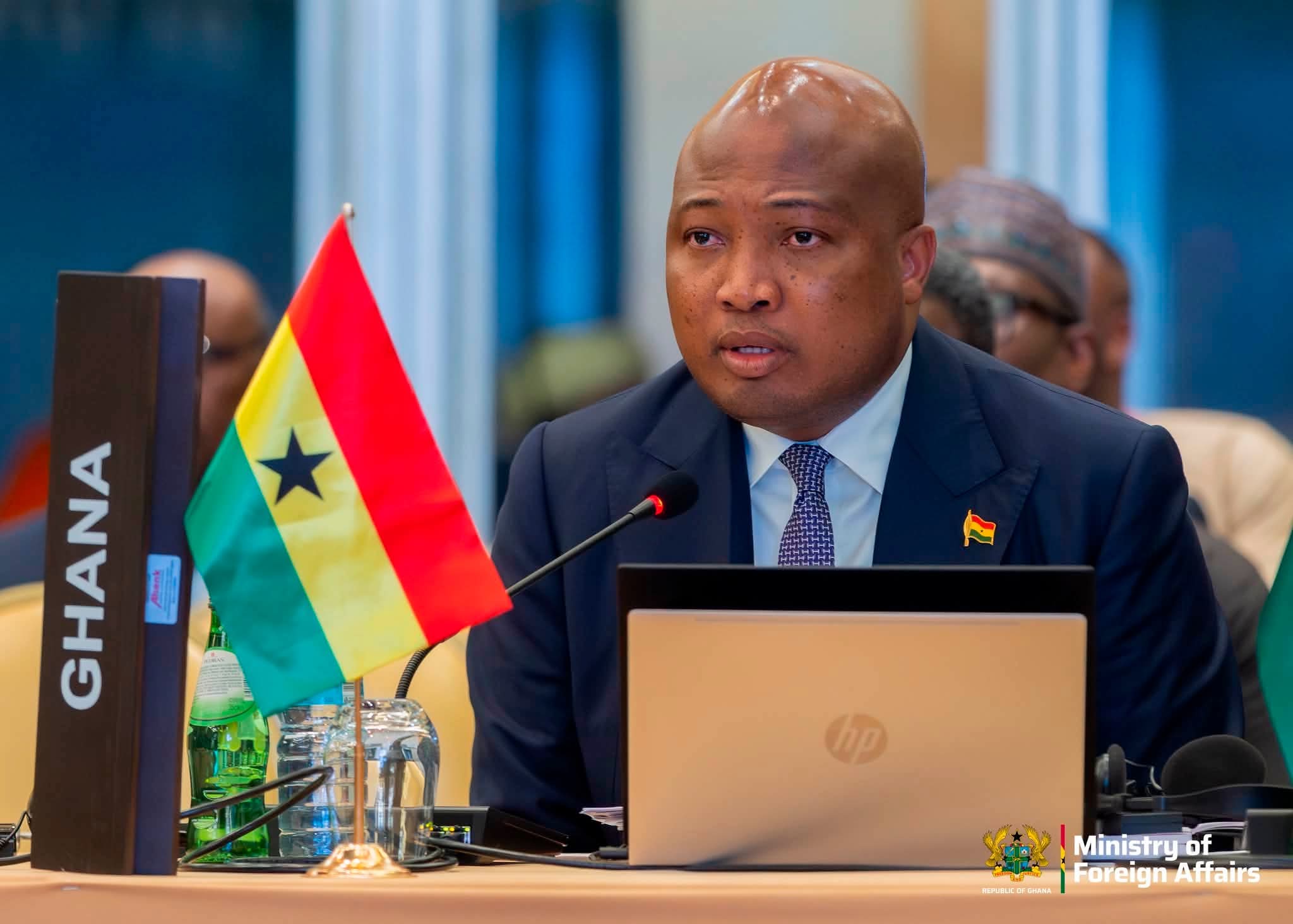
The Ministry of Foreign Affairs has commended The Fourth Estate for its investigative report into the attestation process, while announcing measures to improve the service and prevent the activities of middlemen.
The Ministry, in a press statement issued on Thursday, September 3, 2026, acknowledged an online report published by The Fourth Estate on September 2 concerning an undercover investigation into attestation services provided by state institutions.
It praised the media organisation for its investigative work, noting that such efforts contribute to good governance, public accountability and improved service delivery.
The Ministry, however, clarified that the man implicated in the investigation is not a staff member of the Ministry of Foreign Affairs.
According to the Ministry, the individual has been sanctioned by his respective institution and reported to law enforcement agencies for further investigation and possible prosecution.
It added that he has also been prohibited from entering the premises of the Ministry.
The Ministry maintained that it has a zero-tolerance policy towards middlemen and third-party facilitators who seek to profit from the acquisition of attestation documents.
It condemned the activities of what it described as unscrupulous middlemen who take advantage of vulnerable members of the public.
The Ministry explained that the attestation process involves several institutions across different arms of government, making coordination important to maintaining the integrity of the process.
It said efforts to strengthen coordination among the institutions involved had been ongoing for several months, even before The Fourth Estate’s investigation.
Attestation process to go digital
The Ministry disclosed that comprehensive reforms are underway to make the attestation process more efficient and reduce direct human interaction.
According to it, plans are being pursued to make payments for attestation services cashless, while digital platforms are also being developed to support the entire process.
The Ministry expressed confidence that the reforms would produce results similar to improvements achieved in Ghana’s passport application and administration processes.
It further reminded the public that the Parliament-approved fee for attestation is GH¢200.
The fee, it explained, is collected by officials of the Controller and Accountant-General’s Department, who issue the appropriate receipts.
The Ministry warned the public against using middlemen, stressing that engaging their services is strictly illegal.
It encouraged anyone with information, enquiries or complaints concerning the attestation process to contact the Ministry.
The Ministry reaffirmed its commitment to maintaining transparency, integrity and ethical standards in the delivery of its services.
By: Jacob Aggrey