News
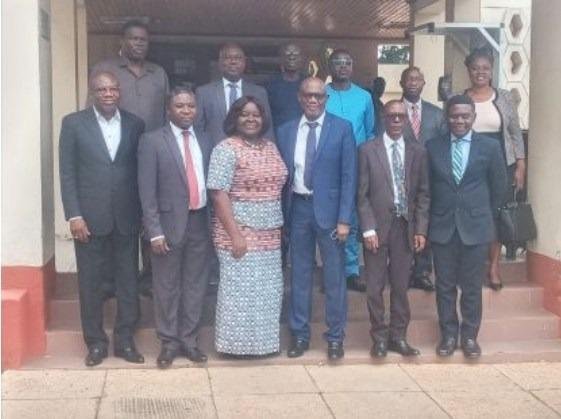
21-Member Governing Board of CSIR Inaugurated

- /home/u249204778/domains/spectator.com.gh/public_html/wp-content/plugins/mvp-social-buttons/mvp-social-buttons.php on line 27
https://spectator.com.gh/wp-content/uploads/2025/09/WhatsApp-Image-2025-09-03-at-16.12.45.jpeg&description=21-Member Governing Board of CSIR Inaugurated', 'pinterestShare', 'width=750,height=350'); return false;" title="Pin This Post">
- Share
- Tweet /home/u249204778/domains/spectator.com.gh/public_html/wp-content/plugins/mvp-social-buttons/mvp-social-buttons.php on line 72
https://spectator.com.gh/wp-content/uploads/2025/09/WhatsApp-Image-2025-09-03-at-16.12.45.jpeg&description=21-Member Governing Board of CSIR Inaugurated', 'pinterestShare', 'width=750,height=350'); return false;" title="Pin This Post">
A 21-member Governing Board of the Council for Scientific and Industrial Research (CSIR) was on Wednesday inaugurated with a mandate to strengthen research and innovation in the sustainable management of Ghana’s natural resources.
The Board is chaired by Professor Mark A. Taylor and include the following members: Mr. George Owusu-Ansah Amoah; Mr. Shadrack Kwadwo Amposah; Mr. Emmanuel Kwame Appiah-Adjei; Prof. Samuel Boakye Dampare; Mr. Seidu Al-Hassan; Mr. William Agyei-Manu; Prof. George Obeng Adjei; Prof. Mike Y. Osei Atweneboana; Mr. Richard Tweneboah-Kodua; Prof. Paul Bosu; Madam Suweibatu Adam; Prof. Augustine Ocloo and Mr. Alexander Bogney Bewong.
The rest are Mr. Kwasi Etu-Bonde; Dr. Anastasia Yirenkyi Michaelina; Mr. Kennedy Ewuntomah; Mr. Samuel Adu-Gyamfi; Mr. Stephen Djaba; Mr. Eric Keyman Defor; and Madam Mary Nsiah-Asare.
Speaking at the ceremony, Mr. Emmanuel Armah-Kofi Buah, Acting Minister for Environment, Science and Technology (MEST), said the inauguration marked a significant step in positioning science, technology and innovation as key drivers of Ghana’s socio-economic transformation.
He explained that the Board’s core mandate is to promote, encourage and regulate the application of scientific and technological innovations for national development.
“As the highest governance authority of the CSIR, the Board is expected to provide strategic direction, exercise oversight, and ensure the effective performance of the Council’s functions,” Mr. Buah said.
He reminded members of their obligations under the CSIR Act, 1996 (Act 521), which tasks the Council with conducting research for the development and utilisation of Ghana’s natural resources.
He emphasised the need for research outcomes to extend beyond academic publications and laboratory work to address real national challenges.
The Acting Minister urged the Board to pursue strategic interventions in priority national programmes, including the Ghana School Feeding Programme, and to remain attentive to public concerns in order to advise government effectively.
He also encouraged stronger partnerships with the private sector, protection of intellectual property, and the transformation of research into commercially viable products and services.
Responding on behalf of the Chair, Prof. George Obeng Adjei thanked President John Dramani Mahama for appointing the members and assured the government of their commitment to the CSIR’s mandate.
“We are mindful of the responsibility entrusted to us and the trust that this function requires. We pledge to discharge our duties with diligence and humility, conscious of the strategic role the CSIR plays in Ghana’s development,” he said.
Prof. Adjei further cautioned that neglecting the mandate could have long-term consequences for the sustainability of Ghana’s natural assets.
By Benedicta Gyimaah Folley









The Attorney-General and Minister for Justice, Dr. Dominic Ayine, has announced plans to introduce a new Bill to strengthen the legal framework for the discipline of lawyers in Ghana.
In an address read on his behalf by the Deputy Attorney-General at the opening of the 2026 Conference of the Ghana Bar Association, Dr. Ayine disclosed that the Bill is headed to Cabinet for review and approval before being laid before Parliament.
The proposed law, to be called the Legal Profession (Practitioners Standards Board) Bill, is expected to transform and strengthen the regulatory framework for disciplining lawyers to safeguard the rights of practitioners and promote public confidence in the profession.
According to the Attorney-General, when passed, the Bill will establish an independent Disciplinary Committee with clear rules of procedure and proposals on proportionate sanctions.
He explained that this marks a progressive departure from the existing framework where the Disciplinary Committee both investigates and adjudicates complaints. The Bill also proposes clear and strict procedural timelines for resolving grievances to avert prolonged deliberations that frustrate both clients and lawyers.
Secondly, Dr. Ayine noted that under the current framework, Superior Court judges sit on the Disciplinary Committee whose decisions, as quasi-judicial decisions, are subject to reviews and appeals in the same courts where these judges preside.
The new Bill seeks to eliminate this conflict of interest by creating a separately constituted Board composed of lay non-lawyers and professional representatives with guaranteed tenure.
The Attorney-General added that the Bill seeks to separate professional discipline from executive, judicial or competitive interference to ensure that disciplinary mechanisms are not weaponized against lawyers by clients, the Bench, or the State.
The introduction of the new law forms part of efforts by the Attorney-General to introduce reforms into the legal profession aimed at revolutionizing legal practice and training. It follows the passage of the Legal Education Act, 2026, which is currently at the implementation stage.
News
Gov’t did not approve market near school — Stan Dogbe clears air on Ahafo Ano South market siting
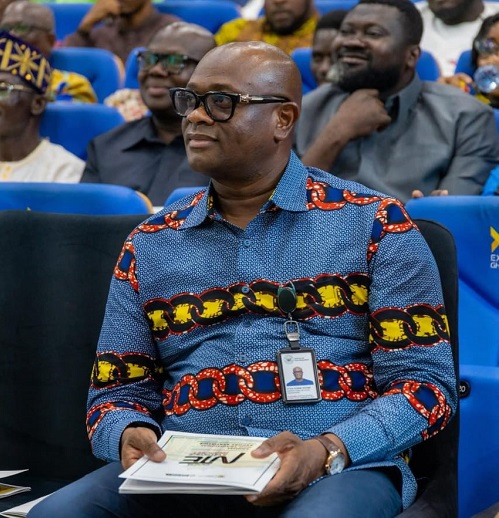
Deputy Chief of Staff, Stan Xoese Dogbe has reacted to a viral video raising concerns about the siting of a market close to a school in the Ahafo Ano South District of the Ashanti Region.
In a post responding to the video, Mr. Dogbe said he has been in contact with the Ashanti Regional Minister, Dr. Frank Amoakohene, who he said is on top of the situation and has long since halted the construction process.
According to him, the decision to designate the said land near the school for the market was not a government decision.
“Once the development was brought to the RCC’s attention, the regional minister immediately asked that the process be stopped,” he stated.
Mr. Dogbe explained that the community currently has no available land space for the construction of the model market, which necessitated their choice of the location near the school.
He noted however that the community has been asked to find another, more suitable piece of land for the project to commence.
“We thank all for the interest in developmental issues in our communities,” he added.
By Edem Mensah-Tsotorme

 Entertainment1 week ago
Sarkodie to SarkNation: You don’t have to tear someone down to prove your loyalty
- Entertainment7 days ago
“Without principle, advice is just an opinion” – Stonebwoy replies Sarkodie
- Entertainment3 days ago
Fiifi Coleman Productions adapt ‘I Told You So’ stage play into feature film