News
Malta, Ghana set sights on practical AI partnership

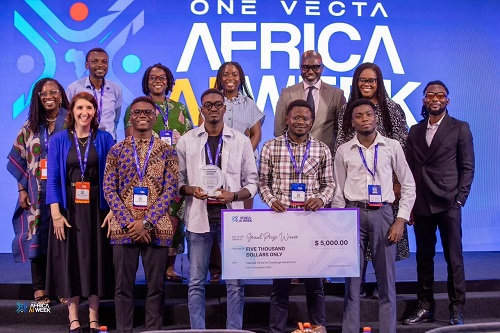
Malta and Ghana have an opportunity to build a forward-looking partnership in artificial intelligence, combining Malta’s institutional agility and European regulatory experience with Ghana’s talent, scale and regional influence.
Malta’s High Commissioner to Ghana, Ronald Micallef, made the call at One Vecta Africa AI Week 2026 in Accra, where he proposed a structured dialogue bringing together governments, regulators, universities and the private sector.
He said the dialogue should move beyond broad declarations and identify a small number of practical initiatives with responsible institutions and measurable outcomes.
“Malta’s experience offers three broad lessons: build institutions people can trust, give everyone the capacity to understand and question artificial intelligence, and keep human values and national purpose at the centre,” High Commissioner Micallef said.
Malta launched its national AI strategy in 2019 with a vision extending to 2030. The country has since strengthened the institutional foundations needed to regulate and support the responsible use of emerging technologies.
Central to this effort is the Malta Digital Innovation Authority, established by law and designated as Malta’s notifying authority and principal market-surveillance authority under the European Union’s AI Act, working alongside other sectoral regulators.
“A strategy needs more than ambition. Every commitment must have a responsible institution, a budget and a measurable result,” the High Commissioner stated.
He also highlighted Malta’s AI for All programme, developed by the Malta Digital Innovation Authority in collaboration with the University of Malta. The free online programme allows citizens and residents aged 14 and over to acquire foundational AI knowledge in Maltese or English.
According to High Commissioner Micallef, AI literacy is rapidly becoming a civic necessity. People must be able not only to use artificial intelligence, but also to question its outputs, recognise its limitations and understand how it may affect their lives.
Drawing on Ghana’s tradition of Sankofa, he warned that the development of artificial intelligence raises important questions about whose histories, languages and knowledge are preserved.
He quoted the Asantehene, Otumfuo Osei Tutu II, who recently observed: “The palace must remain a guardian of memory. But it must also become a workshop for the future.”
“Sankofa has a direct relevance to artificial intelligence,” High Commissioner Micallef said. “If societies do not make deliberate choices, their languages, memories and ways of understanding the world may be diminished rather than strengthened.”
He linked this thinking to Project ETHICS, a Malta-supported initiative developed with Step Up Nigeria and partners in Ghana. The project encourages young people to examine integrity, empathy, responsibility, fairness and service within their everyday lives and communities.
The High Commissioner said Ghana’s interest in strengthening ethics education offers fertile ground for cooperation, particularly as young people prepare to engage with increasingly powerful but fallible technological systems.
He also invited Ghanaian institutions to participate in shaping the proposed Sovereign Technology Centre on Malta’s sister island of Gozo.
The centre, which remains at a formative stage, is envisaged as a solar-powered platform for research and testing in sovereign technologies, including artificial intelligence.
“Sovereign AI does not mean isolation,” he explained. “It means retaining meaningful control over essential data, computing infrastructure, standards and critical systems.”
Potential areas for Malta–Ghana cooperation include AI assurance and regulation, AI literacy, ethics education, data governance, joint research and collaboration with the proposed Gozo centre.
High Commissioner Micallef stressed that the partnership should not involve simply transferring one country’s model to another.
“Malta and Ghana bring different but complementary strengths. The purpose is to learn from one another and build approaches suited to our respective national realities.”
“The future will belong not to those with the most intelligent machines, but to those with the wisdom to decide what intelligence is for,” he concluded.
By Chris Koney






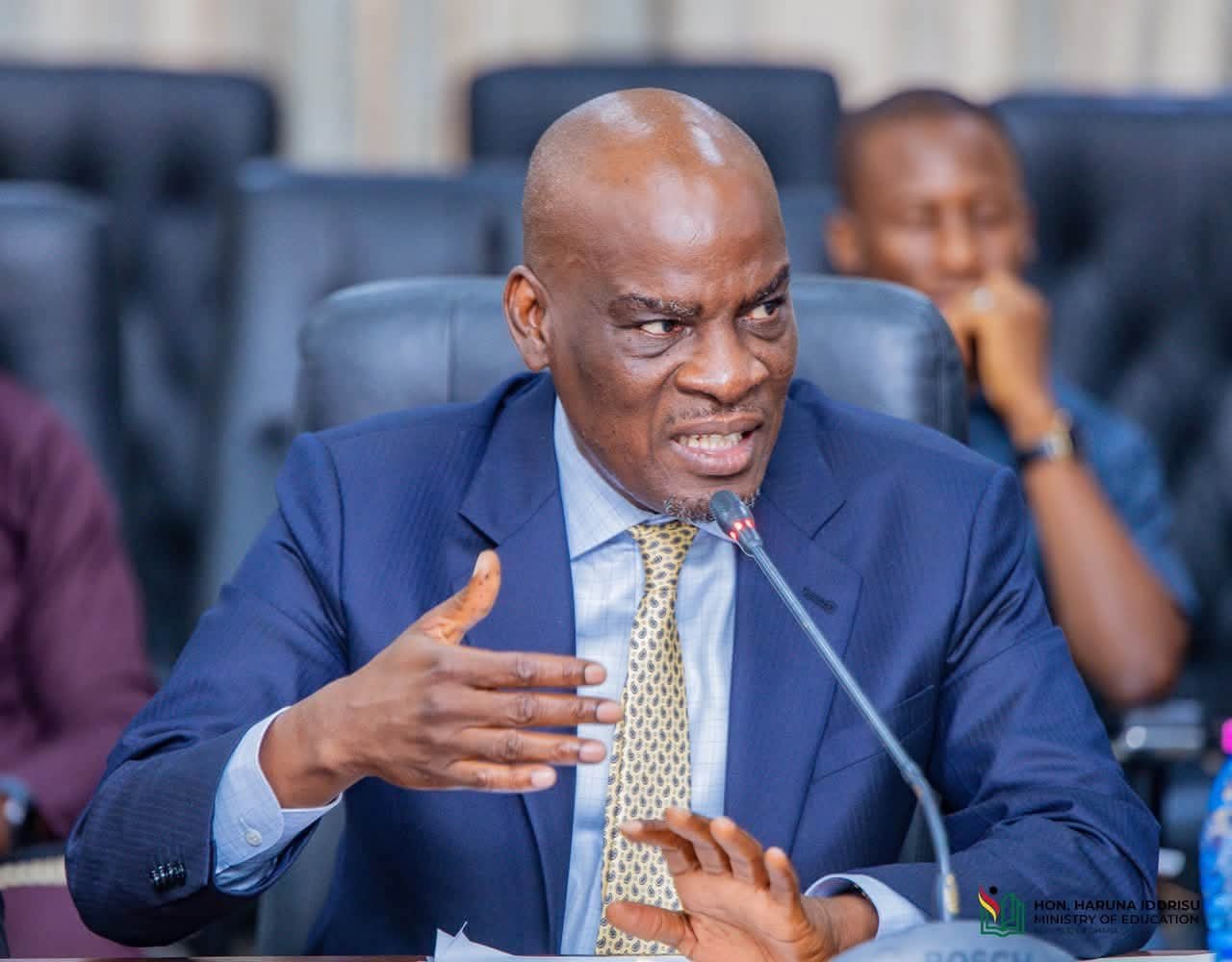
Management of the Ghana Education Service (GES) has interdicted two staff members of Aduman Senior High School over alleged sexual misconduct against a male student.
The teachers are Mr. Isaac Yankey and Mr. Palance Kwakye.
According to GES, Management received reports of the alleged sexual misconduct involving the two staff members against the male student.
Following receipt of the report, the matter was referred to the Police for investigation. The two staff members have since been arrested by the Police in connection with the alleged incident.
In addition, Management has interdicted the two teachers pending the outcome of the investigations.
The alleged victim has also been provided with psychosocial support to safeguard his well-being.
Management has assured the public that appropriate measures will continue to be taken to ensure that all students learn in a safe environment.
By Edem Mensah-Tsotorme
The Ministry of Health has cautioned the public against a fraudulent fundraising campaign being aired on Ghanaian televisions, which falsely solicits money to support patients seeking surgical treatment through Mercy Ships.
Mercy Ships International, an international Christian organisation providing free surgical care and education across Africa, currently has its hospital vessel, The Global Mercy, docked at the Tema Port.
The vessel is expected to provide free surgeries to more than 2,500 Ghanaians over a 10-month period ending in June 2027.
The Ministry has clarified that patients scheduled for treatment were identified and pre-screened ahead of the vessel’s arrival through a coordinated process involving Mercy Ships and the Ministry, based on established medical and eligibility criteria.
According to them, Mercy Ships is currently operating at full capacity and is not accepting additional patients for the ongoing field service.
The Ministry emphasised that payments or registrations through third parties will not guarantee access to treatment.
The fraudulent broadcast, featuring an organisation identified as ‘HELP Save LIFE Foundation,’ solicits financial contributions through an MTN Mobile Money account.
“The Ministry wishes to state categorically that the campaign is not affiliated with, authorised by or endorsed by Mercy Ships,” the statement noted.
They reminded the public that all medical services provided by Mercy Ships are entirely free, and no patient is required to make payments, donations or mobile money transfers to access treatment.
Members of the public have therefore been advised not to make payments, share personal or financial information with individuals claiming to facilitate access to the services, or engage with similar suspicious solicitations.
The ministry encouraged the public to rely solely on official Ministry of Health and Mercy Ships communication channels for accurate information on medical services and patient access.
By Edem Mensah-Tsotorme