News
2025 Budget: GUTA calls for tax cuts, currency stability, and cost reductions

- /home/u249204778/domains/spectator.com.gh/public_html/wp-content/plugins/mvp-social-buttons/mvp-social-buttons.php on line 27
https://spectator.com.gh/wp-content/uploads/2025/02/FB_IMG_1740562967725-960x600.jpg&description=2025 Budget: GUTA calls for tax cuts, currency stability, and cost reductions', 'pinterestShare', 'width=750,height=350'); return false;" title="Pin This Post">
- Share
- Tweet /home/u249204778/domains/spectator.com.gh/public_html/wp-content/plugins/mvp-social-buttons/mvp-social-buttons.php on line 72
https://spectator.com.gh/wp-content/uploads/2025/02/FB_IMG_1740562967725-960x600.jpg&description=2025 Budget: GUTA calls for tax cuts, currency stability, and cost reductions', 'pinterestShare', 'width=750,height=350'); return false;" title="Pin This Post">
The Ghana Union of Traders’ Associations (GUTA) has expressed cautious optimism ahead of the government’s 2025 Budget Statement, emphasising the need for significant reforms to reduce the cost of doing business.
The Association welcomed assurances from the new administration to streamline the tax system and cut down taxes, duties, and levies, which have long been a burden on the trading community.
“The assurance to ease the business climate through tax reforms is a step in the right direction,” GUTA President Dr. Joseph Obeng stated.
“Our expectations are clear, and we believe this budget is an opportunity to address long-standing challenges traders face,” the added.
GUTA has outlined key expectations from the budget, starting with the elimination of what it terms “nuisance taxes.”
The Association believes that scrapping redundant taxes will significantly relieve businesses, promote growth, and foster a more competitive market environment.
High on the list of demands is the restructuring of the Value Added Tax (VAT) to make it simpler, more affordable, and uniform across sectors.
“A reformed VAT system will ease compliance burdens and make operations more predictable for businesses,” Dr Obeng noted.
Addressing concerns over the volatility of the Ghana cedi, GUTA has proposed that the Bank of Ghana’s dollar rate—used to determine import duty payments—be fixed quarterly or bi-annually instead of the current weekly or biweekly adjustments.
“Frequent changes in the dollar rate destabilise business planning. Pegging it quarterly will bring much-needed stability,” the Association emphasized.
GUTA is also advocating for the introduction of unconditional tax amnesty programs to broaden the tax base.
Such initiatives, the Association believes, will encourage non-compliant businesses to enter the tax net and allow companies with irregularities to settle obligations without harsh penalties.
“This is not just about revenue mobilization—it’s about giving businesses breathing space to recover and grow,” Dr. Obeng explained.
On compliance, GUTA is urging the government to adopt effective education, monitoring, and enforcement strategies to ensure fair application of tax laws.
Traders are also looking forward to the implementation of a fixed duty system for spare parts, a promise highlighted in the governing party’s manifesto.
GUTA believes this pilot project could eventually be extended to cover all imported commodities, further stabilizing import costs.
Economic stability remains a top priority for the trading community.
GUTA is calling for policies that will ensure the stability of the local currency, reduce inflation and interest rates, and improve key economic indicators.
“A stable economic environment is crucial for business predictability and growth,” Dr Obeng stressed.
Beyond revenue measures, the Association is urging the government to scrutinize and evaluate its expenditures to prevent waste and mismanagement of public funds.
“We pay taxes to see meaningful development. Value for money should be a guiding principle in public spending,” Dr Obeng asserted.
Source: Myjoyonline.com

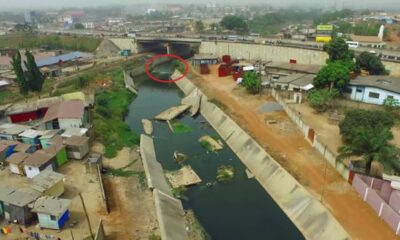




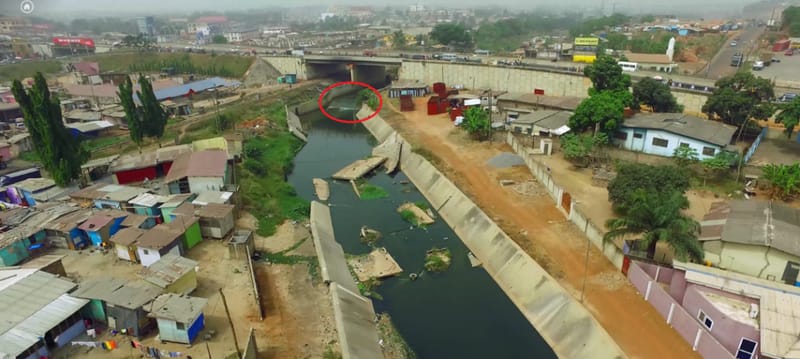
Construction of a major underground stormwater drain along the Dr. Busia Highway within the Kaneshie enclave will commence on September 7, 2026.
The Project Coordinator for the Greater Accra Resilient and Integrated Development (GARID) Project, Dr. Kwadwo Ohene Sarfo, announced this at a special media briefing on Wednesday.
According to him, the works will involve the construction of a double-cell underground rectangular drain measuring approximately 10 metres wide and 1.95 kilometres long, stretching from Pamprom Junction to First Light Junction.
The new drain will replace the existing two 1.2-metre diameter pipes, which are inadequate to carry the volume of stormwater in the area.
Dr. Sarfo said the drain will connect at one end to the recently completed section within the Accra Academy campus and at the other end to the existing drain at Pamprom Junction.
He said the construction is expected to run from September 2026 to October 2027.
The project forms part of government’s broader flood prevention and mitigation programme aimed at addressing perennial flooding in Accra.
By Edem Mensah-Tsotorme
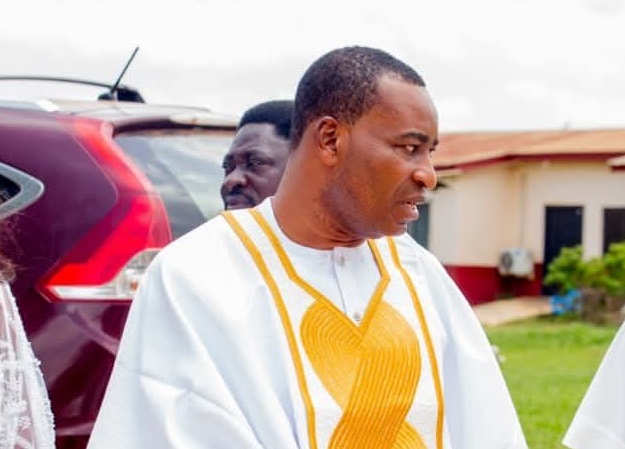
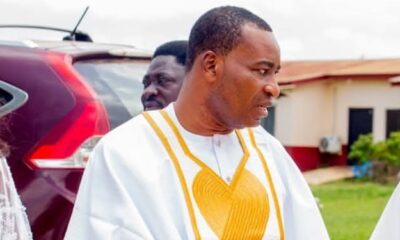
The former Ashanti Regional Chairman of the New Patriotic Party (NPP), Bernard Antwi Boasiako, popularly known as Chairman Wontumi, has withdrawn from the party’s National Chairmanship race.
In a statement issued yesterday, Chairman Wontumi who is currently serving a 20-year jail term said his decision was driven by his love for the party and his unwillingness to let his personal circumstances distract the NPP from its rebuilding efforts.
“There are moments in the life of a man when the heart wants to continue, but duty demands sacrifice. Moments when one must quietly set aside personal ambition, not because the dream has died, but because the family he loves must not be made to carry his burden. Today, I find myself at such a painful moment,” he wrote.
He disclosed that after many nights of prayer, sober reflection and consultations with his family, legal team, party elders, campaign team and trusted supporters, he concluded that his present situation must not become an additional burden on the NPP.
“This is not the decision my heart desired, but sometimes, true love requires us to release what we deeply want in order to protect what we love even more,” he added.
Recounting his years of service, Chairman Wontumi said he had served the party with everything within him, walking through heat and rain, travelling to remote communities and standing with the grassroots in both victory and defeat.
“For many years, I have served the NPP with everything within me… The NPP is not merely a political party to me. It is my family. It is my home. It is a cause to which I have dedicated a significant part of my life,” he stated.
He explained that the party, already carrying the pain of electoral defeat and the huge responsibility of preparing for the future, should not be made to carry his personal weight.
“That is why I cannot allow my present situation or personal ambition to distract the party from the difficult work of rebuilding. I cannot ask the party to carry my weight when it is already carrying the pain of defeat and the enormous responsibility of preparing for the battle ahead. I would rather carry this pain quietly than allow the party I love to suffer because of me,” he said.
He further sympathized with his supporters across the 16 regions, acknowledging that the decision would be painful for many who had sacrificed for his campaign.
“To my teeming supporters across all sixteen regions, I know this message will hurt. I know many of you will read it with tears in your eyes because I understand the sacrifices you have made for this journey,” he said.
By Edem Mensah-Tsotorme