Hot!
1000 days in captivity, the seafarer’s nightmare


- /home/u249204778/domains/spectator.com.gh/public_html/wp-content/plugins/mvp-social-buttons/mvp-social-buttons.php on line 27
https://spectator.com.gh/wp-content/uploads/2024/05/A-smile-at-last-for-Jewel.jpg&description=1000 days in captivity, the seafarer’s nightmare', 'pinterestShare', 'width=750,height=350'); return false;" title="Pin This Post">
- Share
- Tweet /home/u249204778/domains/spectator.com.gh/public_html/wp-content/plugins/mvp-social-buttons/mvp-social-buttons.php on line 72
https://spectator.com.gh/wp-content/uploads/2024/05/A-smile-at-last-for-Jewel.jpg&description=1000 days in captivity, the seafarer’s nightmare', 'pinterestShare', 'width=750,height=350'); return false;" title="Pin This Post">
In his quest for greener pastures and fend for his family, a young seafarer Jewel Ahiable left the shores of Ghana with huge hopes of turning his fortune around for the better.
Aboard MV Iceberg 1 ship, the then 31-year-old Jewel Ahiable was beaming with confidence for brighter days ahead and a chance to make things better for himself and his family.
Unknown for him, was the most terrifying, harrowing, dreadful and torturous 1000 days of his life and that of his crew ahead of them, in the middle of the sea, filled with sorrow, grief and regret with no hope in sight.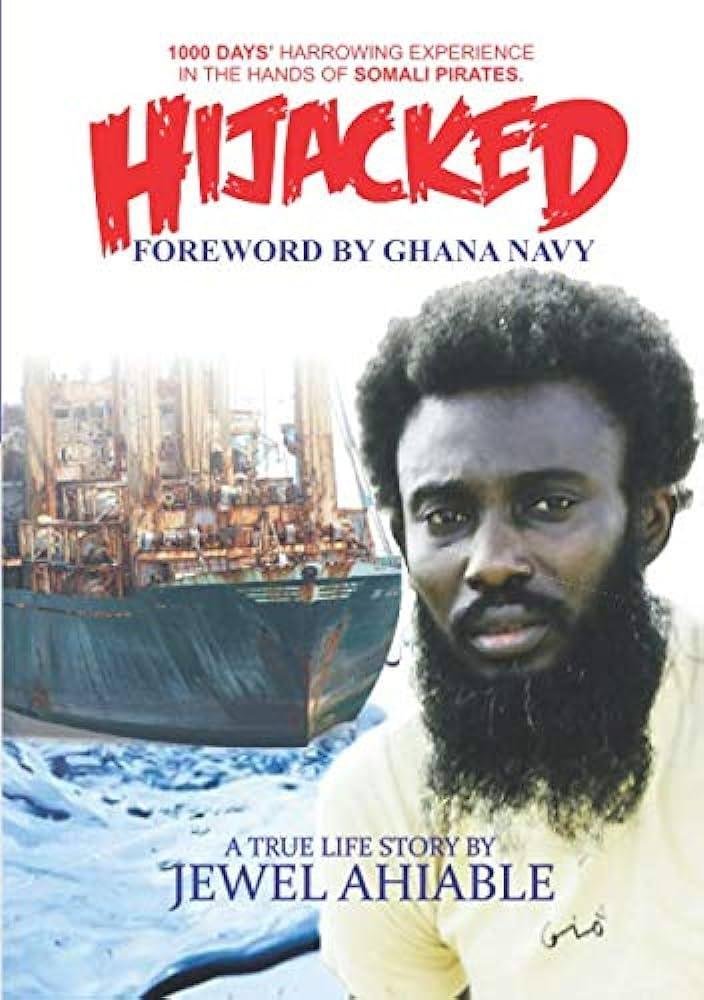
What was supposed to be a smooth sail, became a nightmare, when six months into a 10-month contract with Azal Shipping and Cargo, LLC, Dubai, on March 2010, Jewel and 23 other crew members were hijacked by Somali pirates and held captive for 1000 days, one of the longest held piracy victims.
Jewel is a marine electrical engineer, who studied at the Regional Maritime University (RMU) in 2003 then Maritime Academy and purposed to work onboard a ship. He secured his first ship in 2006, had the first experience as a seafarer and returned home safely after three months.
Jewel then joined the second ship in 2008 and worked for a year before returning home in 2009 after another successful sail.
Later in 2009 he moved on to a new company for better remuneration-the MV Iceberg 1 ship and graciously departed Ghana on September 29, 2009 to Oman.
The journey started smoothly as they moved from one country to the other with their last voyage taking them from Dubai to the Port of Eden in Yemen.
They had left very late on March 28, 2010 and arrived the following day, March 29 at 7:45am when Jewel was about having breakfast, only to hear the emergency alarm ring.
Just when they were about to find out the reason for the alarm, bullets started flying in the air into the ship and eventually they were hijacked and captured by Somali pirates, taken hostage to Somalia for a ransom to be paid before their release.
They eventually arrived at Somalia in four days where the torturous, two years, one month (1000 days) ordeal began.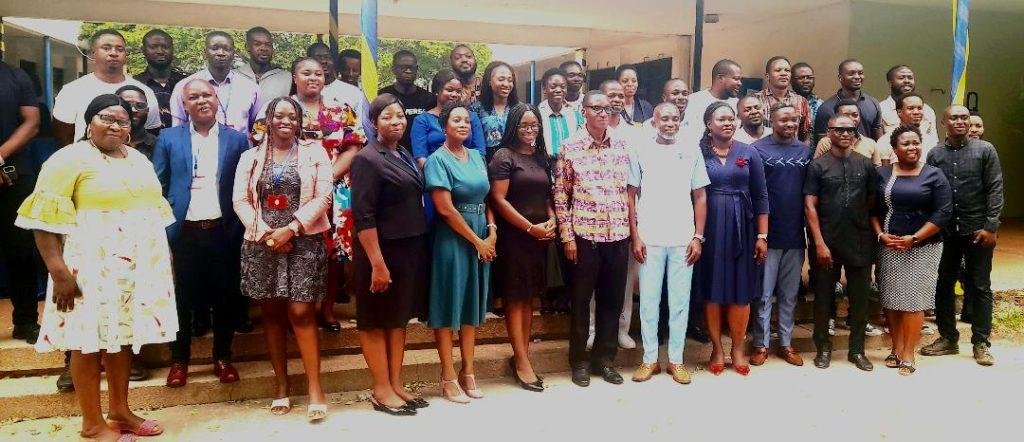
During the period, the vessel ran aground, food, water, medical supplies all finished, causing the death of a crew member who was initially dumped into a deep freezer and later thrown into the sea while another member went missing.
“We went on hijack attempts of two ships but was unsuccessful, the United Nations (UN) came in at a point and wanted to take the body of the dead colleague but the pirates did not agree and rather threw the body into the sea,” he narrated.
“We continued to suffer and endured difficult moments. We were beaten, stabbed and one of our Chief Engineers’ ear was cut into pieces and isolated for a year to suffer excruciating pain,” he added.
At the point the crew felt abandoned and forsaken as all attempts to get rescued proved futile and they practically gave up in life because there seem to be no light at the end of the tunnel.
The hijackers were only obsessed with their quest to amass fortune and deafened their ears to the cry of the innocent humans.
That was until December 10, 2012 when they heard another shooting towards the ship and this time, for rescue purposes. The rescue by Puntland Maritime Police Force from Somalia lasted for 13 days as the pirates would not give up easily. The police eventually managed to take the pirates away, evacuate the 22 remaining ‘victims’ who stepped foot on ground for the first time in 1000 days.
“It was a very difficult time for my family as it took them three months to hear that I was hijacked. They went around for help and God protected us all,” he stated.
Painfully, he also lost the love of his life to another man during the period since there was no communication. “We came back on December 23, 2012 and she got married in February 2013. I lost her contact so she moved on,” he said. Jewel is however currently married with two children.
The near-death experience for Jewel during the captivity had become a learning curve for many seafarers as he managed to come out with a book titled ‘Hijacked! 1000 Days’ Harrowing Experience in the Hands of Somali Pirates’ to not only narrate his ordeal but recommend solutions.
The 44-year-old has also become a resource person to maritime institutions with one of his recent endeavours-a presentation at the ongoing Support for West Africa Integrated Maritime Security (SWAIMS) training in maritime affairs and security at the RMU.
He advised participants to be guided by their instincts before embarking on a journey, take their training seriously while calling for drills on every ship on how to escape such attacks.
Unfortunately, after the ordeal, the survivor’s salaries were not paid by the company while the government of Ghana, though promised to pay compensations to them, had since not reached out despite several attempts.
By Michael D. Abayateye


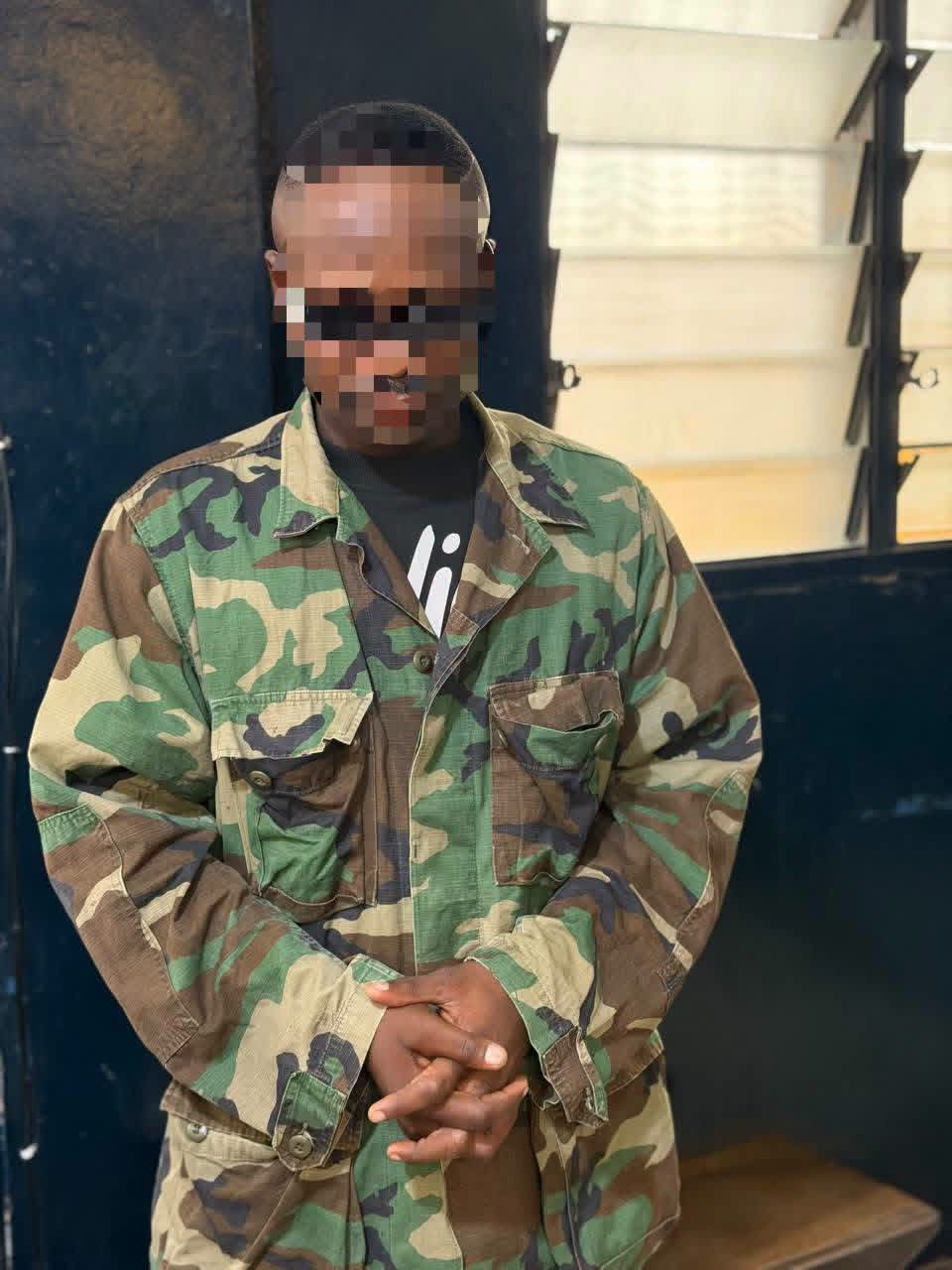
The Tema Regional Police Command has arrested a 32-year-old man for allegedly posing as a soldier and extorting money from unsuspecting members of the public at Ashaiman.
The suspect, identified as Bright Atsu Kudiabor, was arrested by the Ashaiman Police on Wednesday, September 16, 2026, at about 7:00 a.m.
According to the Police, he was arrested at an area known as “I Shall Return”, where he was allegedly parading himself as a soldier and demanding money from people.
The Police said Kudiabor, who is an ex-convict, was initially arrested by personnel of the Ghana National Fire Service in Ashaiman with assistance from other members of the public.
A search conducted on him after he was handed over to the Police reportedly led to the recovery of a set of military camouflage uniform.
The suspect is currently in Police custody and assisting with investigations.
The Tema Regional Police Command said he would be processed for court after investigations are completed.
The Police urged the public to remain vigilant and report anyone who falsely presents themselves as a soldier or a member of another security agency to deceive or extort money from the public.
By: Jacob Aggrey

Volta Regional Minister, James Gunu, says the Volta Region holds enormous agricultural potential and efforts must be geared towards connecting farmers to the needed resources to unlock that potential.
He said focus must be on linking farmers to resources, technology, financing and markets to increase production, create jobs and build sustainable livelihoods.
Hon. Gunu made the remarks at the national launch of the Ghana Tomato Self-Sufficiency Initiative (GHATSI) held at Anloga in the Volta Region on Tuesday, September 15.
The initiative, under the theme “Produce at Home. Feed the Nation. Export the Surplus,” seeks to boost local tomato production, processing and marketing while reducing Ghana’s heavy reliance on imported tomatoes.
The launch was attended by the Minister for Food and Agriculture, Eric Opoku, his Deputy, John Setor Dumelo, Feed Ghana Coordinator, Bright Demordzi, Members of Parliament, traditional leaders, MMDCEs, farmers and other stakeholders.
Mr.Gunu expressed appreciation to the Minister for Food and Agriculture for the support announced for the region, including two excavators, 200 cartons of organic fertiliser, and GH¢200,000 for Ms. Kuatudzo Esther Dela, a tomato farmer and processor from Ziope.
He described the initiative as an important step towards making agriculture a stronger driver of food security, job creation and economic growth in the Volta Region.
By Edem Mensah-Tsotorme