Editorial
Winneba- Swedru road needs attention

- /home/u249204778/domains/spectator.com.gh/public_html/wp-content/plugins/mvp-social-buttons/mvp-social-buttons.php on line 27
https://spectator.com.gh/wp-content/uploads/2024/03/The-deteriorating-nature-of-the-road.jpg&description=Winneba- Swedru road needs attention', 'pinterestShare', 'width=750,height=350'); return false;" title="Pin This Post">
- Share
- Tweet /home/u249204778/domains/spectator.com.gh/public_html/wp-content/plugins/mvp-social-buttons/mvp-social-buttons.php on line 72
https://spectator.com.gh/wp-content/uploads/2024/03/The-deteriorating-nature-of-the-road.jpg&description=Winneba- Swedru road needs attention', 'pinterestShare', 'width=750,height=350'); return false;" title="Pin This Post">
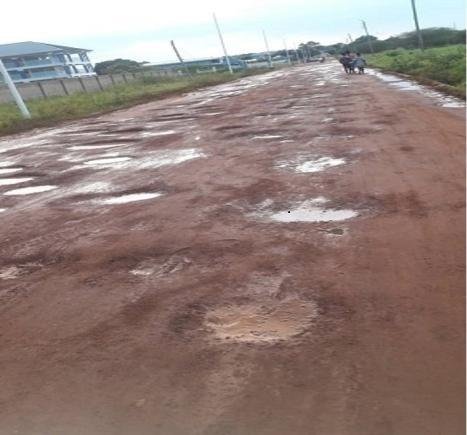
The deteriorating nature of the road
Dear Editor,
Kindly permit me to use this column of your esteemed newspaper to bring to the notice of the concerned authorities, the deteriorating nature of the Winneba- Swedru road.
The condition of the road is very terrible and pathetic.
There are many potholes on the road, making it difficult for drivers to navigate their ways through.
This does not only slow down traffic but also cause several accidents.
The road users and most importantly residents living closer to the roadside face great inconvenience.
The potholes become the breeding grounds for mosquitoes as they occupy the stagnant water gathered on the stretch.
Also, passengers especially pregnant women on board these vehicles endure a long period of discomfort as cars go through the bumps.
It has been like this for over four years and nothing has been done about the bad nature of the road.
Residents on the Winneba- Swedru road are calling on the appropriate authorities to come to their aid and take a swift action into fixing the road.
Nicholas Nyarkoh, Swedru.


Cassava leaf consumption was just not part of traditional Ghanaian culture, and as Dr. Kwaku Owona Hwesofour Asante, a Research Scientist at the CSIR-Crops Research Institute (CRI), has noted, the hurdle to adopting this resource is cultural rather than environmental or economic.
The crop has only been viewed through the lens of its starchy root for many centuries. In the meantime, our West African neighbours’ cuisine has traditionally featured cassava leaves.
Ghana’s eating and cooking customs need to change. These leaves have an astounding crude protein content of 17 percent to 38 percent on a dry weight basis. Even more impressively, they provide more than 10 of the essential amino acids required by the human body for tissue growth and health maintenance.
According to Dr. Asante’s striking and indisputable comparison, eating correctly prepared cassava leaves is biologically similar to eating fish or eggs for protein
Ignoring a free, plentiful, environmentally friendly alternative is a luxury we can no longer afford in a nation where the typical household’s cost of animal and fish proteins is rising. The private sector has a strong business argument that goes beyond public health.
These days, agriculture has to adjust to resource scarcity and climate change. A cyclical agro-economy is defined by the use of cassava leaves. A farmer can practically double their yield without purchasing an additional metre of land, using more water, or clearing more forests by harvesting the leaf canopy in addition to the underground root.
Although there are naturally occurring cyanogenic chemicals in raw cassava leaves, this issue has previously been resolved by science. The toxicity is completely neutralised by pounding and boiling the leaves for approximately 15 to 20 minutes, making them completely safe.
Aggressive private enterprise is made possible by his predictable processing pathway. It is simple to commercialise processed leaves as nutrient-dense cattle feed concentrates, dry protein powders for dietary supplements, or frozen culinary greens.
An Appeal for Legislative Action By demonstrating the science and charting the financial advantages, researchers at the CSIR-CRI have done the tough lifting. They have already briefed important decision-makers. The government’s leadership now has complete control over the situation.
The Spectator feels that the Ministry of Food and Agriculture (MoFA) and the Ministry of Gender, Children, and Social Protection (MGCSP) need to take action in order to transform this overlooked treasure into a national asset.
Consumption of cassava leaf should be purposefully incorporated into national food initiatives like the Ghana School Feeding Programme (GSFP). The government can simultaneously enhance children nutrition and provide rural farmers with new sources of income by establishing an institutional market for the leaves.
We can no longer afford to let literally tons of premium protein to spoil in our crops. It is time to look above the ground, see the green gold that is looking back at us, and fully use Ghana’s cassava canopy.
Dear Editor,
Ghana’s move into the next stage of 5G spectrum licensing is an important development for the country’s digital future. With MTN Ghana, Telecel Ghana and Goal Telecommunications cleared to proceed, expectations will naturally rise among businesses, students, technology professionals and ordinary internet users.
But as Ghana prepares for a more advanced digital era, we must ask a simple question: who will actually benefit from 5G?
Technology should not become meaningful only to people who can afford expensive smartphones, data packages and compatible devices. If 5G is introduced without addressing affordability and accessibility, Ghana risks creating a faster digital highway that many citizens cannot afford to enter.
For students, reliable and affordable internet can mean access to online courses, research materials, remote opportunities and international learning platforms. For small businesses, better connectivity can support digital payments, online marketing, e-commerce and communication with customers. For professionals, it can create opportunities for remote work and participation in the global digital economy.
The government and telecommunications companies must therefore ensure that the 5G rollout goes beyond speed. There should be serious attention to affordability, coverage and digital inclusion. Rural communities should not be forgotten while investment concentrates only on Accra, Kumasi and other major commercial centres.
Telecommunications companies should also communicate clearly with consumers about the actual benefits of 5G, the cost of accessing it and the devices required. Consumers deserve value, not simply another technological label attached to their data plans.
Ghana has an opportunity to use 5G as a tool for economic transformation but that transformation will only be meaningful if the technology reaches beyond corporate offices and wealthy consumers.
The measure of Ghana’s digital progress should not simply be how fast our networks can operate. It should also be how many Ghanaians can afford to participate in the digital economy.
From Desmond Frimpong
Esuofia

 Entertainment7 days ago
Rhythms On Da Runway returns November 28 with 16th edition themed ‘Unbound’
- News1 week ago
48 Engineer Regiment to be major sub-contractor on Accra-Kumasi Expressway, $2bn ready- Prez Mahama
- Entertainment7 days ago
Ohemaa Mercy’s Tehillah Experience outfit was priestly regalia, not costume – Management clarifies