Hot!
What’s happening to our age-group football?

- /home/u249204778/domains/spectator.com.gh/public_html/wp-content/plugins/mvp-social-buttons/mvp-social-buttons.php on line 27
https://spectator.com.gh/wp-content/uploads/2022/07/Age.jpg&description=What’s happening to our age-group football?', 'pinterestShare', 'width=750,height=350'); return false;" title="Pin This Post">
- Share
- Tweet /home/u249204778/domains/spectator.com.gh/public_html/wp-content/plugins/mvp-social-buttons/mvp-social-buttons.php on line 72
https://spectator.com.gh/wp-content/uploads/2022/07/Age.jpg&description=What’s happening to our age-group football?', 'pinterestShare', 'width=750,height=350'); return false;" title="Pin This Post">
Years back, Ghana’s age-group football teams were spectacles to behold. They were a real charm.
The national Under-17 side (Black Starlets), the Under-20 and Under-23 teams (the Black Satellites and Black Meteors) were always the cynosure of all eyes; and whenever the senior national team (Black Stars) disappointed, we had the age-restricted outfits jumping in to bail the nation out of its desolation and torture.
The Starlets, for instance, delighted everybody with its trademark of tantalizing football and won the hearts of millions across the world. That the ‘Twinkling Twinkling Little Stars’ as the two-time World Cup-winning Starlets are known, dazzled and burrowed their way into the hearts of the fairer sex, is an assertion that cannot be contorted.
On the continental front, as well, they are three-time champions.
The Satellites, too, have been champions in their own right – brushing aside everything they surveyed, especially in the 90s. Do not forget this is that evocatively vintage side that upstaged Brazil in the final of the FIFA World Under-20 Youth tournament in 1999, becoming the only African team to win this trophy.
For the Black Meteors, the fact that they became the first African team to clinch bronze at the Olympic Games (Barcelona 1992), speaks volumes.
Sadly, today, the nation’s age-group teams are steadily but speedily turning into also-runs at qualifiers and tournaments, making many wonder whether our future have any dependable future, at all.
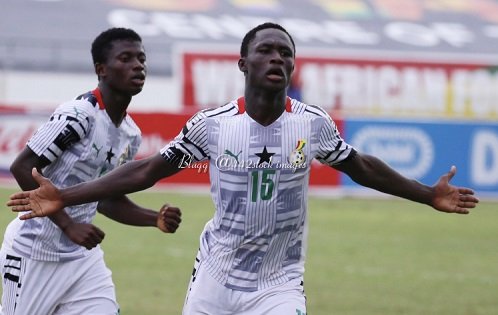
Only last week, hosts Ghana failed to qualify for the 2023 U-17 Africa Cup of Nations after losing 1-0 in the West African Football Union (WAFU) Zone B semi-finals to Burkina Faso, at the Cape Coast Stadium. It was the second successive failure of the Starlets, having failed earlier in 2019 which also denied them qualification to the World Cup.
In May, this year, the Satellites also crumbled in their bid to defend their WAFU Zone B title after losing to Burkina Faso 2-1 in the second group game. The defeat saw them miss out on the Africa U-20 Cup of Nations and the FIFA World Cup in Egypt and Indonesia respectively. Ghanaians were horrified by the slouch.
In the case of the Meteors, the last time they qualified for the Olympic Games was as far back as Athens 2004 – some 18 years ago. That is grossly unacceptable.
Clearly, there is something those in charge of our football are not doing well over the years. It is either they have gone to sleep or are getting their tactics off beam.
Indeed, it is time for our football authorities to wake up from their slumber and begin to do the right thing. Some of the players we have seen don the national colours of these junior national teams are anything but pedestrian – and sometimes have triggered suspicions of ‘position buying’ in the eyes of the public.
In those halcyon days, a decent number of our talents were picked from the Inter Colleges and Schools Sports festivals. What has happened to that system now? What has happened to active juvenile football league that was promised by the Ghana Football Association (GFA)? These were the models that produced marquee names like Michael Essien, Sulley Ali Muntari, Mubarak Wakasu, Samuel Inkoom, Baba Rahman, John Mensah, and many others.
Look at the embarrassment and shame that the nation had to endure recently when as many as 20 Starlets players had to be dropped few days ahead of the WAFU B Under-17 Nations Cup for failing the MRI tests. Why should that be the case?
Without any shred of doubt, that incident played a massive part in the 4-2 defeat of the team by Nigeria in the opening game, leading to their eventual failure to make it to the continental tournament proper. Question: What went into the selection of the players by Coach Paa Kwesi Fabin? This is not the first time our players have been caught by the MRI and it begs the question as to whether we are a serious football nation, at all?
Come to think of it, our female Under-17 team – Black Maidens, were also recently accused of age-cheating by their Moroccan counterparts, threatening to report Ghana to FIFA. The Moroccans eliminated the Maidens 4-2 on penalties to book a place at the Under-17 World Cup in India, slated for October, this year.
Maybe, let us say it was all mind game by the North Africans and we succumbed to it. Perhaps!
Whilst we commend the national Under-20 women’s team (Black Princesses) for qualifying for this month’s FIFA World Cup in Costa Rica, the Ghana FA must do a deep soul-searching of its policy as regards building a compellingly winsome age-group sides capable of winning medals again for the nation.
This nation abounds in embarrassing depth of talents which can be explored through an elaborately well thought-out programme – right from the juvenile league system through to the schools-inter colleges’ football competitions.
It is also imperative that we see some progression. Fact that the age-group teams failed to qualify for their respective competitions is not enough raison d’être to press the jettison button and throw them overboard when there are a couple of talents in there to pick and choose for the next level.
We witnessed how we glistened in the age-category football in the 90s because of that clairvoyant progression that saw the likes of Starlets’ Odartey Lamptey, Isaac Asare, Emmanuel Osei Kuffuor, Yaw Preko and Emmanuel Duah among others, draft into the Satellites, Meteors – and later the Black Stars.
If for nothing at all, that succession plan should see our teams exhibit some quality in terms of cohesion, unity and solidity in performance – a positive feature we have been lacking for a while now.
PlainTalk with John Vigah



The Tema Regional Police Command has arrested a 32-year-old man for allegedly posing as a soldier and extorting money from unsuspecting members of the public at Ashaiman.
The suspect, identified as Bright Atsu Kudiabor, was arrested by the Ashaiman Police on Wednesday, September 16, 2026, at about 7:00 a.m.
According to the Police, he was arrested at an area known as “I Shall Return”, where he was allegedly parading himself as a soldier and demanding money from people.
The Police said Kudiabor, who is an ex-convict, was initially arrested by personnel of the Ghana National Fire Service in Ashaiman with assistance from other members of the public.
A search conducted on him after he was handed over to the Police reportedly led to the recovery of a set of military camouflage uniform.
The suspect is currently in Police custody and assisting with investigations.
The Tema Regional Police Command said he would be processed for court after investigations are completed.
The Police urged the public to remain vigilant and report anyone who falsely presents themselves as a soldier or a member of another security agency to deceive or extort money from the public.
By: Jacob Aggrey
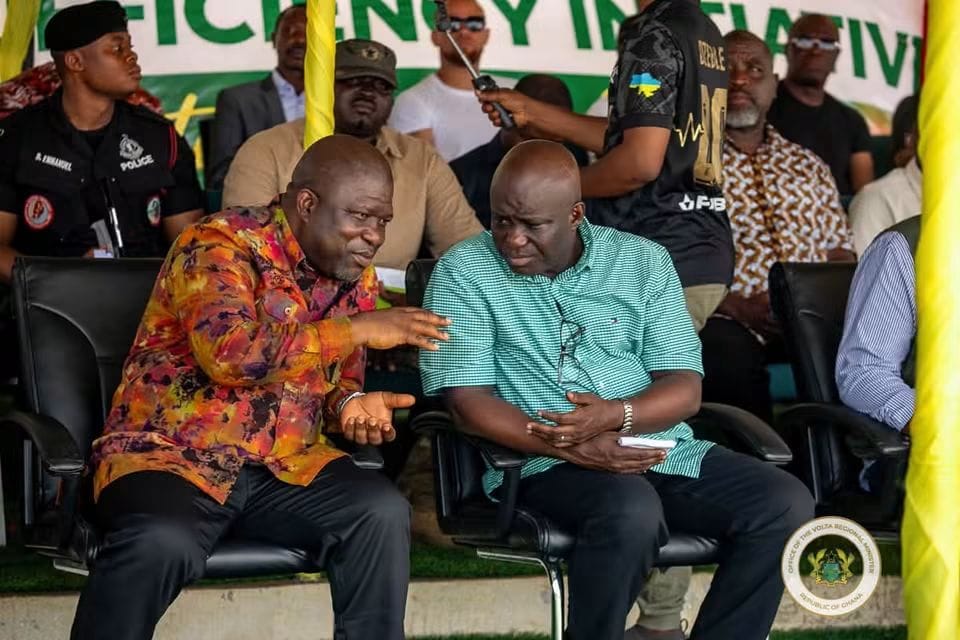
Volta Regional Minister, James Gunu, says the Volta Region holds enormous agricultural potential and efforts must be geared towards connecting farmers to the needed resources to unlock that potential.
He said focus must be on linking farmers to resources, technology, financing and markets to increase production, create jobs and build sustainable livelihoods.
Hon. Gunu made the remarks at the national launch of the Ghana Tomato Self-Sufficiency Initiative (GHATSI) held at Anloga in the Volta Region on Tuesday, September 15.
The initiative, under the theme “Produce at Home. Feed the Nation. Export the Surplus,” seeks to boost local tomato production, processing and marketing while reducing Ghana’s heavy reliance on imported tomatoes.
The launch was attended by the Minister for Food and Agriculture, Eric Opoku, his Deputy, John Setor Dumelo, Feed Ghana Coordinator, Bright Demordzi, Members of Parliament, traditional leaders, MMDCEs, farmers and other stakeholders.
Mr.Gunu expressed appreciation to the Minister for Food and Agriculture for the support announced for the region, including two excavators, 200 cartons of organic fertiliser, and GH¢200,000 for Ms. Kuatudzo Esther Dela, a tomato farmer and processor from Ziope.
He described the initiative as an important step towards making agriculture a stronger driver of food security, job creation and economic growth in the Volta Region.
By Edem Mensah-Tsotorme