News
U.S. Embassy, KNUST strengthen educational ties with two new projects

- /home/u249204778/domains/spectator.com.gh/public_html/wp-content/plugins/mvp-social-buttons/mvp-social-buttons.php on line 27
https://spectator.com.gh/wp-content/uploads/2020/10/Prof.-Rita-Akosua-Dickson-with-U.S.-Embassy-officials-at-the-launch.jpg&description=U.S. Embassy, KNUST strengthen educational ties with two new projects', 'pinterestShare', 'width=750,height=350'); return false;" title="Pin This Post">
- Share
- Tweet /home/u249204778/domains/spectator.com.gh/public_html/wp-content/plugins/mvp-social-buttons/mvp-social-buttons.php on line 72
https://spectator.com.gh/wp-content/uploads/2020/10/Prof.-Rita-Akosua-Dickson-with-U.S.-Embassy-officials-at-the-launch.jpg&description=U.S. Embassy, KNUST strengthen educational ties with two new projects', 'pinterestShare', 'width=750,height=350'); return false;" title="Pin This Post">
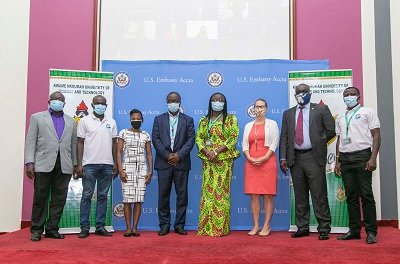
The U.S. Embassy in Accra and the Kwame Nkrumah University of Science and Technology (KNUST) Kumasi, has launched the U.S. State Department Bureau of African Affairs’ University Partnerships Initiative (UPI).
According to a statement following the launch, the initiative sought to “strengthen existing ties and foster new collaboration between U.S. and African universities through faculty and student exchanges, joint research, administrative capacity-building and public-private partnerships.”
The virtual launch held at the KNUST campus, last Wednesday, was presided by Professor Prof. (Mrs) Rita Akosua Dickson, Vice-Chancellor of KNUST.
Ambassador Tibor Nagy, Assistant Secretary of State for African Affairs, also delivered remarks from Washington, DC while representatives from the Texas International Education Consortium (TIEC) and Iowa State University (ISU) provided an overview of the projects they were undertaking at KNUST.
“In response to the urgent need for virtual education due to the COVID-19 pandemic, TIEC staff have assembled higher education professionals from several universities in Texas to train 30 administrators and faculty to produce quality online and flexible learning.
“Participants will go on to train other faculty and administrators within KNUST and throughout Ghana. TIEC, in collaboration with the KNUST Business School, is implementing “Flexible Learning: Responding and Reimagining Education in Ghana,” the statement noted.
ISU, according to officials, was partnering with the KNUST College of Engineering to implement “Institutional Capacity Building through Engineers Without Borders (EWB) Collaboration.
ISU and KNUST faculty and students will partner with the Ullo Traditional Area in the Upper West Region to collaborate on small-scale community development.
The projects are expected to promote research-driven solutions to address food security, potable water security, sustainable agriculture, and improved economic opportunity.
It would also bolster the students’ real-world problem-solving abilities and globalise the undergraduate engineering curriculum at both universities.
Professor Dickson endorsed the ISU-KNUST project, saying it would “strengthen our institutional capacity towards achieving our mission and position KNUST in an era where academia-community engagement for the socio-economic development of our less privileged communities is paramount.”
“The TIEC-KNUST project propel us in our pursuit of building the needed capacity for the establishment of a more resilient and robust e-learning system that ensures seamless academic work all year round and also offer us the opportunity to transfer knowledge to individuals less privileged to access in-person learning experience from our University,” she added.
“Assistant Secretary Nagy applauded the inaugural UPI collaborations in Ghana, stating that the projects exemplify core principles in American higher education.”
He noted that leadership, excellence, and innovation in delivery of online education had become paramount as schools relied largely on virtual learning.
Officials said through UPI, the U.S. Embassy would continue to “expand existing links and promote new partnerships at the university level that will strengthen Ghana’s educational institutions as instruments of national development while enhancing the United States and Ghana’s shared goals of regional prosperity, security, and stability.”


A nine-member board for the New Times Corporation (NTC), publishers of The Ghanaian Times and The Spectator newspapers was sworn into office on Thursday with a call to strengthen the governance of the Corporation.![Dr. Binka (seated second from right) with Dr Okpoti [right] the board and Management of NTC photos Okai Elizabeth.](https://spectator.com.gh/wp-content/uploads/2026/08/Dr.-Binka-seated-second-from-right-with-Dr-Okpoti-right-the-board-and-Management-of-NTC-photos-Okai-Elizabeth-1024x683.jpg)
The new NTC board is chaired by Dr Charity Binka and has Very Rev. Helena Amma Serwah Opoku-Sarkodie, Mr Tito Kojo Voegborlo Esq and Naana Aklerh Amenyah Kubi I as members. Read More
SKIP THE QUEUE, TAP THE NEWS
You can now read the Ghanaian Times and The Spectator newspapers from the comfort of your device via TimesNewsPlus.
Join our WhatsApp Channel: https://whatsapp.com/channel/0029VbBElzjInlqHhl1aTU27
Christians have been urged to demonstrate a living faith in Jesus Christ by allowing their confession of Him as Lord and Saviour to reflect in their daily lives.
According to the Kaneshie District Pastor of the Evangelical Presbyterian Church, Ghana (EPCG), Rev. Dzidzor Nathaniel Affram, a genuine Christian’s confession should go beyond words and be demonstrated through obedience to God, love for others and service to the Church.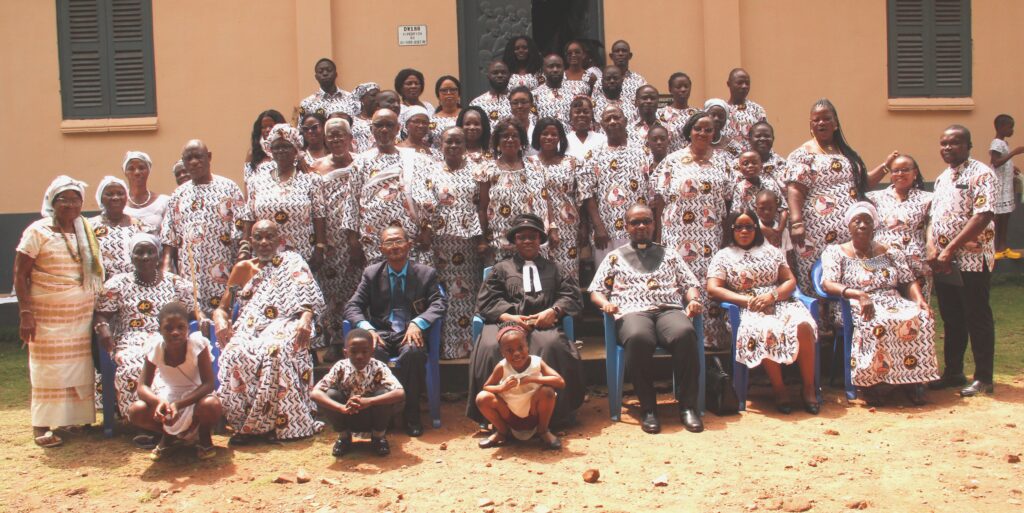
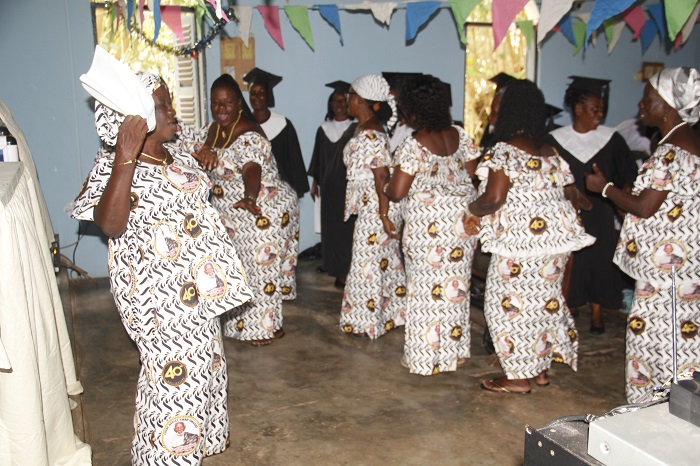
He made the call at the 40th anniversary remembrance service for the late Wesley Kwasi Kwadzo at the Evangelical Presbyterian Church, Ghana, Maranatha Congregation at Awudome Avenui in the Volta Region.
Speaking on the theme, “The Church Built on a Living Confession,” Rev. Affram said life would continually present challenges capable of testing Christians’ faith, making it necessary for believers to hold firmly to their confession that Jesus Christ is Lord.
He explained that accepting Jesus Christ as Lord and Saviour required Christians to live according to His teachings, stressing that their faith must be evident in their conduct.
“A living confession listens to God and not man,” he said, urging Christians to remain obedient to God even when faced with difficulties and pressures.
Rev. Affram further encouraged the congregation to care for vulnerable people and demonstrate concern for others, adding that such acts were practical expressions of Christian faith.
He also urged Christians to identify and use their God-given gifts to build the Church.
He said every member of the Church had a role to play and cautioned Christians against looking down on others because of their status or abilities.
The remembrance service brought together family members, friends, members of the congregation and sympathisers to commemorate the 40th anniversary of the late Wesley Kwasi Kwadzo.
By Lizzy Okai