Features
Tooth erosion: Understanding causes, symptoms and treatment options

Tooth erosion, also known as dental erosion, is a common dental problem that affects millions of people worldwide.
It occurs when the enamel on your teeth wears away, exposing the underlying dentin and causing sensitivity, pain, and increased risk of cavities.
In this article, we will delve into the causes, symptoms, and treatment options of tooth erosion, as well as provide tips on how to prevent it.
What is tooth erosion?
Tooth erosion is a type of tooth wear that occurs when the enamel on your teeth is worn away by acid. The enamel is the hard, outer layer of your teeth that protects them from decay and damage. When the enamel is worn away, the underlying dentin is exposed, causing sensitivity and pain.
Causes of tooth erosion
There are several causes of tooth erosion, including:
- Acidic foods and drinks: Consuming foods and drinks with high acidity, such as citrus fruits, soda, and sports drinks, can erode tooth enamel.
- Gastroesophageal reflux disease (GERD): Stomach acid can flow up into the mouth and erode teeth.
- Bulimia: Frequent vomiting can expose teeth to stomach acid.
- Dry mouth: Reduced saliva flow can make teeth more susceptible to erosion.
- Genetics: Some people may be more prone to tooth erosion due to genetic factors.
- Medications: Certain medications, such as antihistamines and decongestants, can reduce saliva flow and increase the risk of tooth erosion.
- Environmental factors: Exposure to acid rain, swimming in acidic pools, and working in acidic environments can all contribute to tooth erosion.
Symptoms of tooth erosion
The symptoms of tooth erosion can vary depending on the severity of the condition. Common symptoms include:
- Tooth sensitivity: Pain or discomfort when consuming hot, cold, or sweet foods and drinks.
- Tooth discolouration: Yellowing or browning of teeth.
- Rounded teeth: Teeth may appear worn or rounded.
- Dentin exposure: Visible dentin, which can appear as small dents or holes.
- Tooth pain: Pain or discomfort when biting or chewing.
Treatment options for tooth erosion
The treatment options for tooth erosion depend on the severity of the condition. Common treatment options include:
- Fluoride treatment: Fluoride can help strengthen tooth enamel and reduce sensitivity.
- Desensitising toothpaste: Using toothpaste specifically designed for sensitive teeth can help alleviate symptoms.
- Dental bonding: A tooth-coloured resin can be applied to the affected tooth to protect it and improve its appearance.
- Crowns: In severe cases of tooth erosion, a crown may be necessary to protect the tooth and restore its function.
- Dental implants: In cases where the tooth is severely damaged, a dental implant may be necessary to replace the tooth.
Prevention Tips
Preventing tooth erosion is easier than treating it. Here are some tips to help you prevent tooth erosion:
- Practise good oral hygiene: Brush your teeth gently with fluoride toothpaste and clean between your teeth once a day.
- Avoid acidic foods and drinks: Limit or avoid consumption of acidic foods and drinks.
- Use a straw: When consuming acidic drinks, use a straw to minimise contact with your teeth.
- Visit your dentist regularly: Regular check-ups can help identify and treat tooth erosion early.
- Chew sugar-free gum: Chewing sugar-free gum can stimulate saliva production, which can help neutralise acid and remineralise teeth.
Conclusion
Tooth erosion is a common dental problem that can cause sensitivity, pain, and increased risk of cavities.
By understanding the causes, symptoms, and treatment options, you can take steps to prevent tooth erosion and maintain good oral health.
Remember to practise good oral hygiene, avoid acidic foods and drinks, and visit your dentist regularly to keep your teeth strong and healthy.
By Robert Ekow Grimmond-Thompson

Walk into any supermarket in Accra, Kumasi, or Tamale today, and you will see the modern Ghanaian diet packaged as ‘progress.’ You will see breakfast cereals with cartoon mascots, fruit drinks that are mostly sugar and colour, and snacks promising energy and happiness in bright fonts.
Even products loaded with salt and unhealthy fats often wear a health halo labeled as fortified or natural, while the real nutritional risk is hidden in tiny print on the back. This is not just a consumer inconvenience; it is a public health blind spot. Ghana is living through a silent surge of non-communicable diseases (NCDs) like hypertension, diabetes, and stroke.
These conditions quietly drain household income and steal productive years. According to the Ghana Health Service (GHS) and World Health Organisation (WHO) estimates, NCDs are now responsible for nearly 45 per cent of all deaths in Ghana.
We cannot build a healthy nation on a food environment designed to confuse people at the point of purchase. Ghana must mandate simple front-of-pack warning labels (FOPWL) on high-sugar, high-salt, and high-fat packaged foods because consumers deserve truth at a glance, and industry must be pushed to reformulate.
Why Back-of-Pack Labels Are Not Enough
In theory, consumers can read nutrition panels. In reality, most Ghanaians shop under pressure, limited time, rising prices, and children tugging at their sleeves. The back label is a relic that requires a high cognitive load to interpret—essentially, the seller knows what is inside, but the buyer cannot easily tell.
This ‘information asymmetry’ is not fair. It is not consumer choice when the information needed to choose well is deliberately difficult to find.
Simple warning labels like the black octagons used in the Chilean Model act as a ‘stop-and-think’ nudge. They do not ban products but they simply tell the truth so people can decide.
Reshaping Our Food Environment
A generation ago, Ghana’s meals were mostly home-prepared, like kenkey and banku with soups and stews. Today, ultra-processed foods have become the norm, especially in urban areas. Children are growing up with sugary drinks and salty snacks as everyday items, not occasional treats.
If Ghana is serious about prevention, we must act where decisions are made—thus, the shelf. Warning labels protect parents from sugar traps and pressure the market to improve. When warning labels are mandatory, manufacturers start to compete to make healthier recipes to avoid the stigma of the label.
Addressing the Pushback
Industry will argue that labels create fear or that education alone is enough. However, health education is slow; labels work immediately. While the informal street food sector is a challenge, regulating pre-packaged goods is the practical starting point because the supply chain is traceable. We cannot wait until the whole system is perfect; we must start where action is feasible.
A 2026 Implementation Roadmap for Ghana
To move from talk to action, Ghana needs this 5-step plan:
- Issue mandatory regulation: The Ministry of Health, Food and Drug Authority (FDA), and Ghana Standards Authority (GSA) must define the label format and nutrient thresholds for all pre-packaged foods.
- Simple, bold symbols: Use plain language and clear symbols, such as “HIGH IN SUGAR,” designed for busy families, not experts.
- Transparent thresholds: Adopt technically defensible standards adapted to the Ghanaian diet.
- Transition and enforce: Provide a 12–18 month period for manufacturers to reformulate, followed by firm enforcement at ports and retail centers.
- National literacy campaign: The Ghana Health Service must pair labels with public messages explaining why high salt or sugar increases disease risk.
Conclusion: Truth Is Not a Luxury
Prevention is cheaper than treatment. A warning label costs little compared to the price of dialysis, stroke rehabilitation, or lifelong diabetes complications. A black octagon on a box of biscuits is more than a label; it is a shield for the health of all Ghanaians. It is time to put the truth where we can see it, right on the front.
By Abigail Amoah Sarfo
Join our WhatsApp Channel now!
https://whatsapp.com/channel/0029VbBElzjInlqHhl1aTU27

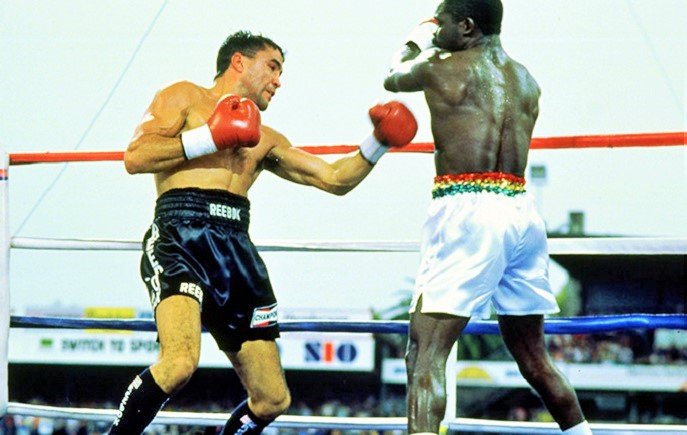
Natives of the Kenkey Kingdom were mad with joy. They were still recovering from the hangover of the kingdom’s loss of the African Cup when their spirits were rekindled. Their great warrior, Zoom Zoom, stormed Melbourne and made sure that every Australian refused food. And that was after he had drawn contour lines on the face of their idol, Jeff Fenech.
Not only did the terrible warrior transform Old Boy Jeff’s face into a contour map useful for geography lessons, but he also accomplished the feat of retaining the much-envied super-kenkeyweight title against all odds. The warrior had not been eating hot kenkey for nothing.
The Fight Against Fenech
When Jeff Fenech bit the dust in the eighth round, I was tempted to consider if Adanko Deka could not have faced him in any twelve-rounder, title or non-title bout. Adanko has improved tremendously, and soon he would be facing Pernell Whitaker.
Sincerely, I was pessimistic about Azumah’s man, who the last time took him through twelve grueling rounds of rough boxing. I expressed my fears to my colleague Christian Abbew, alias Gbonyo, who surprisingly had total confidence that the Australian brawler would fall, predictably in Round Five.
Gbonyo gave reasons for his contention, all of which I counteracted using the age factor. Fact is, I didn’t know that contrary to the laws of nature, Azumah was all the time growing younger.
When Fenech fell briefly in round one, I asked my brother whether it was the same Fenech that fought Azumah in Las Vegas. Sure, it was the same Fenech, all out to beat Azumah before his countrymen.
But the African Professor had no intention of making the Australian a hero. As he spun round the desperate Aussie, dancing and stinging out his jabs, it was not too long before I realized that the end was near.
The Eighth Round Showdown
Two minutes into the eighth round, the African ring-master proved to the whole world that he was a true son of Bukom. He himself was cornered, but like the tough nut he is, he managed to break free before overwhelming the panting Australian with several blows that made him crash headlong.
Moments after, the referee, expressing fatherly sympathy, stopped the fight to prevent an obituary. After the ordeal, Fenech’s fairly handsome face was full of newly constructed hills, valleys, ox-bow lakes—whatever. I noticed that his nose was very tired and had a miniature volcano sitting restlessly on it. Obviously, Jeff’s wife will have to nurse that nose back to its normal shape—but I’d advise her not to use iodine, otherwise her dear husband will wail like a banshee.
Reflections on Boxing
Because Mohammed Ali was the kind of boxer kids liked, many school-going kids often entertained the wish of becoming like him. I remember one day when I told my father I wanted to become a boxer, and he advised me to first complete my education to the highest level. Then, if I decided to become a boxer and was knocked out a couple of times, I’d fall back on my degrees and make a living.
Boxing used to be interesting when bouts were fought more with the mouth and tongue than with gloves. You had to brag well, psychologically belittling your opponent before beating him up physically. Mohammed Ali became a very successful pugilist because he also managed to become a poet. He often blew his horn across America, calling himself the “pretty boxer” and opponents like Joe Frazier “the gorilla.”
Ali made a living fighting hard fists like Joe Frazier, Ken Norton, Jerry Quarry, George Foreman, Leon Spinks, and Trevor Berbick. Twice he came back from retirement to fight just for money. It was Larry Holmes who finally pensioned him, and since then the great Ali has never been himself.
The Path Ahead for Azumah
When Azumah nailed Jeff Fenech on the cross and barked almost immediately that he was after the head of Pernell Whitaker, I was happy but concerned. I would have been happier if he had announced his resignation there and then—he would have been more of a hero. Beating Fenech in Australia is more newsworthy than facing Whitaker in the States.
With Whitaker, it might be a little difficult. The “Sweet Pea” is agile, has a crooked body like a snake with diarrhea, and stands awkwardly as a southpaw. He is known for having the fastest pair of fists and the rare ability to dodge punches no matter how close they may be.
Much as I do not doubt that Azumah can take his title, I also don’t want him to retire beaten. I want him to retire as a hero and live a fuller, healthy life.
As Azumah himself said after dishing Fenech, he is now a professor and has something to show for it. Like a true professor, I think it is time he resigned and took up training young talents who could draw inspiration from him and become like him in the future.
Closing Thoughts
I must say that although ageing boxers like Larry Holmes and George Foreman are making a name for themselves, boxing is not like the Civil Service, where you can even change your age and retire at 74. Zoom Zoom has delighted the hearts of the natives, and Sikaman will forever hold him in high esteem—but only when he retires as a hero.
This article was first published on Saturday, March 7, 1992.