News
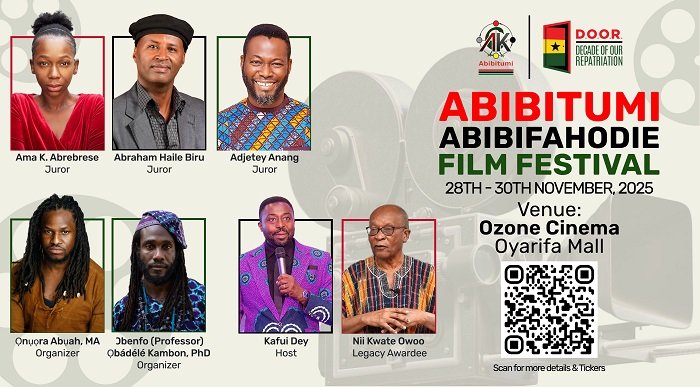
The inaugural Abibitumi Abibifahodie Film Festival launches this November

- /home/u249204778/domains/spectator.com.gh/public_html/wp-content/plugins/mvp-social-buttons/mvp-social-buttons.php on line 27
https://spectator.com.gh/wp-content/uploads/2025/11/ABB-Press1.jpg&description=The inaugural Abibitumi Abibifahodie Film Festival launches this November', 'pinterestShare', 'width=750,height=350'); return false;" title="Pin This Post">
- Share
- Tweet /home/u249204778/domains/spectator.com.gh/public_html/wp-content/plugins/mvp-social-buttons/mvp-social-buttons.php on line 72
https://spectator.com.gh/wp-content/uploads/2025/11/ABB-Press1.jpg&description=The inaugural Abibitumi Abibifahodie Film Festival launches this November', 'pinterestShare', 'width=750,height=350'); return false;" title="Pin This Post">
The inaugural Abibitumi Abibifahodie Film Festival (AAFF) launches this November as a historic hybrid (in-person and virtual) celebration of Abibitumi ‘Black Power’ and Abibifahodie ‘Black Liberation’ through cinema and storytelling from across the Black world.
Taking place November 28–30, 2025, the festival will be hosted at Ozone Cinema, Oyarifa Mall, Accra, with simultaneous digital screenings and live-streamed discussions connecting storytellers, audiences, and creatives from throughout Abibiman and the Diaspora.
With the unifying theme “What Abibitumi Is: Demonstration Over Conversation,” this festival signals the rise of a new creative wave — one that fuses language, film, and liberation practice.
It serves as a powerful prelude to the Abibitumi Conference (December 12–14, 2025), extending the ongoing movement of self-definition, Abibitumi ‘Black Power’, and Abibifahodie ‘Black Liberation’ through art, media, and collective engagement.
Honouring the Tradition of the Kmt(yw): Storytelling as Liberation Practice
Co-founded by Ɔbenfo (Professor) Ọbádélé Kambon and filmmaker Ọnụọra Abụah, the Abibitumi Abibifahodie Film Festival showcases works from across Abibiman (Africa) and the Black world, reflecting narratives of identity, resistance, and consciousness.
The festival affirms cinema as a vital tool in the global struggle for Abibifahodie ‘Black Liberation’.
Featured Categories: Feature Films (non-competitive), Short Films (documentary, animation, and AI-infused works), Student Films (emerging storytellers from across Abibiman).
Opening night will feature the Red, Black, and Green Carpet Gala, and honouring Nii Kwate Owoo with the Legacy Award, followed by a screening of his seminal film You Hide Me — a foundational work in African cinematic resistance.
Jury & Moderators
The 2025 Jury brings together leading voices in African film and culture:
- Abraham Haile Biru (Ethiopia) – President of the Jury
- Ama K. Abebrese (Ghana) – Actor & Producer
- Selikim Geni (Ghana) – Media Professional
- Adjetey Anang – Actor
Panel discussions will be moderated by Derek Fiakpui (Ghana) and other invited professionals, ensuring dynamic conversations around film, creativity, and Abibifahodie.
Hybrid Festival Experience
The festival merges the physical and digital worlds in true Abibitumi fashion — combining in-person screenings and discussions at OzoneCinema with live-streamed sessions via the Abibitumi Film Festival Portal.
This format enables Black people across the globe to connect, create, and celebrate together in real time.
Tickets are available at filmfestival.abibifahodie.org/tickets or directly at the Ozone Cinema Box Office (Oyarifa Mall).
A Pan-Abibiman Collaboration
Organized by Abibitumi in partnership with AEA Films, OzoneCinema, and UNIMAC, with press and media coordination by SITA Communications, the Abibitumi Abibifahodie Film Festival provides a platform for Black filmmakers to define, document, and direct their own narratives — reclaiming storytelling as a weapon of liberation.




Over 20 structures built within the 50-metre buffer zone of the Kpeshie Lagoon at the Laboma Beach Resort in the La Dade-Kotopon Municipality were on Sunday demolished by the Greater Accra Regional Coordinating Council (GARCC).
Buildings such as single-unit semi-detached under construction and completed chalets at the resort were pulled down while portions of a newly constructed perimeter wall were also demolished. Read More
SKIP THE QUEUE, TAP THE NEWS
You can now read the Ghanaian Times and The Spectator newspapers from the comfort of your device via TimesNewsPlus.
Join our WhatsApp Channel: https://whatsapp.com/channel/0029VbBElzjInlqHhl1aTU27

About 120 golfers from clubs across Ghana participated in an 18-hole competition, dubbed ‘MTN 30th Anniversary CEO Invitational Golf Tournament’ held at the Achimota Golf Club on Saturday.
At the end of the hectic day, Frederick Semenu Duvor won the Men’s Group A event with 39 points, while Julienne Afi claimed the Ladies’ Group A title with the same score.
Yaw Mireku Jnr. won the Men’s Group B with an impressive 45 points, while Kous Louanges Mang took the Ladies’ Group B title with 38 points.
Kofi Mangesi won Men’s Group C with 40 points while Elorm R. Akuash Bonney claimed the Ladies’ version with 42 points.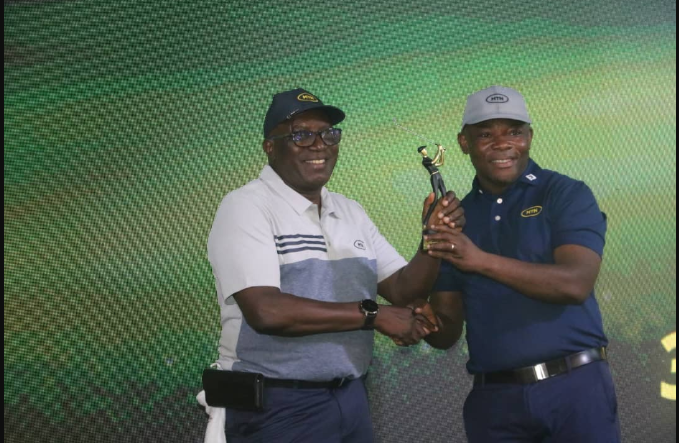
In the Seniors Division, Jan Vogel emerged winner of the men’s category with 39 gross, while Helen Appah topped the ladies’ category with 44 gross.
Addressing participants, the company’s Board Chairman, Mr Ishmael Yamson, urged the company to approach its next phase with the same resilience, discipline and determination that have defined its success over the past three decades.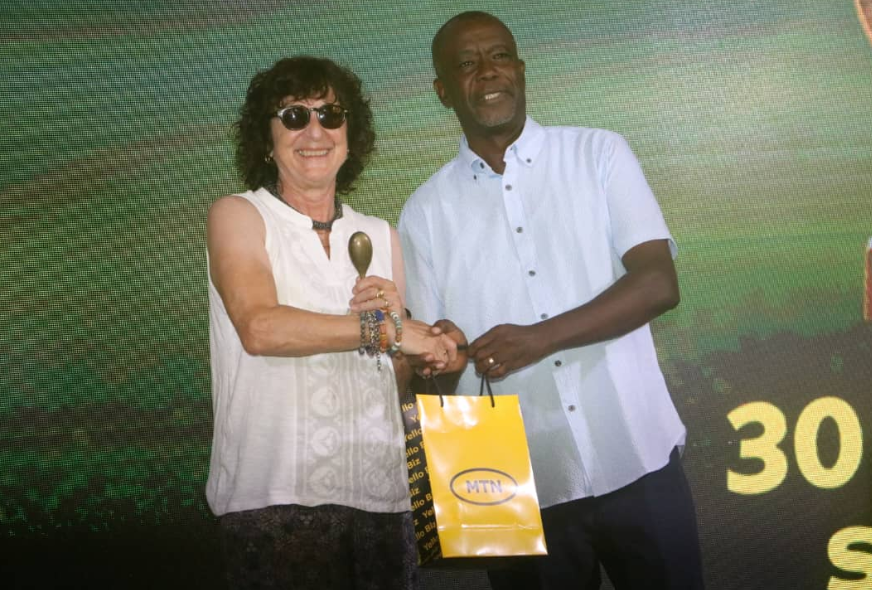
He drew a striking parallel between the game of golf and MTN Ghana’s three-decade journey, describing both as long games in which success depends less on one spectacular moment than on consistency, patience, judgment and the ability to recover from setbacks.
He said, golf had taught him a lesson that extended far beyond the fairways, thus, a round cannot be won on the first hole.

In golfing terms, he said, MTN Ghana had encountered its share of regulatory bunkers, competitive hazards and unexpected storms that had forced the company to pause, reassess and change its approach.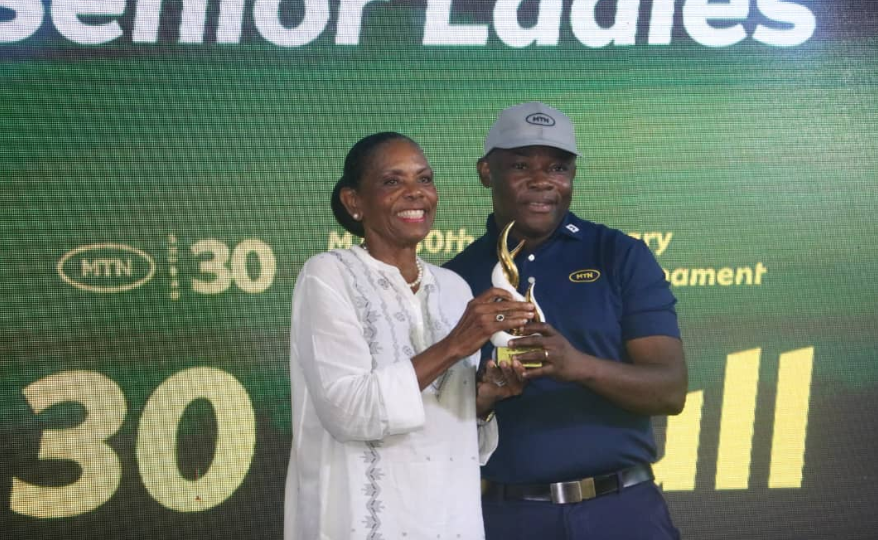
But those challenges, he suggested, were part of the journey rather than reasons to abandon it.
By Andrew Nortey
SKIP THE QUEUE, TAP THE NEWS
You can now read the Ghanaian Times and The Spectator newspapers from the comfort of your device via TimesNewsPlus.
Join our WhatsApp Channel: https://whatsapp.com/channel/0029VbBElzjInlqHhl1aTU27

 Entertainment1 week ago
Fiifi Coleman Productions adapt ‘I Told You So’ stage play into feature film
- News1 week ago
48 Engineer Regiment to be major sub-contractor on Accra-Kumasi Expressway, $2bn ready- Prez Mahama
- Entertainment6 days ago
Rhythms On Da Runway returns November 28 with 16th edition themed ‘Unbound’