News
Stay chaste and free from sexual abuse – Gender activis

To ensure that young girls stayed chaste and free from sexual abuse, the Upper West Regional Director of the Department of Gender, Mrs Charity Banye has asked them to take responsibility of their bodies and not allow themselves to be sexually abused by men.
“You are not a refuse dump, no one has the right to abuse you at this young age in the name of relationship or under the guise of sponsoring your education so you need to take responsibility of your body,” she advised.
Mrs Banye gave this advice during an inter-generational colloquium organised by Curious Minds. It was supported by the Ghana Broadcasting Corporation (GBC) – United Nations Children’s Fund Social and Behaviour Change (GBC-UNICEF SBC) Project.
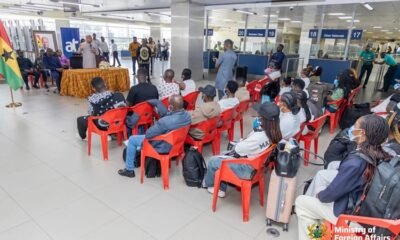
The meeting which brought together pupils from basic schools across the Wa Municipality focused on “Building a better Ghana: eliminating harmful practices for sustainable development” and sought to create a platform for dialogue on ending harmful practices such as child marriage and teenage pregnancy.
The Director stated that men who had carnal knowledge of girls because they were providing for them did not have good intentions for such girls and were only taking advantage of their vulnerability to abuse them.
“Sadly, most of the teenage pregnancy cases we have been recording recently involve boys impregnating their classmates and teachers having affair with their own pupils so we have to speak out if we are put under such circumstances,” she said.
According to the director, when the boys impregnate the girls they are unable to take care of them so they leave them to their fate to become a burden on their parents.
Mrs Banye appealed to the boys to protect the girls and not sleep with them and also encouraged the youngsters to focus on their education instead of engaging in unhealthy relationships and pre-marital affairs.
For his part, the Project Manager, Mr Kingsley Obeng Kyere called for deliberate allocation of resources to promote the rights and well-being of children in Ghana.
He explained that the resources should be used to support efforts aimed at protecting children from harmful practices such as early marriage, parental negligence of duty and other harmful societal practices that prevent children from discovering and reaching their full potentials in life.
Mr Kyerej, who is also a journalist said that the sustainable development goals and other such international declarations considered the well-being of children hence it had enshrined specific clauses to promote the rights of children.
He appealed to stakeholders in child welfare issues to work together to protect the rights of children.
From Lydia Darlington Fordjour, Wa

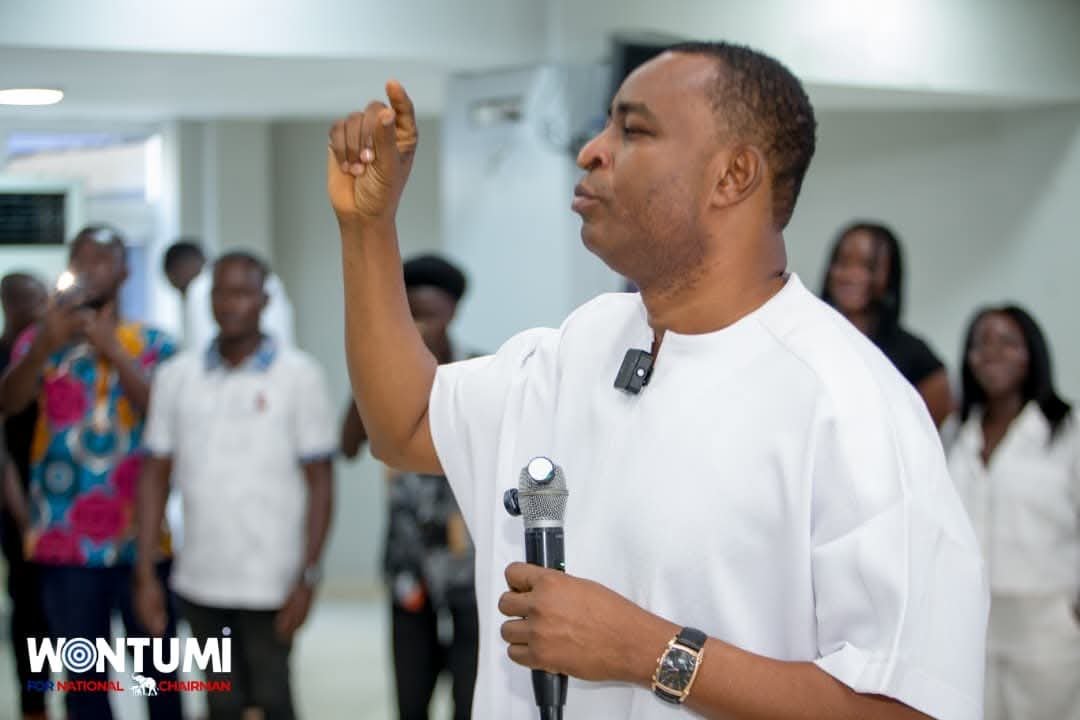
The state has closed its case in the Republic v Akonta Mining and two others.
The case was heard earlier today at the Accra Criminal Court, where state prosecutors and CID investigators from the Ghana Police Service closed the Republic’s case.
In all, the prosecution called three witnesses to prove its case, two former employees of Akonta Mining Company Limited and a detective from the Ghana Police Service.
According to an update on the case, the two former employees testified to Mr Bernard Antwi-Boasiako’s deep involvement in Akonta Mining Company’s alleged illegal mining activities in the Tano-Nimiri Forest Reserve.
The police detective tendered in evidence drone footage and other audio-visual materials and official communications in support of the testimonies of the two former Akonta Mining employees.
The accused persons, through cross-examination of the witnesses, sought to dissociate themselves from every mining activity in the Tano-Nimiri Forest Reserve.
At the close of the prosecution’s case, counsel for the accused persons asked the court to allow him to call the first prosecution witness back into the witness box for further cross-examination.
The court gave him up to Friday, October 30, to file a formal motion to recall the witnesses.
The case has been adjourned to November 4 for the motion to be heard.
By Edem Mensah-Tsotorme
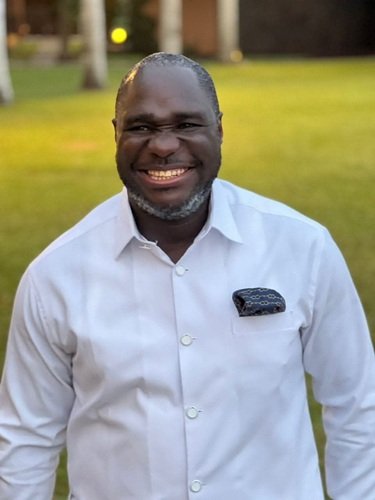
Dr Palgrave Boakye-Danquah, spokesperson to NPP Ashanti Regional Chairman Bernard Antwi Boasiako, popularly known as Chairman Wontumi, has called on the government and Parliament to undertake major reforms in Ghana’s prison system, including the construction of a dedicated prison hospital and the introduction of regulated conjugal visits.
In a press statement issued on Tuesday, October 27, 2026, Dr Boakye-Danquah shared Chairman Wontumi’s observations and recommendations following his remand on July 20, 2026.
According to the statement, Chairman Wontumi’s experience in prison has given him the opportunity to interact with prison officers and inmates and observe the challenges facing the Ghana Prisons Service.
The statement noted that the NPP chairman believes the correctional system must move beyond punishment to focus on rehabilitation, welfare and productivity.
One of his major concerns is the lack of dedicated, well-equipped prison hospitals, ambulances and standby generators in several prison facilities.
Dr Boakye-Danquah said Chairman Wontumi had raised concerns about the difficulties in providing medical care to seriously ill inmates, including those suffering from tuberculosis.
He is therefore calling for the construction of a modern prison hospital to serve facilities across the country. In the interim, he has proposed emergency arrangements with the 37 Military Hospital and the Police Hospital.
On the welfare of prison officers, Chairman Wontumi has urged the government to review their salaries, accommodation and conditions of service.
He has also called for proper classification of inmates, arguing that minor offenders should not be housed alongside armed robbery convicts and that persons facing trial for serious offences, including treason and terrorism, should be appropriately separated from other inmates.
The statement further highlighted concerns about the need for counselling and behavioural support for young inmates, particularly those serving sentences for defilement-related offences.
Chairman Wontumi has also called for a clear policy on the classification and management of LGBTQI+ inmates within the prison system.
On family relationships, he has proposed the creation of designated private areas where prisoners can receive visits from their spouses and children.
He believes regulated conjugal visits could help preserve marriages, reduce tension among inmates and support rehabilitation.
“The prisoner is the one in prison, not the children or spouse,” the statement noted, explaining his position on the need to protect family relationships during incarceration.
Chairman Wontumi has appealed to the Ministry of Food and Agriculture to support prison farms with the necessary equipment to improve food production.
According to the statement, the Ghana Prisons Service has access to vast lands and skilled labour but faces a shortage of agricultural equipment, with only one tractor reportedly available for farming and garbage-related activities.
He has further proposed greater collaboration between prison authorities and the justice sector, suggesting that regional prison commanders should be included in relevant discussions because of their knowledge of prison conditions and inmate rehabilitation.
On infrastructure, Chairman Wontumi has called on the government and private sector to invest in modern prison facilities and factories, arguing that the system has seen limited structural improvements over the years.
Appeal to Parliament
Dr Boakye-Danquah said Chairman Wontumi had made a special appeal to Parliament to lead efforts towards comprehensive prison reform.
He is urging the Speaker of Parliament to initiate discussions on prison conditions as a human rights and national development issue.
He has also called on the Majority and Minority caucuses to work together to pass a new Prison Reform Act and approve funding for a dedicated prison hospital, ambulance services, standby generators and agricultural equipment.
Additionally, he wants the Parliamentary Select Committees on Defence and Interior, Health, and Food and Agriculture to undertake working visits to prisons across the country to assess conditions firsthand.
According to the statement, Chairman Wontumi believes bipartisan cooperation between the Majority and Minority caucuses is necessary to secure the legal and financial reforms required to improve the prison system.
He has called for broader prison reforms across Africa, expressing hope that Ghana could lead the continent in improving correctional facilities.
Reflecting on his experience since July 20, Chairman Wontumi stated: “At this experience since July 20th till date, prison doesn’t reform as it should be. I pray that the entire Africa will learn from Ghana.”
The statement added that Chairman Wontumi remained in high spirits.
By: Jacob Aggrey