News
Sports must thrive in 2025


- /home/u249204778/domains/spectator.com.gh/public_html/wp-content/plugins/mvp-social-buttons/mvp-social-buttons.php on line 27
https://spectator.com.gh/wp-content/uploads/2025/01/A-scene-from-the-Black-Stars-versus-Angola-AFCON-qualifier-in-Ghana-1000x600.jpeg&description= Sports must thrive in 2025', 'pinterestShare', 'width=750,height=350'); return false;" title="Pin This Post">
- Share
- Tweet /home/u249204778/domains/spectator.com.gh/public_html/wp-content/plugins/mvp-social-buttons/mvp-social-buttons.php on line 72
https://spectator.com.gh/wp-content/uploads/2025/01/A-scene-from-the-Black-Stars-versus-Angola-AFCON-qualifier-in-Ghana-1000x600.jpeg&description= Sports must thrive in 2025', 'pinterestShare', 'width=750,height=350'); return false;" title="Pin This Post">
Failures on the sports front in 2024 could force fans to be apathetic in the New Year in order to avoid the disappointments they endured.
There were discontents all over as Ghana failed to make an impact at global events like the Paris Olympic Games, athletics championships, boxing championships and qualifiers and many others.
What may trigger some interest could be the FIFA World Cup 2026 qualifiers set to continue this year.
The FIFA World Cup has a strong appeal capable of turning apathy into a strong feeling and sensitivity to possibly bring the fans back to support the Black Stars bid to qualify.
But in doing so, the performances of the Black Stars have always come to hunt their followers and it remains one thing Coach Otto Addo and his men must resolve to earn the trust of Ghanaians.
The Black Stars occupy the second spot in Group I of the African qualifying for the World Cup behind Comoros on the same points but on inferior goal aggregate.
Against Chad, Central African Republic (CAR), Mali, Madagascar and Comoros, Ghana face a stern battle for the sole ticket allotted the group.
That would definitely not be an easy task but it is also not a challenge above the Stars. When the right players, those committed and dedicated to the Ghana course are selected, Ghana can make it.
The lenses would also be on other sports disciplines that held so much promise but failed to deliver.
Amateur boxing would be one that would attract a lot of attention after failing to excel at the various championships and qualifiers, resulting in the ‘no-show’ of the Black Bombers at the Paris Olympics Games.
Professional boxing, managed by the Ghana Boxing Authority (GBA) supervised a number of entertaining bouts with a number of boxers including John Laryea showing so much promise as world champions.
The GBA, however, was always in the spotlight with legal battles with its stakeholders over enforcement of its own rules.
The controversies with promotions and inadequate security at its fight nights have not made events safe for a lot more patrons although it attracted some new promoters in the year under review.
The year 2025 should offer its President, Abraham Kotey Neequaye, his board and major stakeholders the platform to end the constant fights, respect the rules and work together to produce new world champions and eventually ensure some sanity in the sport.
Athletics gave a good account of themselves but failed at the biggest stage – Olympic Games with the relay teams showing that they were yet to recover from their baton exchange nightmare.
Bawa Fuseini, Charles Osei Asibey, Philipina Frimpong and the other managers of athletics in Ghana must therefore, strive to take the spot a notch higher despite the challenges.
Aside the aforementioned disciplines, there are over 40 disciplines that clearly did their very best to make an impact but failed due to many challenges including finance. There were those who just added to the numbers.
But in the year 2025, every federation must aim to make a difference on the sports scene for the sector to thrive.






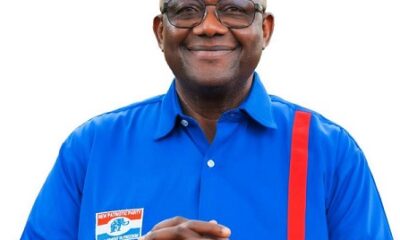
The Director of Legal Affairs of the New Patriotic Party (NPP), Gary Nimako Marfo, has questioned who will bear the cost of conducting presidential and parliamentary primaries following the Supreme Court’s ruling on the party’s delegate system.
Speaking to journalists, Mr. Nimako Marfo said he would not immediately comment on the ruling, adding that he wanted to wait for the full details before sharing his views.
“I don’t want to comment on it now. Let’s wait,” he said.
When asked about the Supreme Court’s decision that all members in good standing should vote in party elections, he shifted attention to the financial implications of implementing the ruling.
According to him, allowing all members in good standing to vote would increase the cost of organising internal party elections.
He questioned who would pay for the expanded electoral process.
“Who is going to pay for the cost of the elections?” he asked.
When a journalist suggested that political parties would bear the cost, Mr. Nimako Marfo replied, “Let’s wait and see.”
The comments come after the Supreme Court ruled that political parties should allow all members in good standing to vote in their internal elections, a decision that is expected to expand participation but also increase the financial and logistical demands of organising presidential and parliamentary primaries.
By: Jacob Aggrey
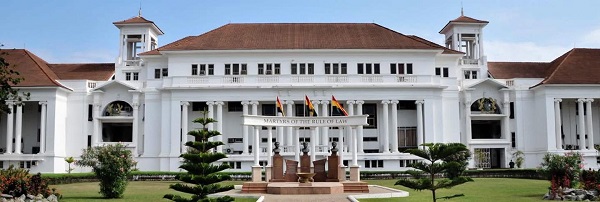
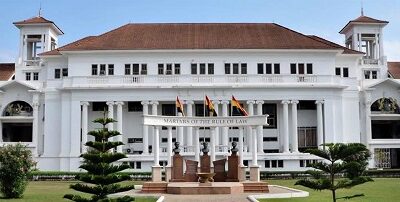
The Supreme Court of Ghana has declared the delegate system used by political parties to elect presidential and parliamentary candidates unconstitutional.
In a 5-2 majority decision delivered, the Court ruled that the long-standing system violates democratic principles and ordered all political parties to ensure every registered, card-bearing member participates in presidential and parliamentary primaries.
The ruling brings to an end decades of internal party elections conducted by a limited number of delegates.
The suit was filed by former Minister for Environment, Science, Technology and Innovation, Professor Kwabena Frimpong-Boateng; veteran politician Dr. Nyaho Nyaho-Tamakloe; and former Minister for Lands and Forestry, Dr. Christine Amoako-Nuamah.
The plaintiffs argued that the delegate system created inequality among party members by granting voting rights to a privileged minority while excluding ordinary members in good standing.
They told the Court that restricting voting rights to delegates was inconsistent with the democratic principles enshrined in the 1992 Constitution.
The Attorney-General’s Department supported the suit and urged the Court to adopt a “one member, one vote” approach.
In its submission, the State argued that political parties perform an important public function in Ghana’s democratic framework and that their internal electoral processes must reflect constitutional values of equality, participation and universal suffrage.
The Attorney-General further submitted that expanding voting rights to all registered members would strengthen accountability and deepen internal democracy within political parties.
The judgment means that going forward, presidential and parliamentary candidates will be selected by all registered members of a political party, instead of by delegates alone.
Political parties are expected to review their constitutions and structures to comply with the Court’s directive ahead of the 2028 general elections.
By Edem Mensah-Tsotorme