News
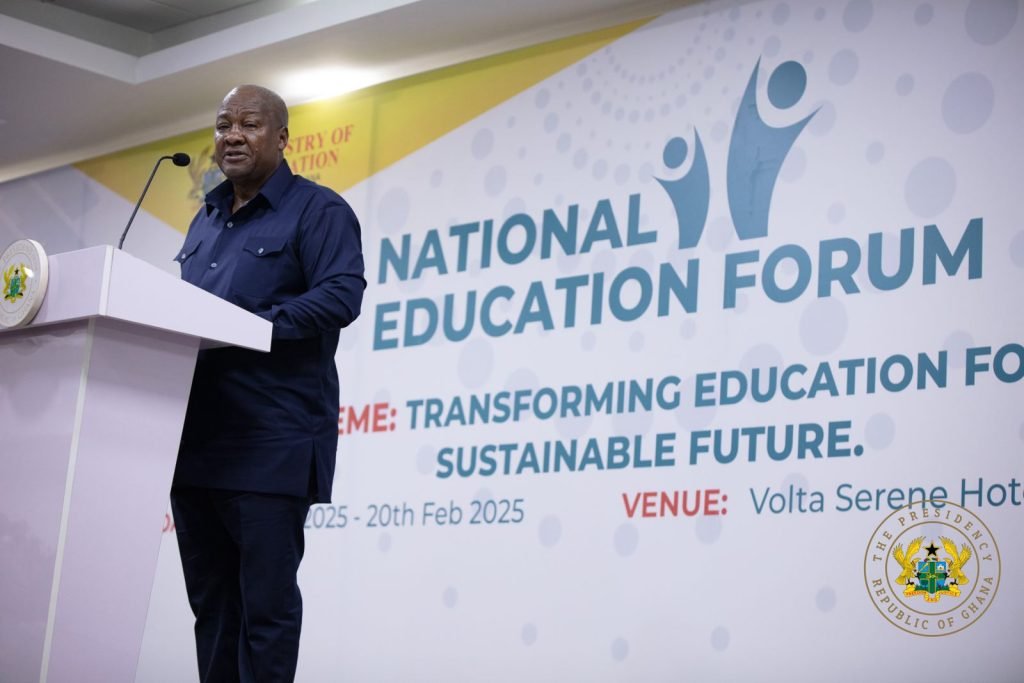
SPEECH: President JD Mahama launches National Education Consultative Forums

- /home/u249204778/domains/spectator.com.gh/public_html/wp-content/plugins/mvp-social-buttons/mvp-social-buttons.php on line 27
https://spectator.com.gh/wp-content/uploads/2025/02/ed1-1024x683-1-1000x600.jpeg&description=SPEECH: President JD Mahama launches National Education Consultative Forums', 'pinterestShare', 'width=750,height=350'); return false;" title="Pin This Post">
- Share
- Tweet /home/u249204778/domains/spectator.com.gh/public_html/wp-content/plugins/mvp-social-buttons/mvp-social-buttons.php on line 72
https://spectator.com.gh/wp-content/uploads/2025/02/ed1-1024x683-1-1000x600.jpeg&description=SPEECH: President JD Mahama launches National Education Consultative Forums', 'pinterestShare', 'width=750,height=350'); return false;" title="Pin This Post">
Let me express my sincerest apologies on behalf of the planning committee of the forum to our stakeholders of the faith-based organisations for the unpardonable omission committed in your delayed invitation to this forum.
Although the omission was quickly remedied, you still deserve an unqualified apology for this oversight. Since you are the purveyors of God’s mercy on earth, I’m sure you are forgiving us.
Thank you very much. We know you are important stakeholders because you own some of the schools, so this educational forum is important to see how we can bring everybody together.
So today, we begin an important journey of consensus-building in an important sector: education. For many years, we’ve watched education standards decline significantly. We have, individually and collectively, expressed our views on how we believe the education sector’s problems can be addressed.
The Presidency, Republic of Ghana
Press Releases
SPEECH: President JD Mahama launches National Education Consultative Forums
18 February 2025
Let me express my sincerest apologies on behalf of the planning committee of the forum to our stakeholders of the faith-based organisations for the unpardonable omission committed in your delayed invitation to this forum.
Although the omission was quickly remedied, you still deserve an unqualified apology for this oversight. Since you are the purveyors of God’s mercy on earth, I’m sure you are forgiving us.
Thank you very much. We know you are important stakeholders because you own some of the schools, so this educational forum is important to see how we can bring everybody together.
So today, we begin an important journey of consensus-building in an important sector: education. For many years, we’ve watched education standards decline significantly. We have, individually and collectively, expressed our views on how we believe the education sector’s problems can be addressed.
What we have lacked, however, is a unified platform on which the various shades of opinion and perspectives can be combined and distilled to yield the most optimal outcomes for our children.
In the years before my election, I indicated my desire to convene a national dialogue on the best approach to giving Ghanaian children a shot at a better life through quality and relevant education.
I committed to ensuring that all concerned about education in Ghana have an opportunity to contribute meaningfully to shaping the policies and programs that will deliver the kind of education we all want. I’m gratified that this has become a reality. I stand before you today with great pleasure and a deep sense of purpose to officially open the National Education Consultative Forum.
This moment marks a significant step in fulfilling one of the commitments of our 120-day social contract with the good people of Ghana, a commitment to build consensus on the urgent and necessary reforms needed to reset our education sector.
Education is not just a tool for personal development. It is the bedrock upon which the progress and prosperity of any nation rests. It defines the present and determines the future of our country.
Education must remain a tool for empowerment, equality, and transformation in Ghana. It is also an important instrument for social mobility. Education must inspire hope and deliver opportunity for all, whether born in Accra or the most remote part of our nation.
We recognise that the education system we inherited has not kept pace with the needs of 21st-century society and the Fourth Industrial Revolution. As the world evolves, so must our education system. What worked in the past no longer suffices for the challenges and opportunities of today and tomorrow. This realisation has brought us together today. We are united in our belief that education reform is not an option but a necessity.
Ladies and gentlemen, the National Consultative Forum on Education is a platform for bringing all stakeholders together.
Governments, policymakers, teachers, students, parents, traditional leaders, religious leaders, political party representatives, development partners, and all members of civil society.
We are here because we recognise that reimagining Ghana’s education system is not a task that any single entity can undertake alone. Education reform is a shared responsibility, a collective journey that requires all voices, perspectives, and hands on deck.
This consultative process, I believe, will bring out the best solutions born out of dialogue, partnership, and mutual understanding to deal with our current and future challenges.
Our goal today is to engage in an honest and productive discussion about the current state of education in Ghana, to diagnose the challenges, and to craft a bold and actionable roadmap for reform.
Our educational system’s current challenges require strategic priorities, fresh solutions derived from objective, nonpartisan issue analysis, and a renewed sense of urgency. The moment to act together is now, and we must use this forum to answer critical questions such as: How do we ensure that every child in Ghana receives a quality education regardless of where they are born or live?
How do we equip our schools and teachers with the necessary tools and resources to provide a quality education? How do we close the gaps in foundational learning and prepare our students for further studies, the world of work, and future opportunities?
How do we ensure innovative pedagogies, inclusive, engaging, and adaptive pedagogies framed around social-emotional learning and universal design for learning, which are central to our teachers’ classroom practice?
How do we develop an assessment system that promotes critical thinking and problem-solving rather than just regurgitating what was learned? How do we restore school leaders’ autonomy against mutually agreed-upon performance standards? How do we remove excessive political interference in the governance of our education system?
How can we ensure adequate and sustainable financing for education and achieve innovative infrastructure provision at optimal cost?
How do we provide our students with the technical and vocational skills to enter the world of work? Where do we place moral education, patriotism, and family values in our curriculum?
How do we increase the role of faith-based organisations in managing their schools? We expect you to focus on these and many more questions and provide us with answers in the roadmap.
Ladies and gentlemen, the big question at the centre of the issues associated with the aforementioned questions is how to ensure the provision of a balanced education for Ghana’s children and young people, an education that transforms them into globally competitive citizens.
An education system that adequately prepares them and nurtures them as Ghanaians with uncompromising values and character qualities of honesty, creativity, and responsible citizenship, as well as 21st-century problem-solving and critical thinking skills.
An education system that ensures that our leaders, by age 10, are well-grounded and proficient in language literacy, mathematics literacy, scientific literacy, and cultural literacy as the foundation for their future learning.
As we all, as stakeholders, consider educational issues across basic, secondary, and tertiary education, we must remember that quality education not only focuses on developing pupils’ intellects but also ensures holistic personality development.
It develops his heart, mind, and hand for the benefit of himself and the larger society. The mind promotes critical thinking and creativity necessary for productive decision-making.
The heart fosters the moral, emotional, and social orientation needed to strengthen societal and family values, enhance social cohesion, and promote mutual respect.
The hand develops in learners skills and practical competencies necessary for building and strengthening our service and productive sectors of our economy. For this reason, I agree with Ellen G. White, the American author, when she says, and I quote, “Our education takes too narrow and too low a range.”
There is a need for a broader scope and a higher aim. True education means more than just pursuing a certain course of study. It means more than preparing for the life that is now. It has to do with the whole being and the whole period of existence possible to man. It means it refers to lifelong learning. It is the harmonious development of the physical and mental.
It prepares the student for the joy of service in this world. Unquote. Education must prepare our students for service.
That is our task. Finding answers to the questions above and others will inform the discourses of this forum. It must be our collective responsibility to make recommendations that are far-reaching, transformative, and necessary for developing the global Ghanaian.
This is a call to action for every stakeholder present today, every Ghanaian across the country, and every Ghanaian in the diaspora.
Their future depends on our decisions and actions today. I’m happy that some of our members, our citizens from the diaspora, like Professor Champon, have travelled to join us at this forum.
Also, Professor Benega is all the way from Australia. You are all welcome. As a government, we are fully committed to this process.
The outcomes of this conference assure you that your recommendations will not gather dust on a shelf. They will not become symbolic recommendations but form the foundation of a comprehensive reform agenda to build an inclusive, equitable, and transformative education system for Ghana and all Ghanaians.
Therefore, we will prioritise the actionable reforms proposed here, using clear timelines and measurable outcomes to guide our actions.
To build trust and transparency, the public will receive regular updates on progress. We will also increase the allocation of resources to critical areas, including foundational learning, with a focus on the four literacies I mentioned: language, mathematics, science, and culture.
Teacher education and capacity development would also receive attention. Infrastructure development and education technology were also included. There was a deepened partnership with parents, traditional authorities, and local communities. I’m happy that the Honorable Education Minister has already announced that PTAs can engage with schools.
The children at the schools are properly managed. PTAs can start to do their work by engaging with the schools to deepen their management. We should deepen partnerships with parents, traditional authorities, and local communities to support every child’s learning journey through the practice of learning teams.
To ensure that school leaders have the autonomy to perform their duties against a national school leader standard, we shall work with stakeholders, including the Conference of Heads of Assisted Secondary Schools and other teachers’ unions, to develop.
We aim to prioritise research and its evidence in decision-making. Additionally, we will continue the teacher transformation initiatives that began in 2014 under the T-TEL project, ensuring that this transformation is implemented across all sectors of the education system, including TVET.
Ladies and gentlemen, as we embark on this crucial dialogue, let us not lose sight of the bigger picture. The task before us is not merely about fixing what is broken but about constructing an education system that is fit for purpose in today’s dynamic world.
Let us envision an education system where every child, regardless of their background, has the opportunity to achieve their full potential.
Let us envision an education system where teachers are celebrated, supported, and empowered to inspire the next generation.
Let us envision an education system in which schools are the centres of innovation and learning that prepare students for not just exams but lifelong learning.
This vision must drive our discussions and decisions today and tomorrow during this forum.
Distinguished ladies and gentlemen, as I officially open this National Consultative Forum on Education, I urge each of you to approach this task with objectivity, courage, creativity, and an unwavering commitment to our nation’s future.
Let us be bold in our ideas, collaborative in our approach, and relentless in our pursuit of excellence.
Together, we can build an education system that resonates with ordinary Ghanaians’ aspirations and prepares our nation for the challenges and opportunities of the 21st century.
The future of this country is in our hands. Let us seize this moment and work together to create a legacy of hope, opportunity, and transformation for future generations. One resolution at a time, one transformation at a time, Ghana will win in developing this country’s young people for service.
Thank you.

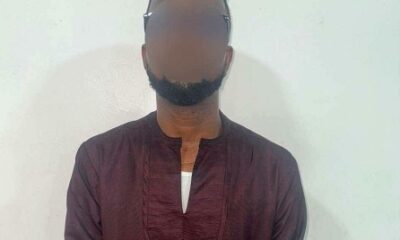



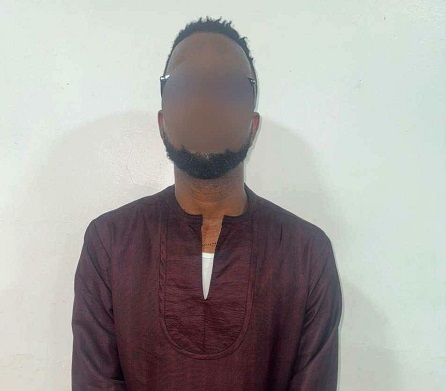
The Ghana Police Service has arrested a man suspected of running a romance scam that targeted women with false marriage promises, blackmail, and the non-consensual sharing of intimate images.
The suspect, Nana Yaw Bonsu Kwarteng, was arraigned alongside Sally Akosua Amoasah before the *
Accra Circuit Court 1 on charges of conspiracy to commit crime, defrauding by false pretences, and non-consensual sharing of intimate images.
According to preliminary investigations, Kwarteng posed as a *pastor conducting online church services on Instagram. He allegedly told women that “God had revealed” they were his future wives.
To gain their trust, police say he went as far as meeting their families and presenting them with promise rings.
Investigators allege the suspect then obtained intimate images of some victims and used them to blackmail them for money.
He is also accused of introducing victims to a fake car tyre business. Under the pretext of shipping and clearing containers of tyres, he allegedly collected thousands of dollars from them before becoming unreachable.
Police further allege that Kwarteng shared the intimate images of some victims with his wife, Sally Akosua Amoasah, who is also accused of threatening the victims.
Seven victims have so far reported the matter to the Police. Investigations indicate the offences date back to 2021.
The court remanded Nana Yaw Bonsu Kwarteng into Police custody to reappear on August 6, 2026. Sally Akosua Amoasah was granted bail.
The Ghana Police Service says it continues to receive complaints from other possible victims.
The Service is urging anyone who may have had similar encounters with the suspect to report to the nearest Police station to assist with ongoing investigations.
By Edem Mensah-Tsotorme
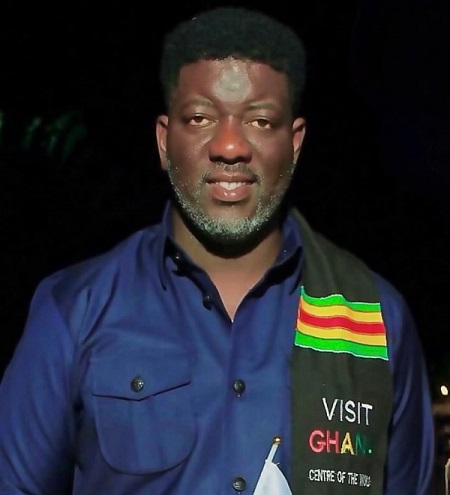
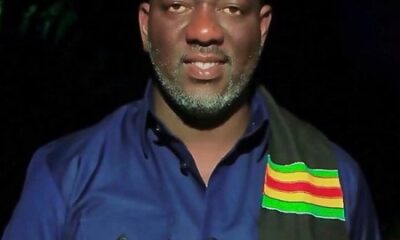
Ghana’s tourism industry is in mourning following the sudden death of Prince Anthony Bart-Appiah, a pioneering figure credited with helping to reconnect the African diaspora to the continent.
Prince Anthony passed away in the early hours of Saturday, July 26, 2026, at his private residence in Spintex, Accra.
He was instrumental in the development and promotion of “The Year of Return,” the flagship tourism campaign that invited members of the African diaspora to return to Ghana in 2019.
The initiative is widely regarded as a turning point that boosted Ghana’s tourism numbers and strengthened cultural ties with Black communities across the world.
Beyond his work with the GTA, Prince Anthony was the Chief Exexutive Officer (CEO) of Bridgezone, an agency dedicated to showcasing Africa to Western audiences and fostering cultural and business connections between the continent and the diaspora.
Colleagues describe him as passionate, strategic, and committed to telling authentic African stories that drive tourism, investment, and pride.
Widely known as Prince Anthony, he served as a Board Member of the Ghana Tourism Authority from 2025 to date.
A former British Army officer and a royal of the Akwamu clan, he brought discipline, vision, and a deep sense of heritage to every role he held
Prince Anthony was also a proud father to two teenagers, whom he deeply cherished.
In a statement, the *Ghana Tourism Authority extended its heartfelt condolences to the grieving family, friends, and all sympathizers.
“The tourism industry has lost a pioneering figure and a vital link to the diasporan community,” the statement read.
The statement further added that “We pray for strength for the family during this difficult time.”
Tributes have since poured in from tourism stakeholders, creatives, and diasporan groups who say Prince Anthony’s legacy will continue to shape how the world sees and experiences Ghana.
By Edem Mensah-Tsotorme