Hot!
Small-scale miners schooled on health hazards of mining with mercury

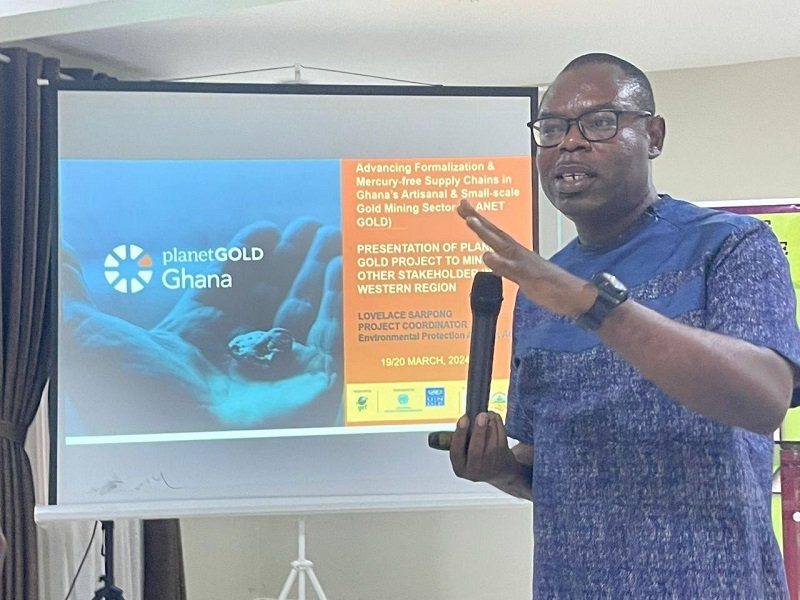
Mr Lovelace Sarpong (right) addressing the participants
Some Artisanal and Small-Scale Miners in the Ashanti and Central regions have been sensitised on the potential health dangers humans are exposed to with the use of mercury in gold processing.
The sensitisation which was organised by PlanetGOLD Ghana project was to raise awareness about the negative impacts on the use of mercury in mining activities.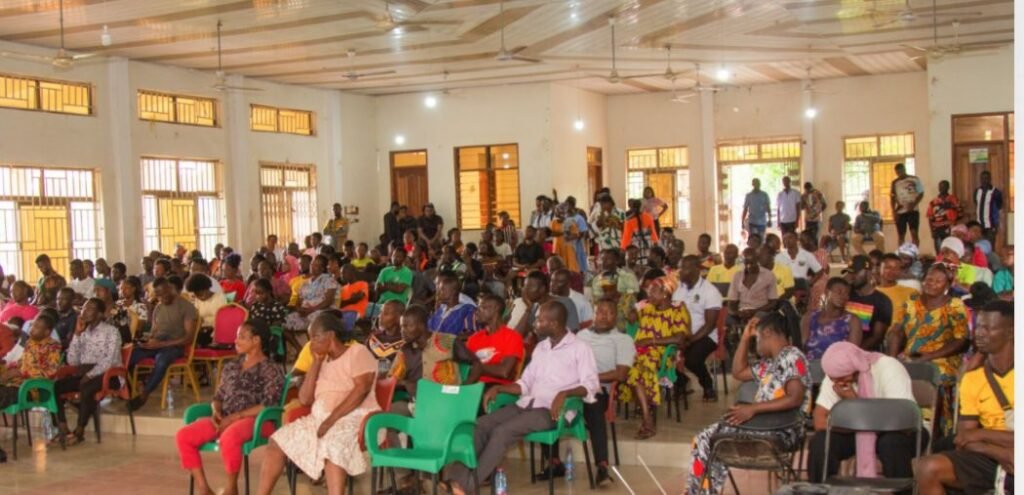
According to the PlanetGOLD Ghana Project Coordinator, Mr Lovelace Sarpong, the use of mercury in artisanal small-scale mining pose health challenges that affects the nervous, digestive and immune systems, lungs and kidneys; and may be fatal.
Some Metropolitan, Municipal, and District Assemblies (MMDAs) that benefited from the exercise were Amansie Central, Asante Akim North, Amansie South, Amansie West, Bekwai, and Adansi North in the Ashanti Region, and Upper Denkyira East (Dunkwa-on-Offin) and Upper Denkyira West (Diaso) in the Central Region.
Additionally, he said inorganic salts of mercury were corrosive to the skin, eyes and gastrointestinal tract, and may induce kidney toxicity if ingested.
He stated that the PlanetGOLD Project has conducted several initiatives to raise awareness on reducing mercury exposure among artisanal and small-scale gold mining actors in the country.
It was to promote mercury-free mining practices in line with Ghana’s obligations under the Minamata Convention on Mercury, support the formalisation of the ASGM sector while advocating the adoption of the CRAFT Code and responsible supply chains, and raise awareness on the availability of mercury-free alternatives.
The Environmental Protection Agency (EPA) Area Head for Konongo, Mr Dawood Abbas, underscored the importance of government’s environmental regulations and EPA’s role in ensuring compliance within the ASGM sector.
He encouraged miners to prioritise environmental stewardship to gain community trust and secure a Social License to Operate (SLO) and reaffirmed the Agency’s commitment to enforce its commitments under the Minamata Convention.
BY Cecilia Lagba Yada






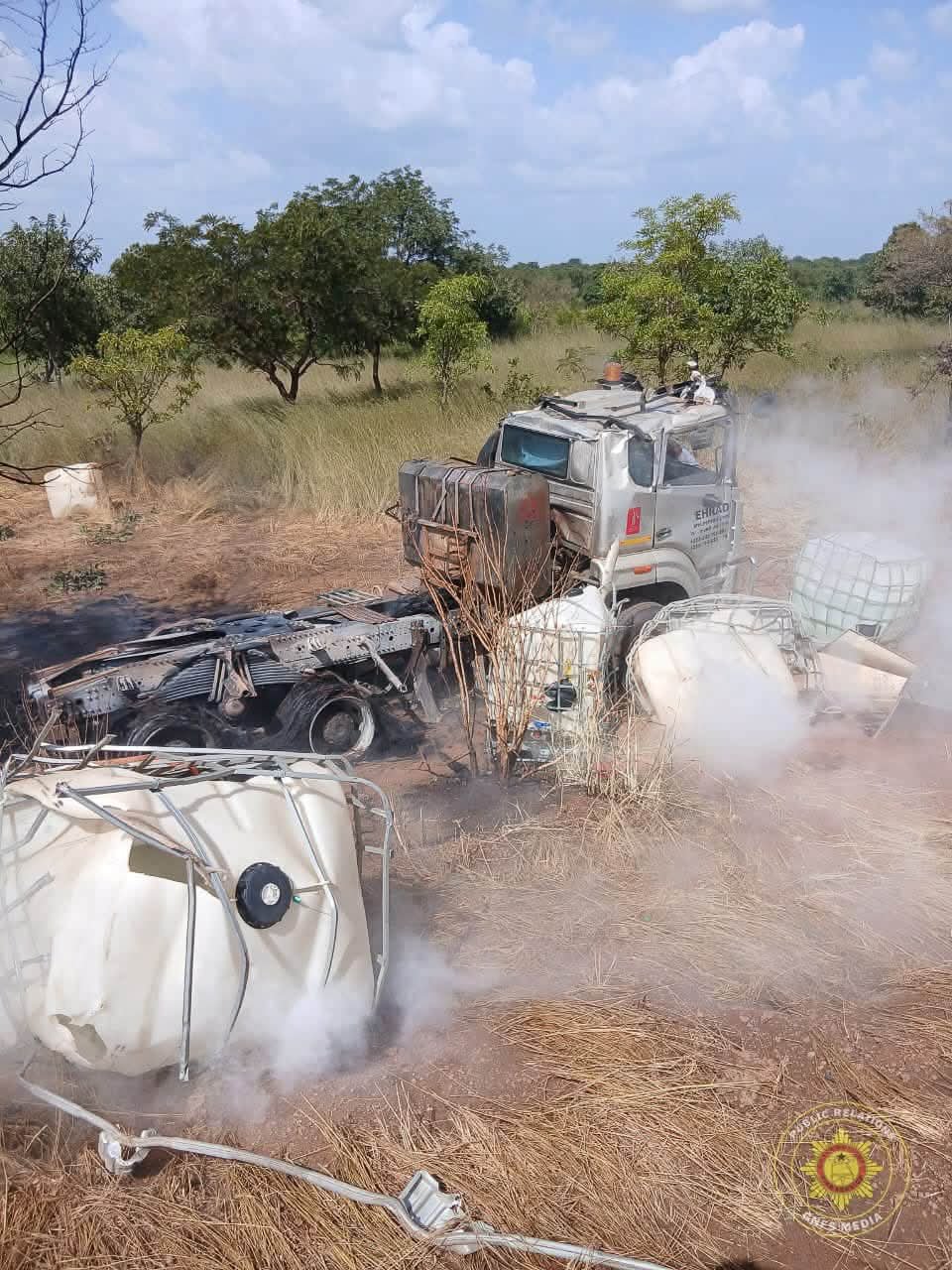
Firefighters from the Upper West Regional Command have responded to a vehicular incident involving a long vehicle carrying 35 Intermediate Bulk Containers (IBC totes) reportedly containing hydrogen peroxide at Goriyiri in the Nadowli-Kaleo District.
The five-member crew, led by ASTNO Balagee, reported to the scene where a fire and an explosion had reportedly occurred.
The firefighters assessed the scene, identified the chemical hazards and implemented appropriate response measures, bringing the situation under control.
The driver reportedly sustained severe chemical burns and was transported to the hospital for treatment.
By Edem Mensah-Tsotorme
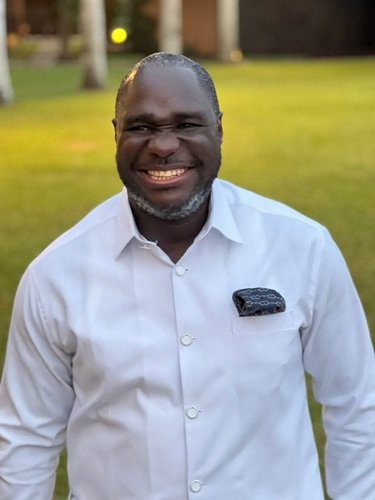
Dr Palgrave Boakye-Danquah, spokesperson to NPP Ashanti Regional Chairman Bernard Antwi Boasiako, popularly known as Chairman Wontumi, has called on the government and Parliament to undertake major reforms in Ghana’s prison system, including the construction of a dedicated prison hospital and the introduction of regulated conjugal visits.
In a press statement issued on Tuesday, October 27, 2026, Dr Boakye-Danquah shared Chairman Wontumi’s observations and recommendations following his remand on July 20, 2026.
According to the statement, Chairman Wontumi’s experience in prison has given him the opportunity to interact with prison officers and inmates and observe the challenges facing the Ghana Prisons Service.
The statement noted that the NPP chairman believes the correctional system must move beyond punishment to focus on rehabilitation, welfare and productivity.
One of his major concerns is the lack of dedicated, well-equipped prison hospitals, ambulances and standby generators in several prison facilities.
Dr Boakye-Danquah said Chairman Wontumi had raised concerns about the difficulties in providing medical care to seriously ill inmates, including those suffering from tuberculosis.
He is therefore calling for the construction of a modern prison hospital to serve facilities across the country. In the interim, he has proposed emergency arrangements with the 37 Military Hospital and the Police Hospital.
On the welfare of prison officers, Chairman Wontumi has urged the government to review their salaries, accommodation and conditions of service.
He has also called for proper classification of inmates, arguing that minor offenders should not be housed alongside armed robbery convicts and that persons facing trial for serious offences, including treason and terrorism, should be appropriately separated from other inmates.
The statement further highlighted concerns about the need for counselling and behavioural support for young inmates, particularly those serving sentences for defilement-related offences.
Chairman Wontumi has also called for a clear policy on the classification and management of LGBTQI+ inmates within the prison system.
On family relationships, he has proposed the creation of designated private areas where prisoners can receive visits from their spouses and children.
He believes regulated conjugal visits could help preserve marriages, reduce tension among inmates and support rehabilitation.
“The prisoner is the one in prison, not the children or spouse,” the statement noted, explaining his position on the need to protect family relationships during incarceration.
Chairman Wontumi has appealed to the Ministry of Food and Agriculture to support prison farms with the necessary equipment to improve food production.
According to the statement, the Ghana Prisons Service has access to vast lands and skilled labour but faces a shortage of agricultural equipment, with only one tractor reportedly available for farming and garbage-related activities.
He has further proposed greater collaboration between prison authorities and the justice sector, suggesting that regional prison commanders should be included in relevant discussions because of their knowledge of prison conditions and inmate rehabilitation.
On infrastructure, Chairman Wontumi has called on the government and private sector to invest in modern prison facilities and factories, arguing that the system has seen limited structural improvements over the years.
Appeal to Parliament
Dr Boakye-Danquah said Chairman Wontumi had made a special appeal to Parliament to lead efforts towards comprehensive prison reform.
He is urging the Speaker of Parliament to initiate discussions on prison conditions as a human rights and national development issue.
He has also called on the Majority and Minority caucuses to work together to pass a new Prison Reform Act and approve funding for a dedicated prison hospital, ambulance services, standby generators and agricultural equipment.
Additionally, he wants the Parliamentary Select Committees on Defence and Interior, Health, and Food and Agriculture to undertake working visits to prisons across the country to assess conditions firsthand.
According to the statement, Chairman Wontumi believes bipartisan cooperation between the Majority and Minority caucuses is necessary to secure the legal and financial reforms required to improve the prison system.
He has called for broader prison reforms across Africa, expressing hope that Ghana could lead the continent in improving correctional facilities.
Reflecting on his experience since July 20, Chairman Wontumi stated: “At this experience since July 20th till date, prison doesn’t reform as it should be. I pray that the entire Africa will learn from Ghana.”
The statement added that Chairman Wontumi remained in high spirits.
By: Jacob Aggrey