Sports
Pushing for greater visibility for Ghana football

- /home/u249204778/domains/spectator.com.gh/public_html/wp-content/plugins/mvp-social-buttons/mvp-social-buttons.php on line 27
https://spectator.com.gh/wp-content/uploads/2024/07/New-Ghana-Premier-League-champions-Samartex-1.jpg&description=Pushing for greater visibility for Ghana football', 'pinterestShare', 'width=750,height=350'); return false;" title="Pin This Post">
- Share
- Tweet /home/u249204778/domains/spectator.com.gh/public_html/wp-content/plugins/mvp-social-buttons/mvp-social-buttons.php on line 72
https://spectator.com.gh/wp-content/uploads/2024/07/New-Ghana-Premier-League-champions-Samartex-1.jpg&description=Pushing for greater visibility for Ghana football', 'pinterestShare', 'width=750,height=350'); return false;" title="Pin This Post">
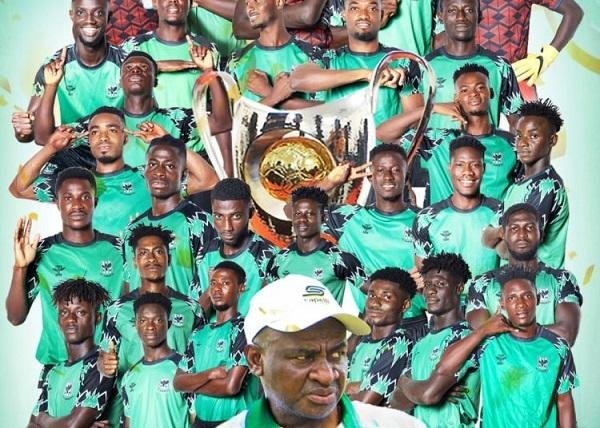
New Ghana Premier League champions, Samartex
Football is more than just a sport.
In Ghana, the love and passion for football is undeniable. Without doubt, it is the most prominent sport in the country. Football development is crucial for the nation’s progress because it has the capacity to boosts the various local economies.
It is for this reason that institutions in society, especially the media must play active roles in its development and promotion in Ghana.
In the early days of Ghanaian football, newspapers such as the Gold Coast Gazette, Commercial Intelligencer, and The Accra Herald extensively covered local matches and players, and many others to boost the players’ profiles.
As football’s popularity surged, coverage expanded with papers like the Daily Graphic, The Ghanaian Times, and Ghana Sports featuring match reports, player profiles, and analyses, which provided a platform for local talent to shine.
However, examining the current state of local football in Ghana’s media landscape reveals a decline in coverage. This underrepresentation negatively impacts the already struggling local football in Ghana.
First and foremost, the lack of media attention discourages young talents because it would be difficult for them to be noticed by coaches and agents.
In an interview with Joshua, a division three player at Play like a Pro Academy, revealed that playing football in Ghana was not easy and local players face several obstacles.
He said, “One of the biggest challenges is that we don’t get recognised. We play well, but no one knows about it.”
Also, Giovanni Frank Gyan, a 25-year old professional footballer who currently plays for the Future Soccer Academy, underscored the importance of media coverage in marketing their skills.
He said it was unfortunate the Ghanaian media was focused on promoting foreign football stars instead of the local talents, explaining that while they look up to foreign players as role models, the local media should focus more on promoting young and upcoming footballers like himself.
The impact extends beyond players, affecting numerous local coaches as well. These coaches, who are key stakeholders in the industry and play a crucial role in nurturing talent for the sport’s development, often become discouraged from continuing their careers because their efforts are insufficiently recognised by the Ghanaian media.
The current state of local football coverage calls for immediate and concerted action.
‘Professor’ Enock Kwesi Wallace, Head of Sports at Adom FM and a seasoned Sports Journalist with Asempa FM, shared this view on the challenges facing local football and the measures necessary to promote its reportage in Ghana.
According to him, the media’s selection of football stories is guided by journalism ethics and values, prominence, proximity, and national issues.
Prof. Wallace further emphasised that the media is a commercial entity that attracts sponsors, and added that it is not their responsibility to seek sponsors for local sports men and women.
Instead, he suggested that the Ghana Football Association (GFA) and local teams should make themselves more accessible; utilise various stakeholders; advertise; and implement e-ticketing to promote themselves.
To increase visibility and accessibility, Mr Wallace further proposed partnership with churches, as seen in Nigeria and Congo Brazzaville, where football clubs were established by churches. This innovative approach, he said, can bridge the gap between local sports and the community.
In essence, promoting local football requires a collective effort from all stakeholders; the media, GFA and sponsors. These stakeholders must work together to give local football teams the recognition they deserve.
In conclusion, the underrepresentation of local football in the media poses a significant national concern that demands urgent action. Therefore, the media must assume the essential responsibility of delivering regular, thorough, and captivating football coverage. It is crucial for all stakeholders to unite in backing our local football talents, ensuring that the sport flourishes for future generations.
*The author is a student of the University of Media, Arts and Communication- Institute of Journalism (UniMAC-IJ) Faculty of Journalism and Media Studies.
Email: a.augustina020@gmail.com
By Augustina Dede Anang


In a resolve to build clearer pathway for athletes, the President of the Ghana Taekwondo Federation (GTF), Mr Frederick Lartey Otu, has indicated the new executive’s commitment to strengthen collaboration with major stakeholders in the development and promotion of the sport.
According to him, it would be difficult to achieve its set targets set for the new elected term without a good working relations with such collaborators.
Mr Otu said this when he addressed participants at the closing ceremony of the 16th edition of the Korean Ambassador’s Cup Taekwondo Championship held last Saturday at the Borteyman Sports Complex.
The event saw the Greater Accra Region’s dominance as they amassed a total of 26 medals consisting of 10 gold, eight silver and eight bronze medals.
The Upper East Region followed in second position with a gold, silver and six bronze medals and Western Region in third after annexing a gold and silver medals.
According to him, the new executive will continue to strengthen collaboration with the Ministry of Sports and Recreation (MoSR), National Sports Authority (NSA), Ghana Olympic Committee (GOC), the Korean Embassy in Accra, corporate organisations as well as educational institutions and Regional Associations.
“Our recent engagements with key stakeholders have reinforced our belief that there is a willingness to support Ghana Taekwondo when we present clear programmes, demonstrate accountability and work collaboratively,” he stated.
Consequently, he assured of the executive board’s commitment to good governance, transparency, accountability, teamwork and respect for all stakeholders.
“We’ll listen to our regions, clubs, coaches, athletes, officials and members of the Taekwondo family. We’ll continue to improve our administrative systems, documentation, communication, financial planning and programme coordination,” he added.
Mr Otu noted that the board was committed to building a sustainable Taekwondo development system that produces athletes, coaches, referees and administrators capable of representing Ghana with pride.
He said starting this month, the GTF will roll out its first major initiative – the Regional Taekwondo Awareness Campaign, to be launched in the Ashanti Region.
The campaign is designed to take Taekwondo directly to the schools and communities, particularly areas where sporting opportunities are limited.
“Our immediate target is to begin with at least five deprived regions — Northern Region, Upper West Region, Bono Region, Central Region and Ashanti Region — and identify young people with the potential to become future Taekwondo athletes,” he emphasised.
Mr Otu expressed gratitude to the Korean embassy for its continuous support for the championship which he said had given Ghanaian athletes the opportunity to compete, gain valuable experience, test themselves against quality opposition and develop the confidence necessary to progress to higher levels of competition.
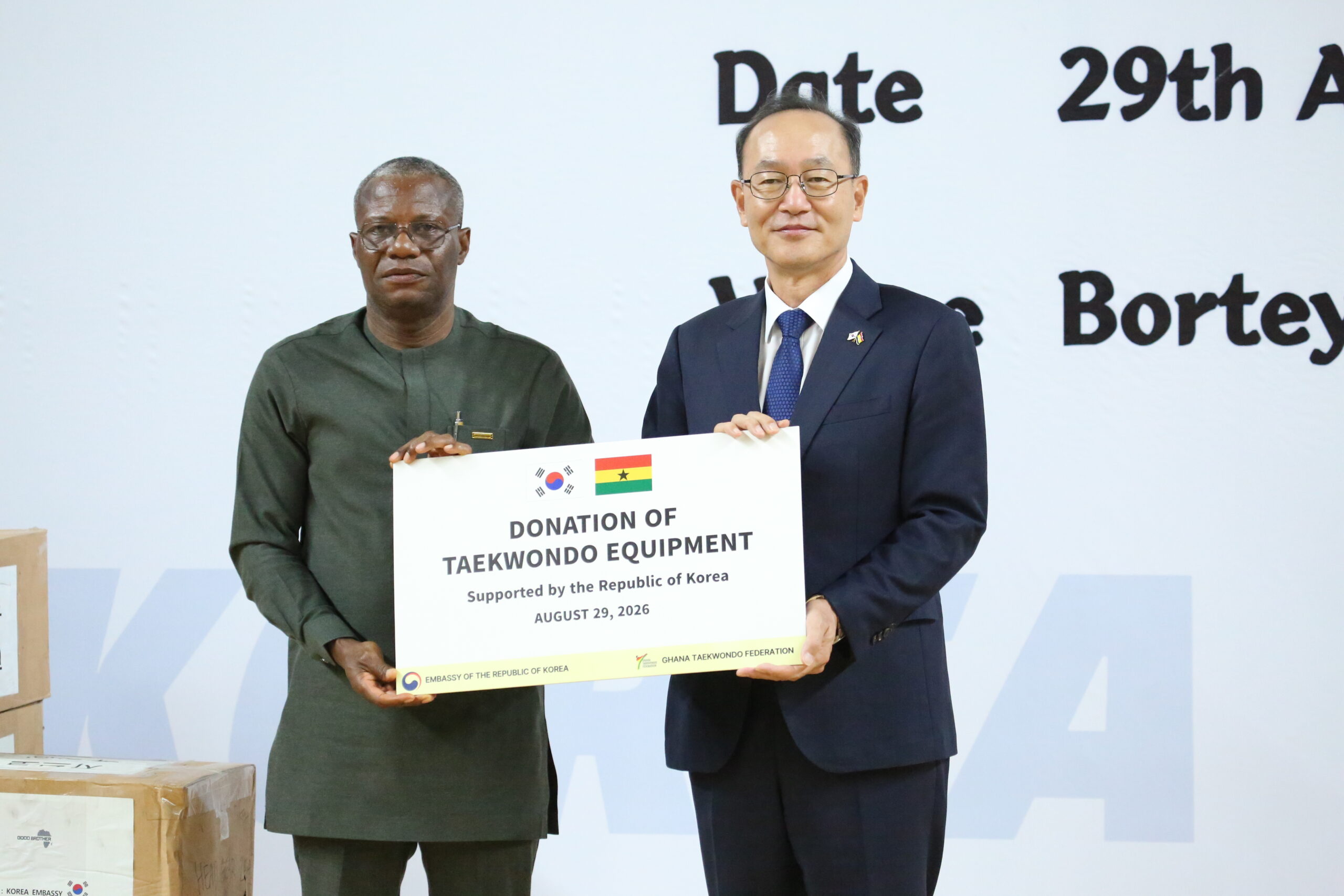
At the end of the competition, the embassy presented a number of Taekwondo attires to the GTF to boost the sport’s promotion in Ghana.
By Andrew Nortey
SKIP THE QUEUE, TAP THE NEWS
You can now read the Ghanaian Times and The Spectator newspapers from the comfort of your device via TimesNewsPlus.
Join our WhatsApp Channel: https://whatsapp.com/channel/0029VbBElzjInlqHhl1aTU27
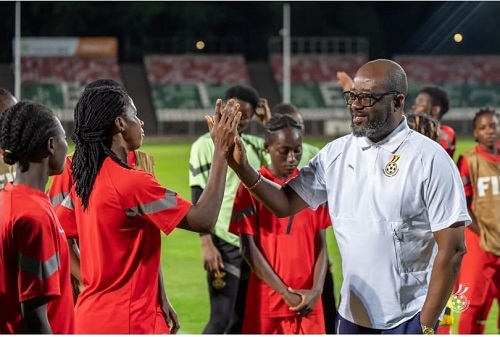
CAF 2nd Vice President and President of the Ghana Football Association, Kurt Edwin Simeon-Okraku, has visited the Black Princesses in Poland ahead of their opening game at the FIFA U-20 Women’s World Cup.
The GFA President, who watched the team’s training session, assured the players of the Association’s full support and backed them to make history by qualifying from the group stage for the first time.
“A few days ago, I was in a chat with the head coach and I promised that I was going to join him for what I think is the most important game for us, which is the first game,” President Simeon-Okraku told the team.
“For me, the first game is the most important, because if we start well, chances are that we will do well. History tells us that this team has always been here. We’ve always been at this tournament for seven consecutive times. My inner faith is telling me that we have enough quality here to qualify from this group.”
He praised the players for their sacrifice and patience throughout preparations, saying their investment would be repaid on the pitch.
“You have been patient and gone through the troubles and the hassles. And you are here today. I believe that these sacrifices you have made, these investments you have made, will be repaid,” he said.
The GFA President stressed that Ghana has the quality to overcome their group opponents.
“We are faced by three opponents — Ecuador, Korea Republic and France. These three nations, believe me, are no better than us. We have enough quality in this team to win games in this group and to make it to the second round of the competition.”
“This tournament is played every two years, so after 14 years, this is the 16th year now — this group must be the one that makes it out of the group to the knockout stage. And this must happen.”
“I think the team is ready. The technical team have done a good job. The players have conducted themselves well. We will continue to support you to ensure you get the best to be able to compete at this level.”
He also charged the final squad to make those who missed out proud.
“A few of you were here but didn’t make the squad and had to leave. This is that moment that you have to make them proud.”
President Simeon-Okraku was accompanied to the training ground by Chief of Staff at the GFA, Michael Osekre, and President of Dreams FC, Jiji Alifoe.
Ghana will open their campaign against Ecuador on September 6, 2026, before facing Korea Republic and France in their other group matches.
By Edem Mensah-Tsotorme