News
Protect journalists against COVID-19

The protection of journalists against the coronavirus disease (COVID-19) is paramount as their work involves frequent interviews with people at all levels while performing their duties.
In this era of COVID-19 the work of journalists has become more challenging and risky; therefore, their safety should not be compromised at all as they can easily contract the virus at the least negligence and later spread it because they leave their homes to report in this difficult circumstances and at the end of the day go back to their families.
Recent photographs captured by the Spectator’s photojournalists showed media persons breaching the COVID-19 protocol on social distancing as they huddled round an interviewee to take photos and record him as duty demands to feed their media houses with the news for public consumption.
In fact, the rate at which the coronavirus is spreading at the community level is so alarming. The current confirmed cases is 22,822 with 17,564 recoveries/discharge and 129 deaths. It should serve as a warning sign for journalists to take their destiny into their own hands and be responsible for their own safety.
In an interview, some of the journalists who spoke to our photojournalist on condition of anonymity, for fear of reprisal from their employers, complained that, “We are going into the field, returning to the office, working and contacting the public in the same way, without Personal Protective Equipment (PPE) from our employers.”
Another journalist revealed, “I am mentally and conditionally prepared that I am going to get the virus, and I do not feel like I can save myself from this.” According to him, “job security is also another issue affecting the mental health of journalists, many of whom have lost their jobs during the pandemic.”
It is obvious that for fear of losing their jobs these journalists had to sacrifice in such dangerous circumstance to seek information for their media houses at the expense of their health. Reports say that some journalists have already tested positive with the virus and many more are extremely vulnerable because of their daily news coverage.
It behoves on authorities of media houses to provide PPE and the necessary equipment for their media team, especially the camera crew to help them zoom from afar as they must stay safe and healthy to report on issues. Also, journalists with serious health conditions which make them vulnerable must be allowed to work from home.
Meanwhile, journalists must strictly adhere to the COVID-19 safety protocols and wear nose or face masks regularly, wash their hands regularly with soap under running water, use alcohol-based sanitisers to clean their microphones, cameras, recorders and all other equipment and also ensure that they abide by all other protocols for their own safety as COVID-19 is no respecter of persons.
Per UNICEF’s safety guidelines for journalists reporting on COVID-19, “if a government spokesperson, senior official or minister is giving a statement, agree among yourselves to record them from at least six feet away and try to stand without huddling.”
The guidelines further says that, “Better still, convince dignitaries to conduct digital press conferences with questions from journalists taken up live as there are plenty of technological platforms available to make this happen”
The Ghana Journalists Association (GJA) must also ensure that all journalists adhere to the GJA’s guidelines for journalists on COVID-19 precautionary measures when reporting, to ensure that they are protected against the virus as they are daily exposed to all kinds of dangers.
Also, a photojournalist disclosed that despite their “wish to adhere to the precautionary measures, the reality on the field while covering events is different” so the GJA must act promptly to check these realities on the ground and address those issues.
“We always need to get close enough to get good visuals and photographs of both health workers and patients to tell our stories,” the photojournalist added.
The Spectator would like to appreciate the efforts of some individuals and organisations that have so far donated PPE to some media houses to support journalists. We further appeal to other benevolent organisations to donate more PPE to enhance the work of journalists.
Companies that are in the position of donating modern equipment to media houses should not hesitate to do so or sell them at reduced costs in this era of COVID-19 to help the media houses to perform their duties effectively.
The government must also give a special package to journalists who risk their lives to cover assignments on COVID-19 as a form of motivation.


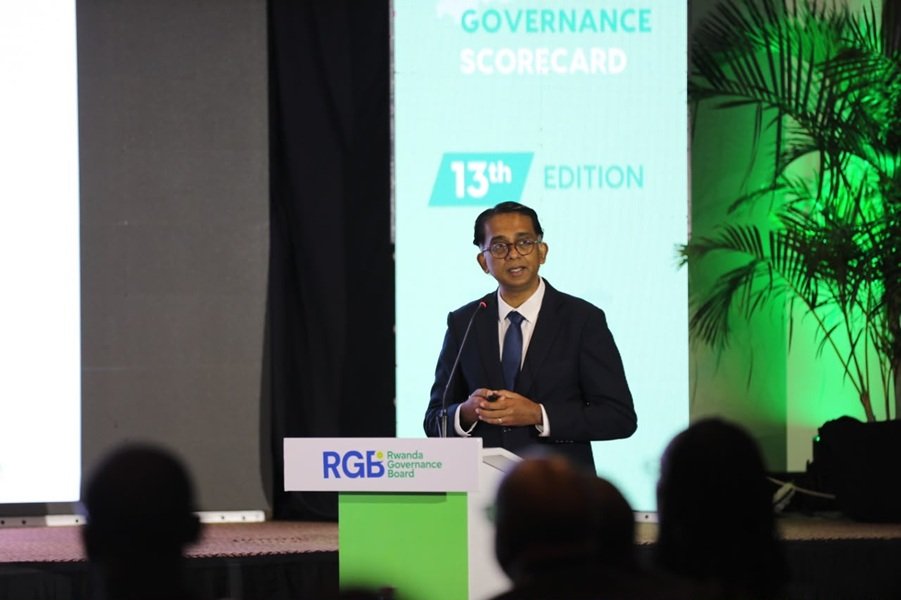
Ghana has made progress in the way it manages public resources and delivers services to citizens, with improvements in financial management and access to education and healthcare helping to raise its governance score.
The country ranked 92nd out of 133 countries worldwide and ninth in Africa in the 2026 Chandler Good Government Index (CGGI), according to a report released last Thursday.
The improvement offers a positive sign for Ghana, although the country still faces challenges in areas such as leadership, long-term planning and creating an attractive environment for businesses.
The index showed that Ghana’s performance in Financial Stewardship, which measures how governments manage public finances and maintain fiscal sustainability, almost doubled this year after declining between 2021 and 2024.
Its score in Helping People Rise, which looks at how government policies and services improve people’s lives, also increased for the second consecutive year, reflecting progress in areas including education and healthcare.
However, the country recorded declines in Leadership and Foresight and Attractive Marketplace, indicating areas where further attention may be needed.
Ghana’s performance comes at a time when several African countries are also making progress in governance. The report found that 71 per cent of African countries assessed in both 2025 and 2026 improved their overall scores.
Dinesh Naidu, Director of Knowledge at Chandler Governance Group, said the continent’s strongest gains were in financial management, followed by efforts to improve citizens’ lives.
He said the progress suggested that improvements in government capabilities were beginning to translate into tangible benefits, including better access to education and healthcare.
However, Africa continues to face significant challenges. Although average scores improved in six of the index’s seven pillars over the past year, the region’s overall average remains below its 2021 level.
The report also found that 23 of the 35 African countries assessed ranked outside the global top 100, while none made it into the top 50.
Globally, 61 per cent of the 120 countries assessed in both 2025 and 2026 recorded higher scores, representing the highest annual share of countries improving since the index began in 2021.
The Chandler Good Government Index assesses government capabilities and effectiveness across 133 countries, representing 94 per cent of the world’s population.
It uses 35 indicators grouped under seven pillars to help governments identify their strengths, recognise gaps and learn from the experiences of other countries.
Mr Naidu said rankings should not be treated as an end in themselves but as a guide to identifying areas that need improvement.
He said sustained progress depended on strong institutions, responsible use of public resources and the ability of governments to turn policies into meaningful outcomes for citizens.
For Ghana, the latest results point to progress in some important areas, while highlighting the need to strengthen other aspects of governance to ensure that improvements are felt in the daily lives of ordinary people.
By Esinam Jemima Kuatsinu
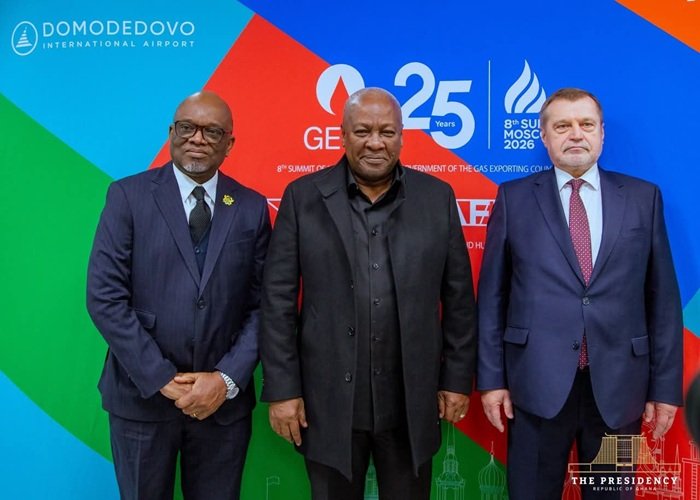
President John Mahama has arrived in Moscow, Russia, from Ethiopia to participate in the 3rd Russia-Africa Summit.
The summit is being hosted by Russian President Vladimir Putin.
During the visit, President Mahama will join fellow African leaders at the Economic and Humanitarian Forum and summit plenary sessions.
He is also scheduled to hold high-level bilateral talks with President Putin and attend a Kente exhibition organised by the Russia-Ghana Parliamentary Forum.
As part of the visit, the President will receive honorary doctorate degrees from the Russian University of Transport and the Peoples’ Friendship University of Russia.
He will also engage Russian businesses and state institutions to advance bilateral cooperation between Ghana and Russia.
By Edem Mensah-Tsotorme