News
President Mahama urges African leaders to build resilient, self-sustaining health systems

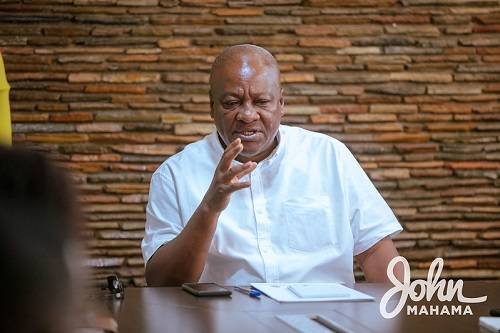
President John Dramani Mahama has called on African leaders to take bold steps in building resilient and self-sustaining health systems across the continent.
He made the call at the opening of the Africa Health Sovereignty Summit held on Tuesday, August 5, 2025, in Accra.
Addressing the gathering, President Mahama said the time had come for Africa to stop relying heavily on foreign aid to solve its health challenges.
He stressed that African countries must become the authors of their own health future by investing in local solutions and strengthening national health systems.
“This summit is not just a meeting, it is a call to action. Africa must no longer be the patient. We must be the drivers, the architects, and the advocates of our own health destiny,” the President stated.
President Mahama thanked the Director-General of the World Health Organization, Dr. Tedros Adhanom Ghebreyesus, for attending and for offering technical support to help Ghana develop its own primary health care system.
He noted that although Africa had made significant gains in health outcomes over the years, recent cuts in donor aid had put many of those achievements at risk, including Ghana’s Community-Based Health Planning and Services (CHPS) programme.
He added that the issue extended beyond funding, describing it as a failure of global solidarity and a challenge to Africa’s right to set its own health priorities.
According to him, the continent must stop being a passive recipient of aid and instead take full ownership of its health agenda.
He described the summit not just as a policy forum, but as a moral call to action and a strategic turning point for the continent.
President Mahama expressed gratitude to key partners, including the African Union, the Rockefeller Foundation, Georgetown University, and the Obasanjo Foundation for their continued support.
He also stated that Africa did not suffer from a lack of capability, but from a lack of perspective, urging leaders to view health not as a cost, but as a “currency of dignity.”
The Director General of the World Health Organization( WHO) Dr. Tedros Adhanom Ghebreyesus in his remarks, warned that sharp declines in aid were putting millions of lives at risk.
He praised Ghana’s recent steps to increase local funding for its National Health Insurance Scheme, calling it a strong example of political commitment to health sovereignty.
Health Minister, Kwabena Mintah Akandoh called for intentional plan for Africa’s health future focused on wisdom, investment, and leadership from within the continent.
The summit, hosted in Accra, brought together African Heads of State, health ministers, and global health leaders to discuss urgent reforms in the way health systems are governed and financed on the continent.
It aims to push for reforms in global health governance and highlight national ownership, local investment, and stronger leadership in public health.
Key outcomes of the summit include the endorsement of The Accra Initiative, the launch of the SUSTAIN Initiative to promote domestic health financing, and the formation of a Presidential High-Level Panel. The Accra Compact, a document outlining Africa’s unified vision for health sovereignty, was also adopted.
By: Jacob Aggrey

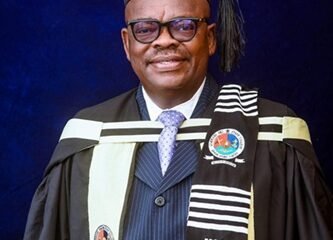



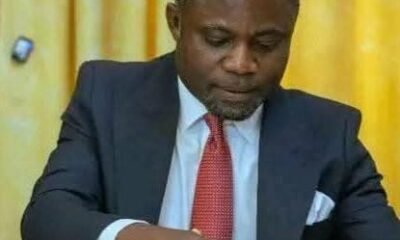


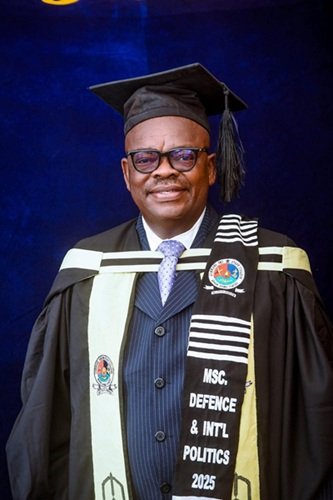
Management and staff of Owass FM have announced the passing of media personality, comedian and politician Seth Kwame Dzokoto following a medical emergency during a live morning show discussion at the station earlier today.
According to the station, Dzokoto was participating in a panel discussion on its morning show “Oman Nkoso” when he suddenly took ill and collapsed.
A statement from the station said its team immediately rushed him to the hospital for medical attention, but he was pronounced dead by the attending medical doctor upon arrival.
“We are deeply saddened by this unfortunate incident, which occurred in the course of our regular programming. Our thoughts and prayers are with his family, loved ones, colleagues, and all those who have been affected by his passing,” the statement said.
Management acknowledged that information about the incident is already circulating in the public domain, but appealed to the public and colleague media houses to respect the privacy of the bereaved family and refrain from circulating unverified information or speculation regarding the circumstances of his death.
Owass FM extended its heartfelt condolences to the family of Seth Kwame Dzokoto.
By Edem Mensah-Tsotorme
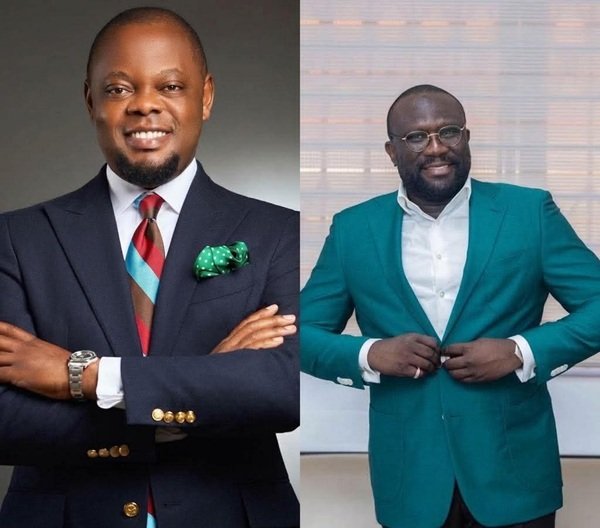
The State through the Attorney General (AG) has filed an appeal at the Supreme Court challenging the suspension of the trial in the case of The Republic v Hanan Aludiba and Faiza Seidu.
On Monday, the Court of Appeal suspended the trial in the case. But the prosecution says it has filed an appeal against the suspension order.
According to the update, the law does not allow a criminal trial to be suspended simply because an accused person has complained about some of the charges on the charge sheet, particularly when those complaints were dismissed as meritless.
It argues that if the Court of Appeal’s decision is allowed to stand, no prosecution will ever be possible, since all it would take for a trial to be suspended is an accused person complaining about anything on the charge sheet.
By Edem Mensah-Tsotorme