Hot!
President launches GH¢1bn COVID-19 support fund…for MSMEs affected by pandemic


President Nana Addo Dankwa Akufo-Addo has launched a GH¢1 billion COVID-19 Alleviation Business Support Programme to support Micro, Small and Medium Enterprises (MSMEs) affected by the coronavirus (COVID-19) pandemic.
The amount is expected to support businesses in areas such as agriculture and agribusiness, manufacturing, tourism and hospitality, education, food and beverages, technology, transportation, commerce, healthcare and pharmaceuticals, and textile and garments.
Additionally, MSMEs which need expansion to meet the growing demand for COVID-19 related goods and services can also apply, President Akufo-Addo said at a ceremony to launch the scheme at the Jubilee House in Accra yesterday.
He said from today to June 20, self employed, sole proprietorship, limited liability partnerships and joint venture businesses with more than 99 employees can begin the application processes for support.
The President said business applicants must also belong to a trade association or group and be registered with the National Board for Small Scale Industries (NBSSI).
To apply, applicants must visit the NBSSI website or visit any of the 170 business advisory offices throughout the country to pick application forms to begin the process, he said.
President Akufo-Addo indicated that the business support programme is expected to help minimise job losses in the wake of the outbreak of the COVID-19 pandemic.
Out of GH¢1.2 billion earmarked for the programme, he said GH¢600 will be disbursed as soft loans to MSMEs with one year moratorium and two years repayment. The rate of interest on the loans is three per cent
Furthermore, the President said the selected participating banks will provide negotiated counterpart funding to the tune of GH¢ 400 million.
President Akufo-Addo said the scheme is expected to reach 180 beneficiaries across the country.
President Akufo-Addo was however optimistic that the Ghanaian economy will bounce back stronger than it was before COVID-19.
He said his administration is committed to helping businesses to get on their feet again and contribute to the growth of the Ghanaian economy.
He pointed out that the government has secured a US$1 billion facility from the International Monetary Fund (IMF) to support the growth of the economy.
Additionally, he said the Bank of Ghana has earmarked an amount of GH¢10 billion as investment commitment to support the economy to resist the adverse effects of the COVID-19.
President Akufo-Addo said aside the GH¢1billion facility for MSMEs, the government will make available a GH¢3 billion credit and stimulus package to help boost businesses.
He said the Finance Minister has been tasked to continue finding more resources to support as many businesses as possible to ensure that the country bounce back stronger post COVID-19
The President noted that the pandemic has had a devastating impact of all economies around the world including the Ghanaian economy.
In Ghana, he said the pandemic has reduced productivity, job losses, and affected the revenue of government, businesses and households.
However, the President believes that the country’s economy will bounce back much stronger than it has ever been, post COVID-19.
BY YAW KYEI


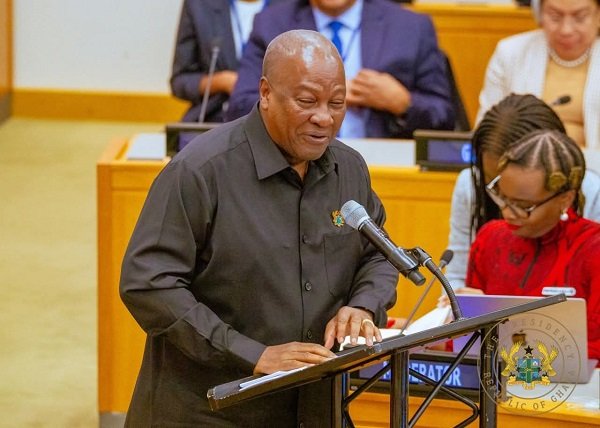
Photos from the High-Level Event on Reparatory Justice for the trafficking of enslaved Africans and the racialised chattel enslavement of African people, convened at the United Nations Headquarters, New York.
Delivering a powerful address, President John Dramani Mahama underscored the moral urgency of confronting historical injustices and advancing a global commitment to reparatory justice.
“The entire transatlantic slave trade was designed to deny African people their humanity,” the President stated.
Highlighting the significance of ongoing international efforts, he added:“This resolution allows us, as a global community, to collectively bear witness to the plight of the 18 million men, women, and children whose homes, communities, names, families, hopes, dreams, futures, and lives were stolen from them over the course of four centuries.”
In reaffirming the enduring truth of justice, President Mahama noted:
“Just because everybody is doing something doesn’t make it right. Slavery is wrong now, and it was wrong then. For as long as Africans have been trafficked and enslaved, there have been abolitionists who have spoken up against it.”
He further called for a deeper reflection on identity and dignity:
“We must also remember to reclaim our own humanity… when we absorb too much of the language of violence and erasure, our minds become enslaved.”
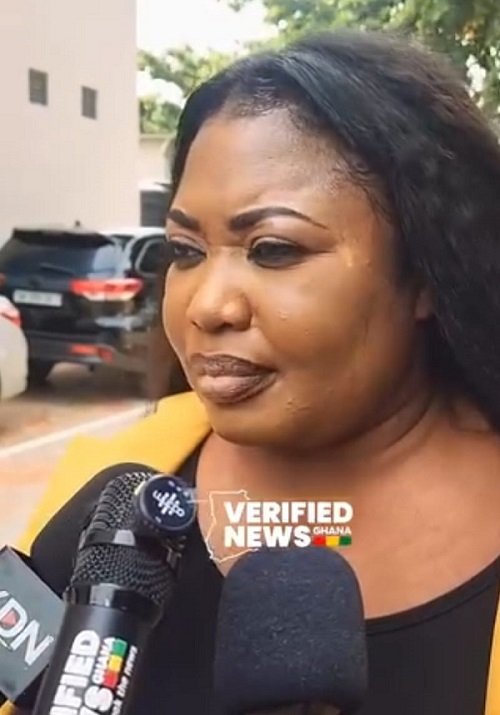
A member of the New Patriotic Party (NPP), Beatrice Siaw, has expressed mixed views about Ghana’s current leadership, saying she admires President John Dramani Mahama but is not fully satisfied with how the country is being governed.
Speaking in an interview on Metro TV on Tuesday, she said although she belongs to the NPP, she finds it difficult to criticise the President personally.
“I admire President Mahama, so it’s hard to speak against him. But I do love my party. I am impressed with the President, not necessarily impressed with how things are going” she said.
She acknowledged that the NDC has made efforts in managing the economy and improving some key indicators. She noted that the party appears determined to prove critics wrong after previously being voted out of office.
“They are trying to do a lot of things that Ghanaians thought they couldn’t do when they were in power,” she said.
However, she was quick to add that these efforts may not necessarily translate into electoral success in the next election cycle.
When asked whether the NDC’s performance could pose a strong challenge in 2028, she said she does not believe so, although she admitted there have been some improvements in certain areas.
“In some aspects, yes,” she said when asked if she had been impressed by the government’s performance.
By: Jacob Aggrey