Gender
Pregnant women advised not to shy away from referrals

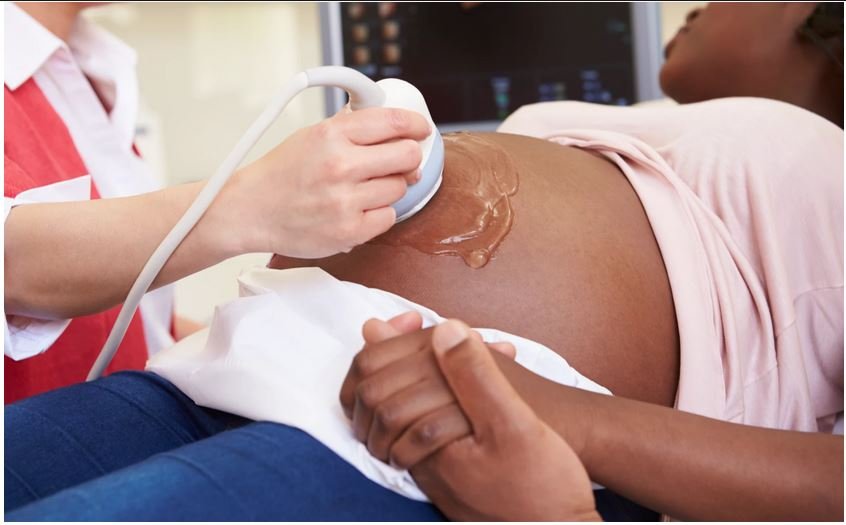
Mr Freda Alowri, a Senior Midwifery Officer (SMO) at the Zorko Health Centre in the Bongo District of the Upper East Region, has admonished expectant mothers to promptly adhere to referral orders from lower to higher health facilities to prevent complications.
She said referrals, especially from health facilities in rural areas made to higher facilities for further management, should be taken seriously without delays especially in pregnant women since that could result in complications and possible deaths.
“Pregnant women in rural areas are usually reluctant to go on referrals to higher facilities and if there is an issue those of us in the deprived communities cannot handle.”
“It is not all the cases that those of us in derived areas can handle, and so if we detect such cases and refer, they should not delay, but go immediately,” she said.
Ms Alowri, who has decades of work experience in the rural community, gave the advice in an interview with the Ghana News Agency (GNA) after she was awarded the 2024 Best Midwife by the District Health Directorate of the Ghana Health Service (GHS).
The Directorate at its 2024 annual health performance review meeting held in Bolgatanga, recognised Ms Alowri’s “Outstanding skills and expertise in the domain of maternal and neonatal care”.
The Directorate said her commitment to delivering high-quality care, mentorship and adherence to best practices had profoundly influenced maternal health in the district.
The midwife advised women in rural areas to immediately visit the nearest health facility if they missed their menstrual cycle and suspected pregnancy.
She said early Ante-Natal Care services in the first trimester of pregnancy was the surest way for safe delivery and insisted that “Pregnant women should try to visit the nearest health facility early for good maternal services.”
For midwives who refused postings to rural areas to work, Ms Alowri said there was much experience to gain at health facilities in rural areas, and urged midwives, especially junior staff to accept postings to any part of the district where their services were needed, and work diligently to uplift the image of the GHS.
Ms Estella Abazesi, the District Director of the GHS, who presented the award to the midwife, told the GNA that staff motivation was important to the directorate as a means to urge them to deliver their best.
She said staff nominated among themselves, those they thought deserved awards, and management also considered key performance indicators of the various facilities for the awards.
“The indicators carried 70 per cent performance and 30 per cent for the nomination. That was what we did for both individual and for the facility level,” she said, and encouraged her staff to continue to work hard to improve service delivery.
The directorate, apart from Ms Alowri, recognised and honoured nine other staff under various categories namely: Mr Mohammed Abu, Mr Michael Awia Achuliwor, Madam Cynthia Lariba Apemjobey, Mr Maxwell Kamah Alagnona, Mr David Adongo, Madam Gloria Wulug, Madam Rihanna Akugre Awudu and Madam Agnes Aloyine Atibila.
Three Community-based Health Planning and Services (CHPS) compounds; the Beo Tankoo CHPS, Kadare and Nayorigo CHPS together with the Namoo, Soe, Valley and Zorko sub-district zones were awarded.
The GHS also honoured WaterAid Ghana, a non-governmental organisation, for its contributions to healthcare delivery in the district. -GNA


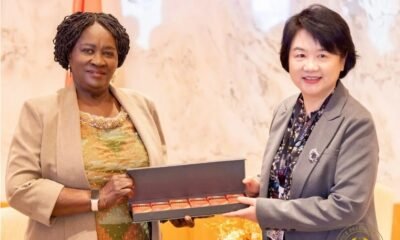




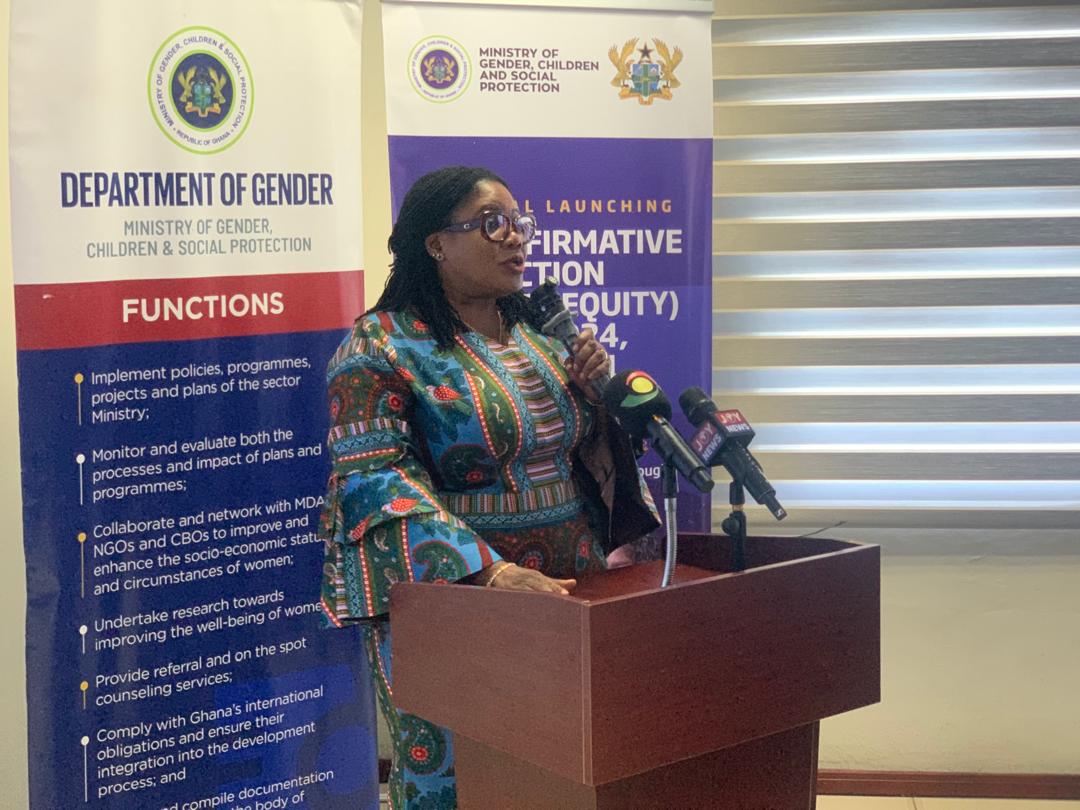
Gender equality should not be left to women alone, but requires the active participation of men and other stakeholders, the Minister for Gender, Children and Social Protection, Dr Agnes Naa Momo Lartey, has said.
She said gender equality was a national development issue and not a matter concerning only women, stressing that both men and women had important roles to play in creating an inclusive society.
Dr Lartey said this last Thursday in Accra at a capacity workshop on the implementation of the Affirmative Action (Gender Equity) Act, 2024.
The workshop was aimed at helping journalists understand the provisions of the Act, strengthen their capacity to communicate gender equity issues and promote accurate, balance reporting on the implementation of the Act.
Ghana could not achieve meaningful development if one section of society was excluded from participating fully in leadership, decision-making and other areas of national development.
“It is not about a group of people. It is not about one of the sexes. It is about the nation. It is about the country,” she said.
She called for stronger commitment to translating the Affirmative Action (Gender Equity) Act, 2024 (Act 1121), into practical action to improve women’s participation in leadership and decision-making.
She said the passage of the law should not be considered the end of the process, but rather the beginning of deliberate efforts to ensure that its objectives were achieved.
Dr Lartey said increasing the number of women in leadership was important, but their participation must also have a meaningful impact on national development.
“We want it to count,” she stressed, calling for practical initiatives that would move the affirmative action agenda from policy to implementation.
The Executive Director of Women, Media and Change (WOMEC), Dr Charity Binka, also urged the media to play a critical role in ensuring the effective implementation of the Act.
She said Ghana had taken an important step by passing the law after 13 years of efforts, but the real test was its implementation.
According to Dr Binka, the Act requires 30 per cent representation of women in leadership and decision-making by 2026, rising to 50 per cent by 2030.
She urged the media to inform the public about the law, monitor institutions’ compliance and challenge stereotypes that undermine women’s leadership.
Dr Binka urged journalists to ensure institutions were complying with requirements, including Gender Equity Policies, Compliance Certificates and annual reports.
She said affirmative action was not about replacing merit with gender, but addressing structural barriers that had historically limited qualified women’s opportunities to participate and lead.
She called for stronger collaboration among government, civil society, traditional and religious leaders, the private sector, the media and other stakeholders to turn the law into measurable results for women and girls.
By Esinam Jemima Kuatsinu
The United Nations has warned, that Gender equality is “woefully off track.”
At the current rate of progress, gender equality would take 171 years to achieve, the UN’s Gender Snapshot report said.
The number of countries with a woman as head of state or government has increased from 2020 to 2026. “Yet six in seven countries are still led by men.
Women’s representation in national cabinets declined to 22.4 per cent in 2026, after peaking at 23.3 per cent in 2024,” the report said. “The decline is a warning sign that gains cannot be taken for granted, and that progress towards equal political power remains fragile.”
Funding for gender equality has fallen to its lowest level since 2021, the report found. At the same time, 42 per cent of UN agencies reported that their efforts to promote gender equality had been weakened, as a result of budget cuts.
Millions of women also continued to endure some extremely severe forms of violence and discrimination across the globe, the UN said. Nearly one in five girls is married before the age of 18, and nearly one in three women globally have survived partner or sexual violence in their lifetime.
In the past year, 316 million women experienced physical or sexual violence by an intimate partner, the report said.
UN Under-Secretary-General for Economic and Social Affairs, Li Junhua, said the statistics were not inevitable. “It is the result of choices, made visible through data. Investing in gender equality, institutions, and the statistical systems that hold them to account is not a cost. It is the fastest route back to the 2030 Agenda’s promise of equal power for all.”-GNA
SKIP THE QUEUE, TAP THE NEWS
You can now read the Ghanaian Times and The Spectator newspapers from the comfort of your device via TimesNewsPlus.
Join our WhatsApp Channel: https://whatsapp.com/channel/0029VbBElzjInlqHhl1aTU27