News
Peace Council chair urges continued dialogue on religious tensions


The Chairman of the National Peace Council, Most Reverend Emmanuel Kofi Fianu, has stressed that churches still support schools with funds and infrastructure, even though government provides major resources.
During an interview on TV3, he explained that many mission schools continue to rely on additional support from their religious bodies. He noted that government does not meet every need in the schools.
He explained that the Catholic Church, for example, provides help when there is a need and resources are available.
This includes support for infrastructure and lobbying partners to assist institutions.
He could not give specific examples immediately but maintained that the Church continues to invest in some schools.
Most Reverend Fianu also addressed concerns that recent public discussions reflect a rise in religious intolerance.
He disagreed, pointing out that Ghana has a long history of religious tolerance and cooperation.
He noted that while some individuals may make negative comments, these do not represent the country as a whole.
He expressed concern about comments targeted at Muslims after a recent court case involving a Muslim student.
He urged the public not to generalise or condemn an entire religious community based on a single incident.
He explained that the Catholic Church practices interreligious dialogue that respects other faiths without compromising its own beliefs.
He insisted that such dialogue is genuine and not an act of pretense.
Most Reverend Fianu called for continuous engagement among religious groups to prevent tension from escalating.
He said ongoing dialogue helps people understand one another and promotes peaceful living.
He added that mutual respect is key, stressing that respecting one another’s religion must be mutual.
By: Jacob Aggrey







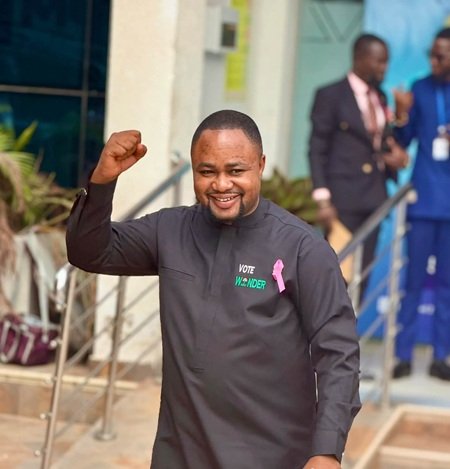
National Democratic Congress (NDC) National Executive Committee member and Volta River Authority (VRA) Board Member, Wonder Victor Kutor, has described calls for the resignation of Foreign Affairs Minister Samuel Okudzeto Ablakwa as premature and unjustified.
He argued that there was no evidence to establish that the minister had committed any wrongdoing to warrant such demands.
Speaking on Joy News in Accra on Wednesday, October 28, 2026, Mr Kutor questioned what had changed to justify the growing calls for the minister to step down.
He recalled that the Ranking Member on Parliament’s Foreign Affairs Committee, Samuel Abu Jinapor, had earlier indicated that the opposition was not accusing Mr Ablakwa of any wrongdoing.
Mr Kutor, therefore, challenged those demanding the minister’s resignation to provide fresh evidence to support their position.
“The call for the Minister to resign is premature, it is untenable. There is no evidence. I mean, what has he done wrong?” he questioned.
He added that documents, including boarding passes, airline receipts and flight manifests relating to the minister’s return journey, had been provided.
Mr Kutor expressed concern that the calls for Mr Ablakwa’s resignation could discourage young politicians from speaking out against corruption and advocating transparency.
According to him, politicians should not be targeted or maligned for demanding accountability, warning that such treatment could create the impression that speaking against corruption could later become a liability when one is appointed to public office.
He maintained that calling for accountability and transparency should not be used as grounds to target public officials without evidence of wrongdoing.
By: Jacob Aggrey
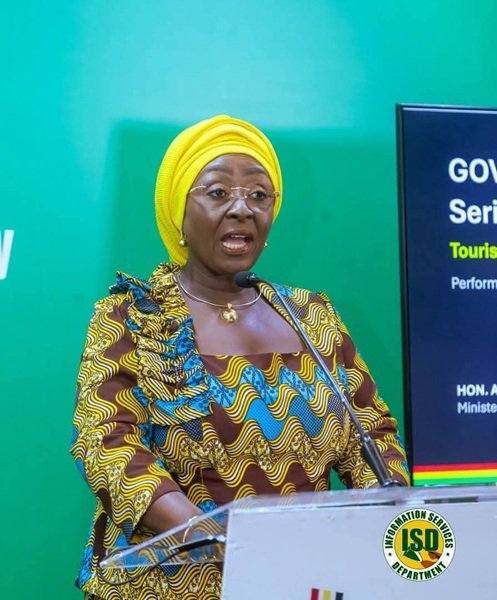
Ghana will host the Africa Festival of Arts, Culture and Creatives (AFESTAC) 2026 alongside Industrial Skills Week Africa (ISWA) 2026 in Accra from December 9 to 12, 2026.
On the back of these programmes, Minister of Tourism, Culture and Creative Arts, Abla Dzifa Gomashie, has called on corporate Ghana, the media and the general public to support the initiative through partnerships, sponsorships and active participation.
The events, supported by the African Union Development Agency (AUDA-NEPAD), will bring together stakeholders to celebrate Africa’s rich cultural heritage, strengthen the creative economy, promote industrial skills development and create employment opportunities for young people.
By Edem Mensah-Tsotorme