Gender
Parents urged to provide moral guidance to help children transition to adulthood

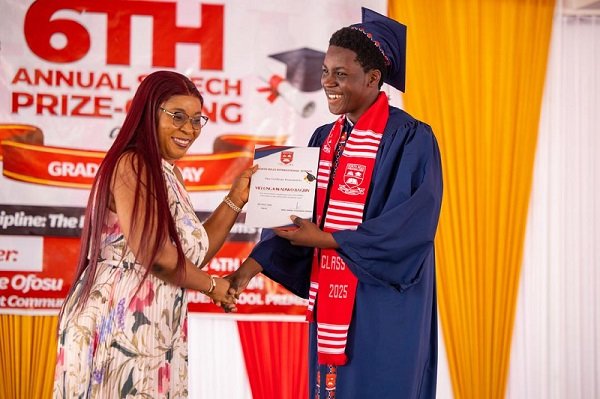
North Hill International School (NIS), a basic school situated at North Legon in Accra has held its 6th Speech and Prize-Giving Day with a call on parents and guardians to provide the needed moral guidance and support for children to become responsible and disciplined adults in society.
The Guest Speaker for the occasion, Mr Felix Kwakye Ofosu, Minister of State and Government Communication who made the call in a speech read on his behalf, said this stage was crucial for children to learn values that enable them become responsible members of the family unit, their immediate environment and the country at large.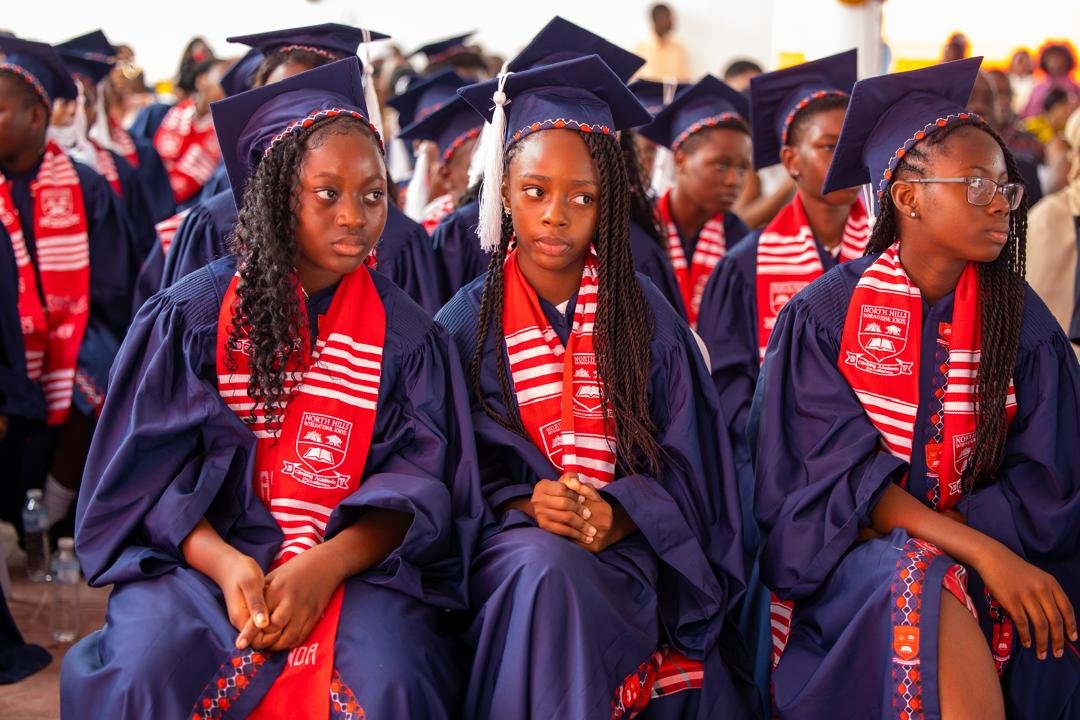
Themed: “Discipline- The bridge between dreams and reality” the event saw 36 learners in total graduating comprising primary and lower secondary.
Master Vielung Kwadwo Bagbin, son of Ghana’s Speaker of Parliament, Mr Alban Sumana Kingsford Bagbin, emerged overall best student.
Mr Ofosu said their formative stage was an age where good habits, behaviours and characters were built which lay a solid foundation for their lives.
In an address, the Principal of the School, Mrs Emma Coleman Opoku, said the school reaffirms its commitment to academic excellence as demonstrated by the outstanding performance of pupils in the 2025 Cambridge Checkpoint Examinations.
She described the outcome as result of tireless efforts from passionate teachers, the determination and diligence of pupils and the support of parents.
Over the years, she said, NIS has made remarkable strides in the Basic Education Certificate Examinations, consistently raising academic standards and producing outstanding results.
According to her, last year, the school recorded exceptional achievements including ten grade ones with two pupils attaining eight grade ones and another achieving six grade ones.
“Despite these successes, we have observed a decline in interest and enrollment in the GES curriculum,” she said.
The Principal indicated that, after careful examination and in light of current enrollment figures, the school has decided to suspend the GES curriculum temporarily.
On her part, the General Manager of the school, Mrs Bernice Adu Boateng, expressed gratitude to teachers for their dedication and professionalism and the invaluable role of parents which has brought the school thus far.
Come September, she said the school would roll out digital boards to complement the use of projectors and desktops in every classroom to infuse the use of technology to enhance facilitator-learner activities.
In a Global Perspective Project titled, “ Acting on Poverty and Inequality “, Year 7 pupils of the school raised an amount of GH₵17,530 to support the cause and donated used personal effects to Potter’s Village.
The Administrator and Human Resources Manager of the school, Mrs. Bertha Boamah Benin, expressed profound appreciation to companies and individuals that supported the event.
By Francis Cofie





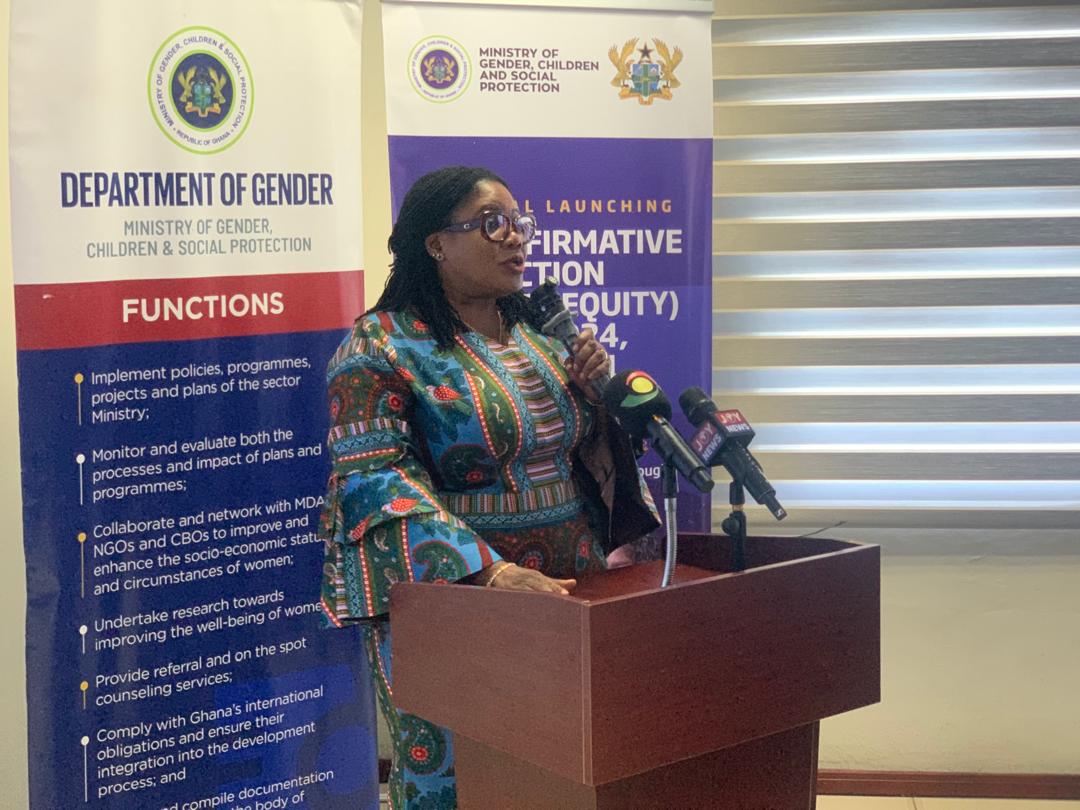
Gender equality should not be left to women alone, but requires the active participation of men and other stakeholders, the Minister for Gender, Children and Social Protection, Dr Agnes Naa Momo Lartey, has said.
She said gender equality was a national development issue and not a matter concerning only women, stressing that both men and women had important roles to play in creating an inclusive society.
Dr Lartey said this last Thursday in Accra at a capacity workshop on the implementation of the Affirmative Action (Gender Equity) Act, 2024.
The workshop was aimed at helping journalists understand the provisions of the Act, strengthen their capacity to communicate gender equity issues and promote accurate, balance reporting on the implementation of the Act.
Ghana could not achieve meaningful development if one section of society was excluded from participating fully in leadership, decision-making and other areas of national development.
“It is not about a group of people. It is not about one of the sexes. It is about the nation. It is about the country,” she said.
She called for stronger commitment to translating the Affirmative Action (Gender Equity) Act, 2024 (Act 1121), into practical action to improve women’s participation in leadership and decision-making.
She said the passage of the law should not be considered the end of the process, but rather the beginning of deliberate efforts to ensure that its objectives were achieved.
Dr Lartey said increasing the number of women in leadership was important, but their participation must also have a meaningful impact on national development.
“We want it to count,” she stressed, calling for practical initiatives that would move the affirmative action agenda from policy to implementation.
The Executive Director of Women, Media and Change (WOMEC), Dr Charity Binka, also urged the media to play a critical role in ensuring the effective implementation of the Act.
She said Ghana had taken an important step by passing the law after 13 years of efforts, but the real test was its implementation.
According to Dr Binka, the Act requires 30 per cent representation of women in leadership and decision-making by 2026, rising to 50 per cent by 2030.
She urged the media to inform the public about the law, monitor institutions’ compliance and challenge stereotypes that undermine women’s leadership.
Dr Binka urged journalists to ensure institutions were complying with requirements, including Gender Equity Policies, Compliance Certificates and annual reports.
She said affirmative action was not about replacing merit with gender, but addressing structural barriers that had historically limited qualified women’s opportunities to participate and lead.
She called for stronger collaboration among government, civil society, traditional and religious leaders, the private sector, the media and other stakeholders to turn the law into measurable results for women and girls.
By Esinam Jemima Kuatsinu
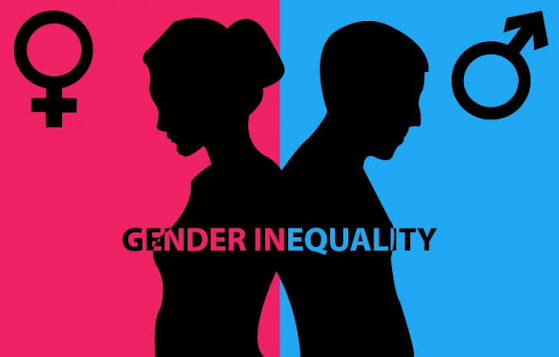
The United Nations has warned, that Gender equality is “woefully off track.”
At the current rate of progress, gender equality would take 171 years to achieve, the UN’s Gender Snapshot report said.
The number of countries with a woman as head of state or government has increased from 2020 to 2026. “Yet six in seven countries are still led by men.
Women’s representation in national cabinets declined to 22.4 per cent in 2026, after peaking at 23.3 per cent in 2024,” the report said. “The decline is a warning sign that gains cannot be taken for granted, and that progress towards equal political power remains fragile.”
Funding for gender equality has fallen to its lowest level since 2021, the report found. At the same time, 42 per cent of UN agencies reported that their efforts to promote gender equality had been weakened, as a result of budget cuts.
Millions of women also continued to endure some extremely severe forms of violence and discrimination across the globe, the UN said. Nearly one in five girls is married before the age of 18, and nearly one in three women globally have survived partner or sexual violence in their lifetime.
In the past year, 316 million women experienced physical or sexual violence by an intimate partner, the report said.
UN Under-Secretary-General for Economic and Social Affairs, Li Junhua, said the statistics were not inevitable. “It is the result of choices, made visible through data. Investing in gender equality, institutions, and the statistical systems that hold them to account is not a cost. It is the fastest route back to the 2030 Agenda’s promise of equal power for all.”-GNA
SKIP THE QUEUE, TAP THE NEWS
You can now read the Ghanaian Times and The Spectator newspapers from the comfort of your device via TimesNewsPlus.
Join our WhatsApp Channel: https://whatsapp.com/channel/0029VbBElzjInlqHhl1aTU27