News
NPP demands apology or sacking of Education Minister over Arabic, Chinese language controversy

- /home/u249204778/domains/spectator.com.gh/public_html/wp-content/plugins/mvp-social-buttons/mvp-social-buttons.php on line 27
https://spectator.com.gh/wp-content/uploads/2026/09/WhatsApp-Image-2026-09-16-at-15.40.09-960x600.jpeg&description=NPP demands apology or sacking of Education Minister over Arabic, Chinese language controversy', 'pinterestShare', 'width=750,height=350'); return false;" title="Pin This Post">
- Share
- Tweet /home/u249204778/domains/spectator.com.gh/public_html/wp-content/plugins/mvp-social-buttons/mvp-social-buttons.php on line 72
https://spectator.com.gh/wp-content/uploads/2026/09/WhatsApp-Image-2026-09-16-at-15.40.09-960x600.jpeg&description=NPP demands apology or sacking of Education Minister over Arabic, Chinese language controversy', 'pinterestShare', 'width=750,height=350'); return false;" title="Pin This Post">
The New Patriotic Party (NPP) has called on President John Dramani Mahama to either apologise to Ghanaians or remove Education Minister Haruna Iddrisu from office over the controversy surrounding the proposed introduction of Arabic and Chinese language studies in schools.
In a statement issued on Wednesday, September 16, 2026, the party’s Education Sector Policy Committee argued that conflicting statements from the President and the Education Minister had raised serious questions about policy coordination within the government.
According to the NPP, President Mahama last week denied approving any policy to introduce Arabic and Chinese into Ghanaian schools, insisting that there was “absolutely no new policy” on the matter.
The party, however, said the President’s position contradicted earlier statements and actions by the Education Minister and institutions under the Ministry.
It noted that Mr Iddrisu had, on April 24, publicly announced that Chinese and Arabic would become compulsory foreign languages at the secondary school level and had linked the policy to President Mahama’s vision for education.
The NPP further claimed that the National Council for Curriculum and Assessment (NaCCA) was subsequently directed by the Education Ministry to undertake work on the curriculum.
It said about 160 writers and reviewers were engaged over several months, resulting in a revised curriculum that included Arabic and Chinese among the foreign language options.
The party said the revised curriculum was presented to the Education Minister on July 22, but he did not reject it. Instead, it said, he referred the document to the Ghana Education Service (GES) and directed the service to prepare for its implementation.
The NPP cited a teacher training programme held on September 3 by NaCCA, with support from the Confucius Institute at the University of Cape Coast, to train teachers to implement the new Chinese language curriculum.
It argued that these developments created the impression that the policy was an official government initiative.
“Either the Minister was advancing a major policy direction without the President’s authority, despite presenting it as part of the President’s vision, or the public has still not been given the full account of what Government had actually authorised and pursued,” the statement noted.
The party raised concerns about public funds allegedly spent on curriculum development, workshops, technical work and teacher training.
It questioned why such resources would have been committed if, as the President maintains, there was “absolutely no new policy”.
The NPP further pointed to comments by President Mahama questioning where Ghana would get teachers to teach Chinese when the country was already facing shortages of French teachers.
According to the party, that concern raises questions about why preparations for the teaching of Chinese had already progressed to curriculum development and teacher training.
The NPP, however, stressed that Arabic and Chinese should not be treated in exactly the same way.
It explained that Arabic was already an optional subject at the junior high school level before the current government took office, while Chinese was part of what it described as a new 2026 process involving curriculum development, implementation preparations and teacher training.
The party said the controversy had now gone beyond the question of whether Arabic and Chinese should be taught in schools.
It argued that if the Education Minister acted without presidential or Cabinet approval, then the President should take action against him.
However, if he acted with the knowledge or authority of the President or Cabinet, the NPP said President Mahama should apologise to Ghanaians and provide a full account of the policy and expenditure involved.
The party said parents, teachers, school administrators and taxpayers deserved clear and consistent communication from the government.
“The President cannot have it both ways,” the NPP stated, insisting that the matter should not simply be declared closed.
By: Jacob Aggrey






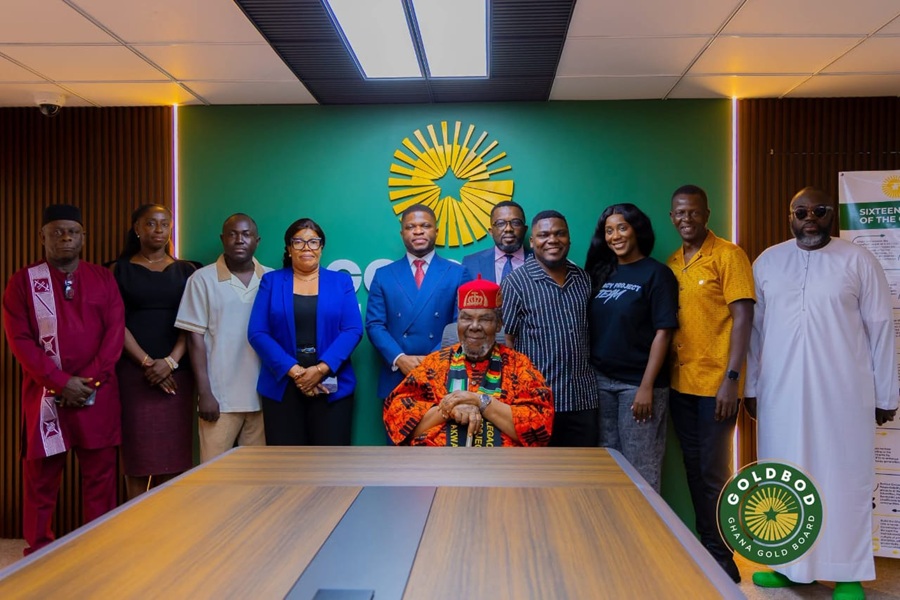
Veteran Nigerian actor and African screen legend, Pete Edochie, has paid a courtesy call on the Chief Executive Officer of the Ghana Gold Board (GoldBod), Sammy Gyamfi, during his visit to Ghana.
Edochie is in Ghana to launch the African Legacy Project, which includes a book, documentary film and an African Youth Mentorship Initiative targeting about 500,000 young people across the continent.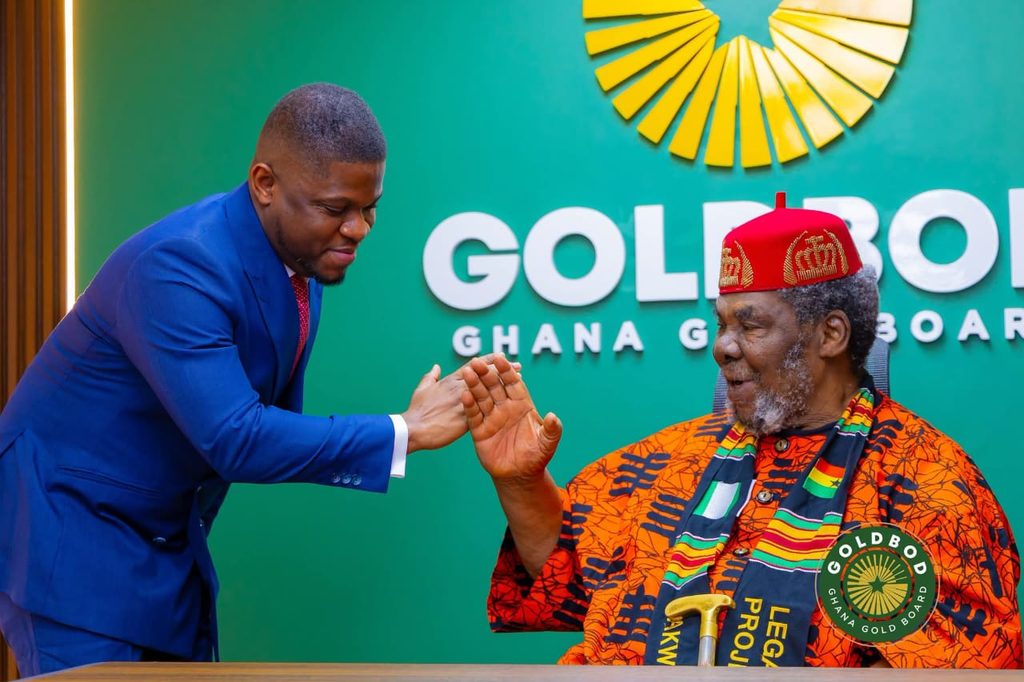
Mr. Gyamfi welcomed the opportunity for GoldBod to support the mentorship initiative, noting that it aligns with the Board’s Special Intervention Programme and its focus on social impact and economic empowerment.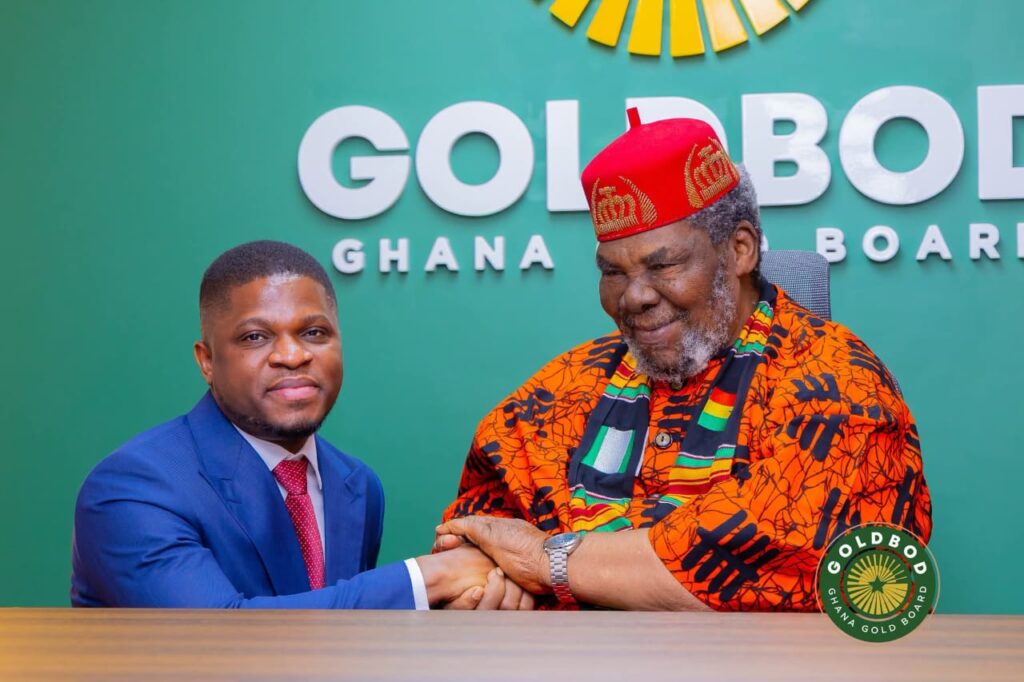
GoldBod’s work is also referenced in Pete Edochie’s new book, which highlights Ghana’s efforts to ensure its gold resources contribute to national development.
By Edem Mensah-Tsotorme
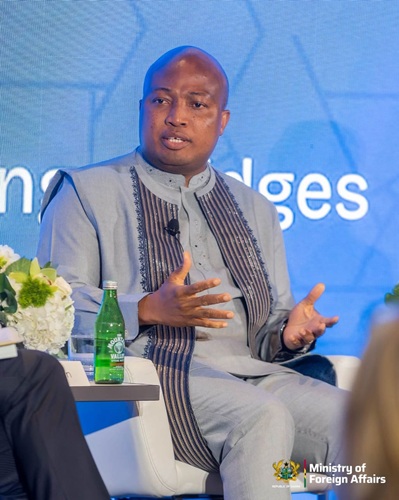
The Ministry of Foreign Affairs has warned Ghanaians seeking employment in Zambia to be cautious of fraudulent job offers that could expose them to human trafficking and forced involvement in cybercrime.
The warning follows the arrest of six Ghanaians in Lusaka, Zambia, during a joint operation by the Zambia Police Service, the Drug Enforcement Commission and the Department of Immigration on August 23, 2026.
According to the Ministry, the operation targeted a facility suspected of being involved in organised cybercrime activities and led to the arrest of 79 people, including 10 Zambians and 69 foreign nationals.
The Ministry said six of the foreign nationals arrested were Ghanaians.
It explained that reports received by the Ghana High Commission in Lusaka indicated that some of those arrested had been recruited through what appeared to be legitimate employment opportunities, including online data entry jobs.
However, the Ministry said some were allegedly forced into online scam activities after their passports were confiscated by their employers.
It warned that the situation highlights how human trafficking groups are using fake employment opportunities to lure unsuspecting job seekers into illegal activities.
The Ministry has therefore advised Ghanaians travelling to Zambia or seeking employment there to thoroughly verify job offers, recruitment agencies and prospective employers before travelling.
Ghanaians living in Zambia have also been urged to remain vigilant when responding to online job opportunities and maintain regular contact with the Ghana High Commission in Lusaka for consular assistance when necessary.
The Ministry said the government remains committed to protecting the welfare and interests of Ghanaians travelling to or living outside the country.
By: Jacob Aggrey