News
NBSSI detects 5,200 fraud alerts on CAP

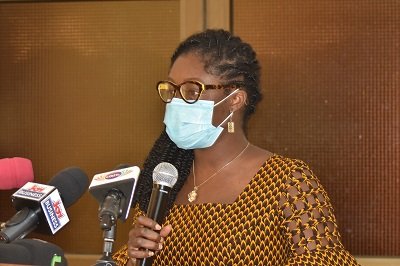
An earlier attempt by the National Board for Small Scale Industries (NBSSI) to begin disbursement of funds to eligible businesses under government’ Coronavirus Alleviation Programme (CAP) has hit a snag due to fraudulent activities.
Executive Director, Mrs Kosi Yankey-Ayeh, who made the disclosure, said at least 5,200 fraud alerts had been detected on the Board’s online portal dedicated to the programme since it came on stream.
“The online portal has detected 5,200 fraud alerts representing multiple applications with same mobile money or bank account details and we are working to address that to ensure that the right people get the funds,’ she said at a news conference in Accra last Friday.
According to the Executive Director, there have been instances where “people have registered with same mobile money account number for about 100 people which is unacceptable and we are working with KPMG to conduct strong data analysis to detect these fraudulent activities and get the accurate data to commence payment soon.”
The NBSSI had scheduled June 12 to commence disbursement of funds to businesses adversely affected by the coronavirus pandemic.
“The whole process will be done on technology without any human involvement. So even if you apply on paper we will go into the IT platform to decide if you met the criteria, based on assumptions designed for the technology,” Mrs Yankey-Ayeh had said in a recent media interview.
Mrs Yankey-Ayeh pointed out that investigations were ongoing into the matter and “we have directed some of these issues to the National Security and the Ghana Police Service to help us address them.”
Meanwhile, the Executive Director submitted that as at Thursday, June 18, 2020, more than 450,000 applicants had registered unto the programme with 75 per cent of the number, having successfully completed their applications.
“Applicants who registered via the USSD code represent 58.8 per cent, the remaining 41.2 per cent represents registrations done directly on the web portal.”
As regards gender disaggregation, the Executive Director pointed out that females constitute 66 per cent of applications who requested for 47 per cent of total funds available with the males, representing 34 per cent, requesting 52.6 per cent of total value of funds.
President Akufo-Addo on May 19 launched the CAP business support scheme to provide support to micro, small and medium-scale enterprises (MSMEs negatively affected by the coronavirus pandemic.
Out of the GH¢1.2 billion earmarked for this programme, GH¢600 million will be disbursed as soft loans to MSMEs with up to a one-year moratorium and a two-year repayment period.
The rate of interest on government’s GH¢600 million facility is three per cent.
Additionally, selected participating banks will provide negotiated counterpart funding to the tune of GH¢400 million, making, in all, GH¢1 billion for disbursement under the scheme, expected to attract some 180,000 beneficiaries across the country.
Source: Ghanaian Times


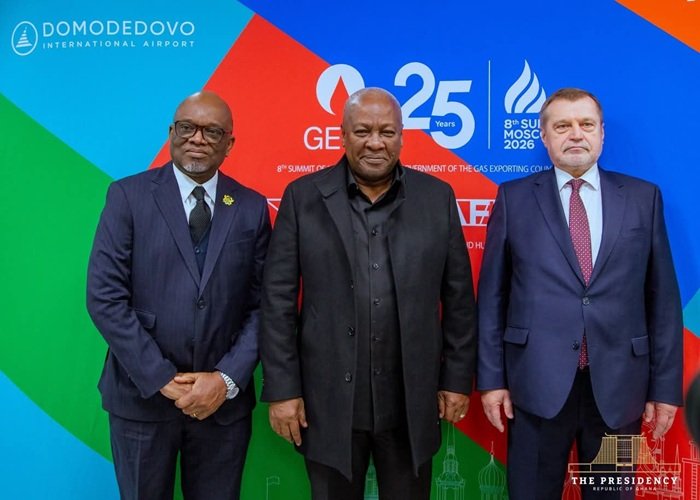
President John Mahama has arrived in Moscow, Russia, from Ethiopia to participate in the 3rd Russia-Africa Summit.
The summit is being hosted by Russian President Vladimir Putin.
During the visit, President Mahama will join fellow African leaders at the Economic and Humanitarian Forum and summit plenary sessions.
He is also scheduled to hold high-level bilateral talks with President Putin and attend a Kente exhibition organised by the Russia-Ghana Parliamentary Forum.
As part of the visit, the President will receive honorary doctorate degrees from the Russian University of Transport and the Peoples’ Friendship University of Russia.
He will also engage Russian businesses and state institutions to advance bilateral cooperation between Ghana and Russia.
By Edem Mensah-Tsotorme
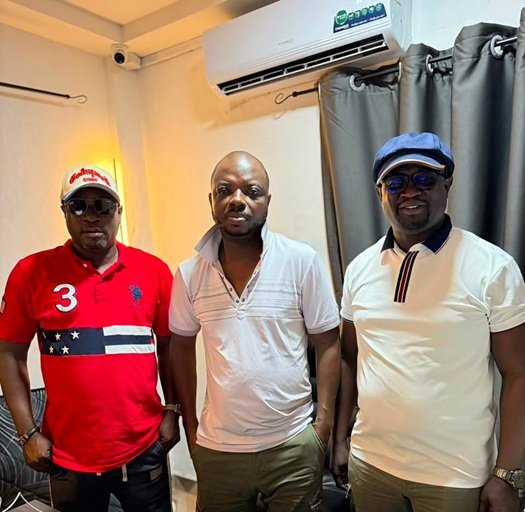
The Greater Accra Regional Organiser of the New Patriotic Party (NPP), Moses Abor, has met with the Bono Regional Chairman of the party, Kwame Baffoe, popularly known as Abronye DC, to address concerns arising from recent social media developments.
In a statement shared , Mr. Abor said he yesterday visited Chairman Baffoe over comments he made on his show, which had raised concern among some party activists.
According to him, he also engaged Charles Opoku Presidoo and ironed out grievances he had earlier held regarding the matter.
Mr. Abor said he was pleased that in the spirit of unity and the party’s shared commitment to return to power in 2028, they had a constructive conversation and addressed the concerns amicably.
“With the matter now resolved, I encourage all Party activists to let the matter rest and redirect our energy toward holding the NDC accountable for its failures and misleading claims,” he said.
He urged party members to continue making the case to Ghanaians on why Dr. Mahamudu Bawumia is the right person to lead the country in 2028.
By Edem Mensah-Tsotorme