Hot!
Nana Afrakoma II, empowering needy young women with employable skills

- /home/u249204778/domains/spectator.com.gh/public_html/wp-content/plugins/mvp-social-buttons/mvp-social-buttons.php on line 27
https://spectator.com.gh/wp-content/uploads/2023/11/school-3.jpg&description=Nana Afrakoma II, empowering needy young women with employable skills', 'pinterestShare', 'width=750,height=350'); return false;" title="Pin This Post">
- Share
- Tweet /home/u249204778/domains/spectator.com.gh/public_html/wp-content/plugins/mvp-social-buttons/mvp-social-buttons.php on line 72
https://spectator.com.gh/wp-content/uploads/2023/11/school-3.jpg&description=Nana Afrakoma II, empowering needy young women with employable skills', 'pinterestShare', 'width=750,height=350'); return false;" title="Pin This Post">
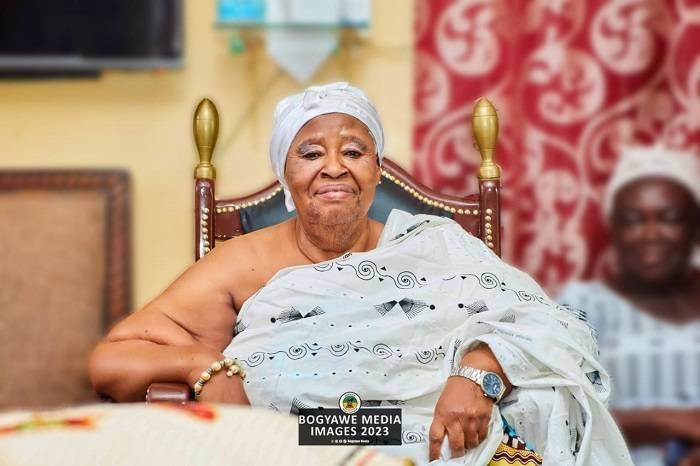
Nana Afrakoma II
Dreams do come true and it is even more fulfilling and gratifying when the reality of the dream impacts lives positively.
That is the case of Nana Afrakoma II, Queen Mother of Akwamu Traditional Area, who has served her people in this capacity since 1964.
She was only 18 when the huge crown of Queen Mother of the revered ‘Akwamu State’ in the Asuogyaman District of the Eastern Region was placed on her head.
It was a huge responsibility which the young Queen Mother took while looking out for opportunities to realise her dream of empowering needy young people in the area through skills development and training.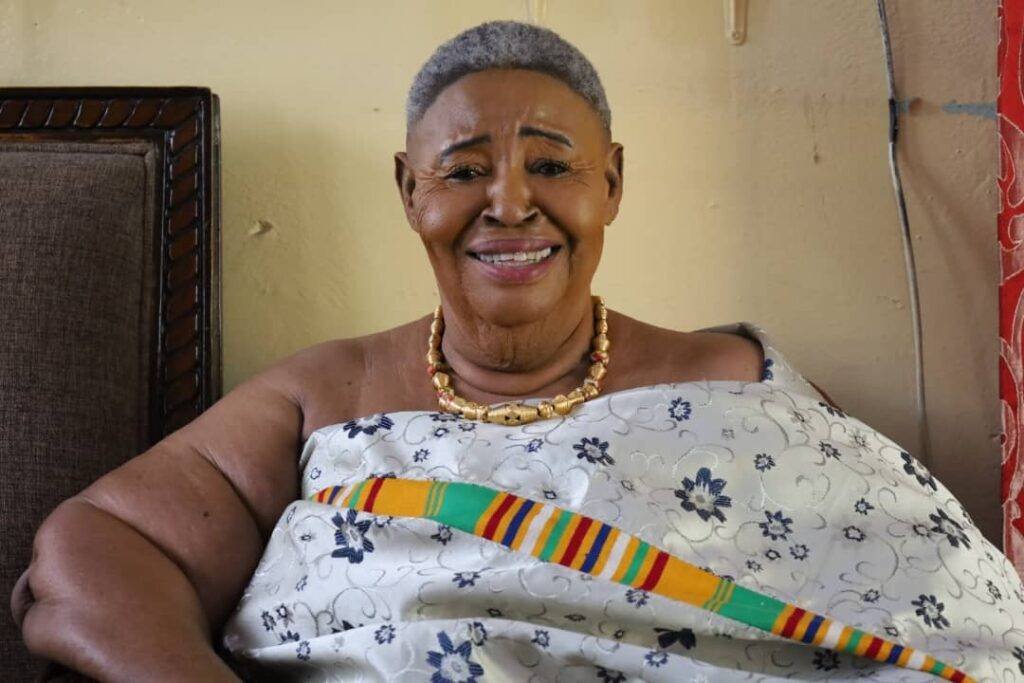
In pursuance of her dream after 59 years of various strides, Nana Afrakoma II, through the Ohemea Afrakoma II Foundation, established a vocational training centre to provide educational space for the people.
The Nana Afrakoma II Vocational Training Institute, officially opened in 2021, is targeted at providing employable skills to the needy young people, especially women, in the area.
The skills being tutored at the Institute range from hairdressing to fashion and beads making.
The Institute currently has a student population of 30, with the first batch scheduled for graduation on November 25 this year.
In an interview with The Spectator, Nana Afrakoma II said the Institute was also established with the intents to tackle the increasing rate of teenage pregnancy in the area.
The consequence of rising cases of teenage pregnancy in the area, she explained, was a corresponding increase in school dropouts, hence the decision to train the beneficiaries to be able to care for their wards.
“Our interest now is providing young men and women who had dropped out of school due to pregnancy with employable skills and a means to improve their livelihood.
We have, within the past two years, enrolled 30 students in the Institute at no cost. The 12 who have completed the training would be graduating on November 25,” Nana Afrakoma II noted.
She said although the Institute was initially established for the indigenes of Akwamu, it was currently providing skills training to young people from the whole of the Asuogyaman District, including Senchi, Atimpoku and other neighbouring communities.
In addition to the training, she noted, the graduates are supported with start-up capital to enable them commence their business operations.
“We don’t want to train and leave them to their fate. We want to see them flourish and able to care for themselves and their offsprings.
For those in fashion, we will give them sewing machines while those who trained in hairdressing will be supported with hair dryers. Those in beads making will also receive support to be able to start their business,” Nana Afrakoma II said.
Although free for the students, she said, the running of the Institute had come at a huge financial cost to the Paramountcy, which has continuously provided financial support, the United Nations Population Fund (UNFPA), also deploying its resources to help the Institute meet it objectives, the Asuogyaman District Assembly and other voluntary donors.
“We are grateful to the Akwamu Paramountcy for the continuous support as well as the UNFPA which has taken a genuine interest in what we do here.
The Assembly has also donated a four-classroom block to be used as one of our training centres. So yes, despite the financial burden, the support from everyone, including voluntary donors, has made it possible for the school’s survival,” Nana Afrakoma II added.
She said in addition to providing the young people with training on employable skills, sensitisation on the dangers of teenage pregnancy has been heightened to prevent others from going through similar experiences.
The Queen Mother called for increased support to enable the Institute develop its 30-acre land to be able to expand and admit more young people who hold an interest in pursuing any of the skills development programmes.
By Claude Nyarko Adams


The University of Ghana Medical Centre (UGMC) has disputed claims made on social media by comedian Michael Blackson concerning the treatment given to his late mother, saying a review found that the allegations did not accurately reflect what happened during her stay at the hospital.
In a statement issued in Accra on August 5, 2026, the management of UGMC expressed condolences to Mr. Blackson and his family over the death of his 83-year-old mother, who died at the facility on July 16, 2026.
The hospital said it had taken the concerns raised by Mr. Blackson seriously and conducted a thorough review in line with its clinical and administrative procedures.
According to the statement, the facts presented by Mr. Blackson on social media contained “numerous inaccuracies” and did not accurately reflect the medical care provided to his mother.
UGMC explained that she was referred to the facility from another hospital and received treatment there from May 27 to July 16, 2026, a period of about eight weeks.
The hospital stated that it would not release details of her diagnosis, treatment, medical records or other aspects of her care because it had a duty to protect patient confidentiality, even after death.
It said the decision was intended to respect the dignity of the deceased and the privacy of her family.
UGMC further stated that all clinical decisions at the facility are made by qualified healthcare professionals based on medical judgment, established standards of care and the best interests of the patient.
The statement added that such decisions are made in consultation with authorised family representatives where necessary and that billing and financial procedures are governed by institutional policies and are separate from clinical decision-making.
The hospital noted that it values feedback from patients and their families and considers both positive and negative comments important for improving the quality of care.
Mr. Blackson had earlier used social media to criticise the care his mother received at UGMC, prompting the hospital’s response.
By: Jacob Aggrey
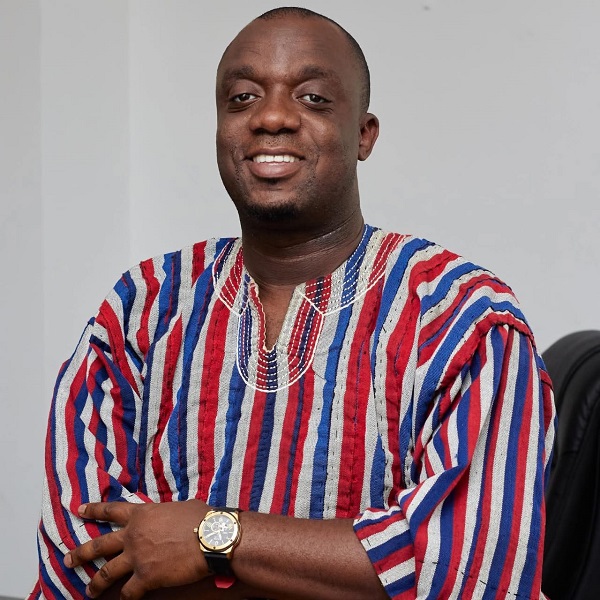
The New Patriotic Party (NPP) has directed all aspirants campaigning in the Greater Accra Region to suspend their campaign activities on August 5 and 6 and instead mobilise supporters for the party’s planned “Democracy Under Attack” demonstration.
The directive was issued by the party’s National Steering Committee in a statement signed by the NPP General Secretary, Justin Kodua Frimpong, on Tuesday.
According to the statement, the decision forms part of efforts to ensure a strong turnout for the demonstration, which is scheduled for Thursday, August 6, 2026.
The party said the protest would begin at 5:00 a.m., with participants expected to gather at the Supreme Court in Accra.
It further directed Regional, Constituency and Polling Station Executives in Greater Accra to work closely to mobilise members and supporters for the event.
“The National Steering Committee is calling on all aspirants currently campaigning across the Greater Accra Region to temporarily suspend their campaign activities on the 5th and 6th of August and join in mobilising support for the upcoming demonstration,” the statement noted.
The NPP appealed to party members and supporters to remain peaceful, disciplined and orderly throughout the protest.
The demonstration forms part of the party’s response to concerns it has raised over issues relating to Ghana’s democratic governance and the justice system.
The NPP leadership expressed confidence that party members would cooperate fully to ensure a successful and peaceful event.
By: Jacob Aggrey

 News1 week ago
Prof. Kwabena Twerefou holds inaugural lecture; calls for better stewardship of Ghana’s natural resources
- News1 week ago
Ahanta Heritage Month: Diplomats, youth tour forts, Cape Three Points and historic sites
- News1 week ago
University of Ghana Students begin 3-Day “Campus to Countries” tour of Togo and Benin