News
‘More than 2m Ghanaians have varying degrees of disability’


- /home/u249204778/domains/spectator.com.gh/public_html/wp-content/plugins/mvp-social-buttons/mvp-social-buttons.php on line 27
https://spectator.com.gh/wp-content/uploads/2025/08/Professor-of-Special-Education.jpg&description=‘More than 2m Ghanaians have varying degrees of disability’', 'pinterestShare', 'width=750,height=350'); return false;" title="Pin This Post">
- Share
- Tweet /home/u249204778/domains/spectator.com.gh/public_html/wp-content/plugins/mvp-social-buttons/mvp-social-buttons.php on line 72
https://spectator.com.gh/wp-content/uploads/2025/08/Professor-of-Special-Education.jpg&description=‘More than 2m Ghanaians have varying degrees of disability’', 'pinterestShare', 'width=750,height=350'); return false;" title="Pin This Post">
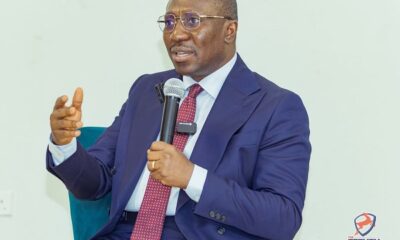
More than 2 million Ghanaians, aged five years and above, have varying degrees of difficulty in performing daily activities, Professor Samuel K. Hayford of the University of Education, Winneba, has disclosed.
He said the figure, pegged at 2,098,138, represented a higher prevalence among females (8.8 per cent) compared to males (6.7 per cent), according to data from the Ghana Statistical Service (GSS).
Visual impairment remains the most prevalent form of disability in Ghana, affecting 4.6 per cent of males and 4.0 per cent of females nationwide.
The Professor of Special Education presented the data at the 42nd Annual Workshop in Accra for Heads of Special Schools, on the theme: ‘Inclusive Education in Ghana: The Role of Special Schools.’
He said the GSS 2021 report revealed that 150,000 persons aged five years and above had severe to profound disabilities, including non-expressive communication (17,577), self-neglect (28,598), unintelligible speech (15,196), immobility (33,778), deafness (19,448), and blindness (35,642).
“Five of Ghana’s 16 regions – North East, Bono, Western North, Savannah, and Oti – lacked special education facilities such as special schools or resource and assessment centres,” he noted.
In addition, four districts; Gushegu (59.4 per cent), North Gonja (55.8 per cent), Central Gonja (54.0 per cent), and Karaga (51.9 per cent), had more than half of all children aged five to 15 years who had never been to school.
Prof. Hayford said Ghana’s 2015 Inclusive Education Policy defined inclusive education as “a system that accommodates all learners, irrespective of their physical, intellectual, social, emotional, linguistic, or other conditions.”
He likened the role of special schools in education to intensive care units in health facilities, indicating that while inclusion was key, there would always be a need for specialised institutions to support learners with profound and pervasive needs.
Prof. Hayford, however, pointed out several implementation challenges, including negative societal attitudes and stigma, gaps in teacher training, limited resources, inadequate teaching materials, assistive technology, and infrastructure deficits.
“Many mainstream schools still lack accessible buildings and facilities, while classrooms are overcrowded, and there are inadequate assessment centres and professionals to identify and support learners with disabilities,” he explained.
To address the gaps, Prof. Hayford proposed increased investment in special schools to enable them to support mainstream schools in meeting the needs of learners with disabilities. —GNA

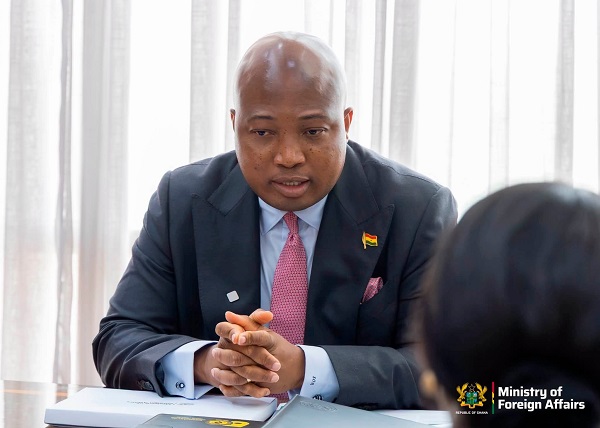
The Government of Ghana has respectfully declined an offer by MTN Ghana to donate GH¢20 million to support Ghanaian victims of the recent xenophobic attacks in South Africa.
In a statement issued on August 26, 2026, the Ministry of Foreign Affairs said it had become aware of media reports suggesting the telecom giant was preparing to make the donation, with publications attributing the announcement to an interview granted by MTN Board Chairman, Dr. Ishmael Yamson.
“The Government of Ghana commends MTN for the offer, however, we respectfully decline,” the Ministry stated.
According to the Ministry, the Mahama administration has made adequate provision for the ongoing evacuation and reintegration of Ghanaians affected by the attacks and is therefore unable to accept the offer.
The Ministry disclosed that this position had earlier been directly conveyed to the Board Chair and CEO of MTN when they called on the Minister of Foreign Affairs, Samuel Okudzeto Ablakwa (MP), on August 14, 2026.
Meanwhile, the government says it remains fully committed to the current humanitarian evacuations and the provision of financial support for the reintegration of every Ghanaian brought back from harm’s way.
The Ministry further assured the public that it will present a comprehensive account of the total cost of the evacuations as soon as the exercise is concluded, in the interest of transparency and accountability.
“Government will continue to create the best business ecosystem for all international brands operating in Ghana to succeed, irrespective of which country their businesses originated from. The welfare of all Ghanaians remains our utmost priority,” the statement added.
By Edem Mensah-Tsotorme
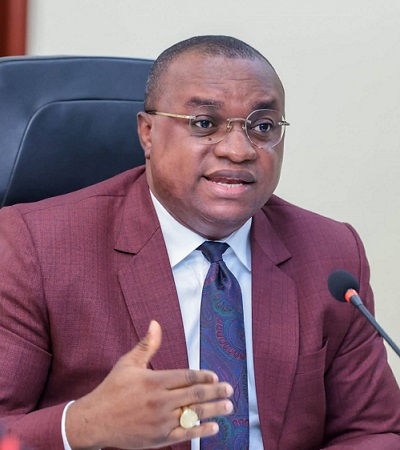
President John Dramani Mahama has made further changes to his government in a mini-reshuffle announced on Tuesday.
As part of the changes, Abdul-Rashid Pelpuo, who until now served as Minister for Labour, Employment and Job Creation, has been reassigned as Minister of State for Special Initiatives.
He is being replaced at the Labour Ministry by Emmanuel Kwadwo Agyekum.
In another move, the Deputy Minister for Defence, Ernest Brogya Genfi, has been reassigned as Presidential Advisor on National Resilience and Emergency Preparedness.
According to a communication from the Presidency, the reassignments take immediate effect.
By Edem Mensah-Tsotorme