News
Let’sustain the peace

- /home/u249204778/domains/spectator.com.gh/public_html/wp-content/plugins/mvp-social-buttons/mvp-social-buttons.php on line 27
Warning: Trying to access array offset on false in /home/u249204778/domains/spectator.com.gh/public_html/wp-content/plugins/mvp-social-buttons/mvp-social-buttons.php on line 27
&description=Let’sustain the peace', 'pinterestShare', 'width=750,height=350'); return false;" title="Pin This Post">
- Share
- Tweet /home/u249204778/domains/spectator.com.gh/public_html/wp-content/plugins/mvp-social-buttons/mvp-social-buttons.php on line 72
Warning: Trying to access array offset on false in /home/u249204778/domains/spectator.com.gh/public_html/wp-content/plugins/mvp-social-buttons/mvp-social-buttons.php on line 72
&description=Let’sustain the peace', 'pinterestShare', 'width=750,height=350'); return false;" title="Pin This Post">
Exactly two years ago, some media colleagues and I from Ghana and Nigeria had the privilege of being invited by the African Mission in Somalia (AMISOM) to witness first hand the roles being played by our country men and women in support of the peace process in Somalia.
This feature is a fulfilment of a promise I made to the then Deputy Head of the Ghanaian Police Contingent in AMISOM, Chief Superintendent Cosmos Allan Anyan who advised that upon our return to Ghana we should use our various media platforms to highlight the negative effects of war to Ghanaians when we are about going to the 2020 December Polls.
In his opinion, if we did so, it would among other things go a long way to get the citizenry to cherish the relative peace the nation was enjoying and guard it jealously instead of taking it for granted and engaging in activities that have the potential to compromise the peace of our motherland, Ghana .
AMISOM is basically about peace keeping mission in Somalia operated by the African Union (AU) with the consent of the United Nations (UN) and aimed at restoring peace in the war torn nation .
Somalia was once a beautiful and a peaceful country but was torn into shreds by civil war in the 1980s.
The one week we spent in Somalia in November 2018, I must confess that I lived in danger zone because unlike Ghana where I could move freely on foot or soft body vehicles without fear of a gun shot, bomb blast, suicide attacks and other related issues, that was a sharp contrast.
We moved about most of the time in Mamba vehicles (a specialised vehicle which provides protection against mines of up to seven kilogrammes) wearing a body armour which weighed probably about 10 kilogrammes overall combat helmet which weighed about 30 pounds.
Even though our movements were under tight security, it was still very uncomfortable knowing that the Al-Shabab was also close by and could strike at any time.
On a couple of occasions, we escaped death because the intelligence gathering machinery of the AMISOM was on its toes.
We had the opportunity to visit some parts of the country and if you were told this was once a peaceful place, you would doubt.
There were visible marks of gun shots in some of the buildings and traces of bomb blasts and the situation was more heart breaking at the Internally Displaced Persons’ Camps.
I still remember how some of the children looked sick, mothers looked frustrated and men hopeless at the Alrahma IDP Camp.
Some of them told us how they could go a day or two without food or even water and for breastfeeding mothers who had to feed their younger ones on an empty stomach was quiet worrying .
There were more than 1,000 Camps in Mogadishu, the national capital of Somalia, according to the then AMISOM Gender Focal Person, Inspector Rachel Malambo.
A 42-year old widow, Ms Abiba Nuru Alee who granted the media an interview through an interpreter told us she was once an independent woman who owned a house, a farm and other properties with enough to eat and spare.
She was even taking care of eight other people but because of the war, she lost everything and had found herself in an IDP Camp where she had to beg for food and water and aside from that she could not tell whether she would survive the day or not.
For many women like her who had lost their husbands to the war, she wouldn’t wish war even on her worst enemy.
Ms Alee said no country should engage in any activity that had the tendency to destroy the peace of a country because the effect was irreversible or devastating.
As the nation goes to the polls on December 7, let us all remember what women and children like Ababa Nuru Alee are going through and be mindful of our deeds and utterances.
A war may take days, weeks, months or even years but its repercussions may take decades or even centuries and the nation may never recover.
Well, physical things could be fixed but the emotions of people never get restored. The hurt from families who never get to see their loved ones again whether they are dead or separated .
When there is war, women and children and even men are sexually abused. Some women never get to know the fathers of their children and the defiled children perpetually live in trauma.
The issues of hunger and starvation, no access to quality healthcare including maternal healthcare, education and having to live in a state of insecurity is heartbreaking.
Let us always remember that we have only one Ghana. There are people who deliberately foment trouble because they stand to benefit if the country is in chaos.
Don’t forget the conflict entrepreneurs. For them, it is an opportunity to sell their fighter jets, arms and ammunition, armoured vehicles and conflict apparels among others.
Let peace prevail.
From Dzifa Tetteh Tay, Tema.


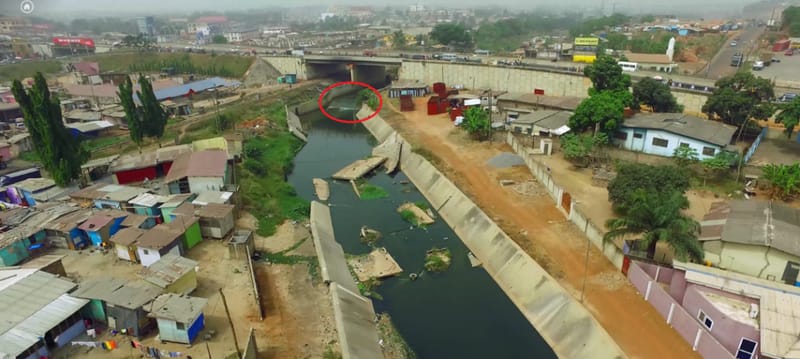
Construction of a major underground stormwater drain along the Dr. Busia Highway within the Kaneshie enclave will commence on September 7, 2026.
The Project Coordinator for the Greater Accra Resilient and Integrated Development (GARID) Project, Dr. Kwadwo Ohene Sarfo, announced this at a special media briefing on Wednesday.
According to him, the works will involve the construction of a double-cell underground rectangular drain measuring approximately 10 metres wide and 1.95 kilometres long, stretching from Pamprom Junction to First Light Junction.
The new drain will replace the existing two 1.2-metre diameter pipes, which are inadequate to carry the volume of stormwater in the area.
Dr. Sarfo said the drain will connect at one end to the recently completed section within the Accra Academy campus and at the other end to the existing drain at Pamprom Junction.
He said the construction is expected to run from September 2026 to October 2027.
The project forms part of government’s broader flood prevention and mitigation programme aimed at addressing perennial flooding in Accra.
By Edem Mensah-Tsotorme
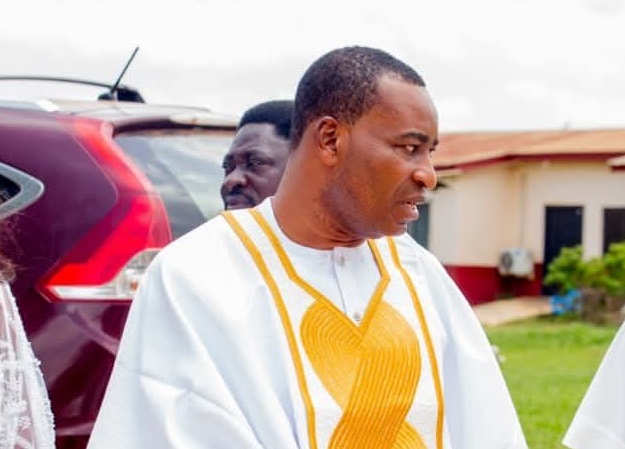
The former Ashanti Regional Chairman of the New Patriotic Party (NPP), Bernard Antwi Boasiako, popularly known as Chairman Wontumi, has withdrawn from the party’s National Chairmanship race.
In a statement issued yesterday, Chairman Wontumi who is currently serving a 20-year jail term said his decision was driven by his love for the party and his unwillingness to let his personal circumstances distract the NPP from its rebuilding efforts.
“There are moments in the life of a man when the heart wants to continue, but duty demands sacrifice. Moments when one must quietly set aside personal ambition, not because the dream has died, but because the family he loves must not be made to carry his burden. Today, I find myself at such a painful moment,” he wrote.
He disclosed that after many nights of prayer, sober reflection and consultations with his family, legal team, party elders, campaign team and trusted supporters, he concluded that his present situation must not become an additional burden on the NPP.
“This is not the decision my heart desired, but sometimes, true love requires us to release what we deeply want in order to protect what we love even more,” he added.
Recounting his years of service, Chairman Wontumi said he had served the party with everything within him, walking through heat and rain, travelling to remote communities and standing with the grassroots in both victory and defeat.
“For many years, I have served the NPP with everything within me… The NPP is not merely a political party to me. It is my family. It is my home. It is a cause to which I have dedicated a significant part of my life,” he stated.
He explained that the party, already carrying the pain of electoral defeat and the huge responsibility of preparing for the future, should not be made to carry his personal weight.
“That is why I cannot allow my present situation or personal ambition to distract the party from the difficult work of rebuilding. I cannot ask the party to carry my weight when it is already carrying the pain of defeat and the enormous responsibility of preparing for the battle ahead. I would rather carry this pain quietly than allow the party I love to suffer because of me,” he said.
He further sympathized with his supporters across the 16 regions, acknowledging that the decision would be painful for many who had sacrificed for his campaign.
“To my teeming supporters across all sixteen regions, I know this message will hurt. I know many of you will read it with tears in your eyes because I understand the sacrifices you have made for this journey,” he said.
By Edem Mensah-Tsotorme