News
Hisense Ghana donates H60 Ultrasound to Komfo Anokye, Tamale Teaching hospitals


- /home/u249204778/domains/spectator.com.gh/public_html/wp-content/plugins/mvp-social-buttons/mvp-social-buttons.php on line 27
https://spectator.com.gh/wp-content/uploads/2025/10/Nana-Ama-MacBrown-presenting-the-equipment-to-the-mediacl-authorities-1000x600.jpg&description=Hisense Ghana donates H60 Ultrasound to Komfo Anokye, Tamale Teaching hospitals', 'pinterestShare', 'width=750,height=350'); return false;" title="Pin This Post">
- Share
- Tweet /home/u249204778/domains/spectator.com.gh/public_html/wp-content/plugins/mvp-social-buttons/mvp-social-buttons.php on line 72
https://spectator.com.gh/wp-content/uploads/2025/10/Nana-Ama-MacBrown-presenting-the-equipment-to-the-mediacl-authorities-1000x600.jpg&description=Hisense Ghana donates H60 Ultrasound to Komfo Anokye, Tamale Teaching hospitals', 'pinterestShare', 'width=750,height=350'); return false;" title="Pin This Post">
Hisense Ghana has donated a state-of-the-art Hisense H60 Ultrasound Diagnostic System to the Komfo Anokye Teaching Hospital (KATH) in Kumasi and the Tamale Teaching Hospital (TTH) to strengthen medical care at the two major health facilities.
The gesture demonstrates the company’s commitment as a global technology leader transcending homes and reaching the critical sphere of public health.
The donation is strategically vital, recognising the essential role of diagnostic imaging.
Presenting it, the product ambassador, Nana Ama MacBrown, said in places like Ghana, where resources can be constrained, ultrasound was often the primary, non-invasive diagnostic tool for an estimated 70 per cent of initial obstetric and gynaecological assessments, and plays a crucial role in diagnosing conditions ranging from abdominal emergencies to cardiac issues.
She said equipping major teaching hospitals with advanced systems directly enhances patient outcomes and medical education.
She described the Hisense H60 as a proven reliable medical technology that will no doubt enhance operations at the two facilities.
“Globally, Hisense ultrasound products are utilised in over 20 premier Chinese hospitals, where they have successfully supported more than 50,000 complex diagnostic cases, earning unanimous clinical recognition from expert physicians.”
She said “The H60 system leverages advanced image processing and a user-friendly interface to deliver exceptional clarity, which is crucial for early and accurate diagnosis—a factor that can drastically improve patient prognosis in critical care, paediatrics, and emergency departments.”
The donation, she said, was not the first and would not be the last as Hisense recognises its corporate social responsibilities to its people.
In August 2020, Hisense Ghana donated two fully-equipped ambulances, valued at $90,000, to the Apinto Government Hospital and the Tarkwa Municipal Hospital.
In 2023, it made a substantial donation of an advanced ultrasound diagnostic system—valued at over $50,000—to the prestigious University of Ghana Medical Centre (UGMC), Legon, providing essential tools for the next generation of Ghanaian medical professionals.
Through this donation of the Hisense H60 Ultrasound, it assures the beneficiaries and partners of a successful and enduring collaboration aimed at delivering better health outcomes for the Ghanaian people.
By Spectator Reporter
Join our WhatsApp Channel now!
https://whatsapp.com/channel/0029VbBElzjInlqHhl1aTU27



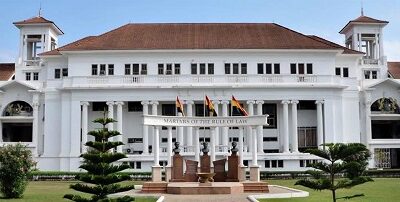



The Director of Legal Affairs of the New Patriotic Party (NPP), Gary Nimako Marfo, has questioned who will bear the cost of conducting presidential and parliamentary primaries following the Supreme Court’s ruling on the party’s delegate system.
Speaking to journalists, Mr. Nimako Marfo said he would not immediately comment on the ruling, adding that he wanted to wait for the full details before sharing his views.
“I don’t want to comment on it now. Let’s wait,” he said.
When asked about the Supreme Court’s decision that all members in good standing should vote in party elections, he shifted attention to the financial implications of implementing the ruling.
According to him, allowing all members in good standing to vote would increase the cost of organising internal party elections.
He questioned who would pay for the expanded electoral process.
“Who is going to pay for the cost of the elections?” he asked.
When a journalist suggested that political parties would bear the cost, Mr. Nimako Marfo replied, “Let’s wait and see.”
The comments come after the Supreme Court ruled that political parties should allow all members in good standing to vote in their internal elections, a decision that is expected to expand participation but also increase the financial and logistical demands of organising presidential and parliamentary primaries.
By: Jacob Aggrey
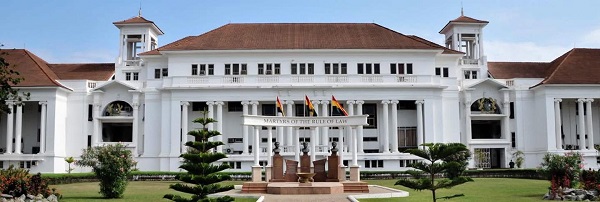
The Supreme Court of Ghana has declared the delegate system used by political parties to elect presidential and parliamentary candidates unconstitutional.
In a 5-2 majority decision delivered, the Court ruled that the long-standing system violates democratic principles and ordered all political parties to ensure every registered, card-bearing member participates in presidential and parliamentary primaries.
The ruling brings to an end decades of internal party elections conducted by a limited number of delegates.
The suit was filed by former Minister for Environment, Science, Technology and Innovation, Professor Kwabena Frimpong-Boateng; veteran politician Dr. Nyaho Nyaho-Tamakloe; and former Minister for Lands and Forestry, Dr. Christine Amoako-Nuamah.
The plaintiffs argued that the delegate system created inequality among party members by granting voting rights to a privileged minority while excluding ordinary members in good standing.
They told the Court that restricting voting rights to delegates was inconsistent with the democratic principles enshrined in the 1992 Constitution.
The Attorney-General’s Department supported the suit and urged the Court to adopt a “one member, one vote” approach.
In its submission, the State argued that political parties perform an important public function in Ghana’s democratic framework and that their internal electoral processes must reflect constitutional values of equality, participation and universal suffrage.
The Attorney-General further submitted that expanding voting rights to all registered members would strengthen accountability and deepen internal democracy within political parties.
The judgment means that going forward, presidential and parliamentary candidates will be selected by all registered members of a political party, instead of by delegates alone.
Political parties are expected to review their constitutions and structures to comply with the Court’s directive ahead of the 2028 general elections.
By Edem Mensah-Tsotorme