News
GFA hands over Nissan Navara Pickups from FIFA Forward Program to Regional Football Associations

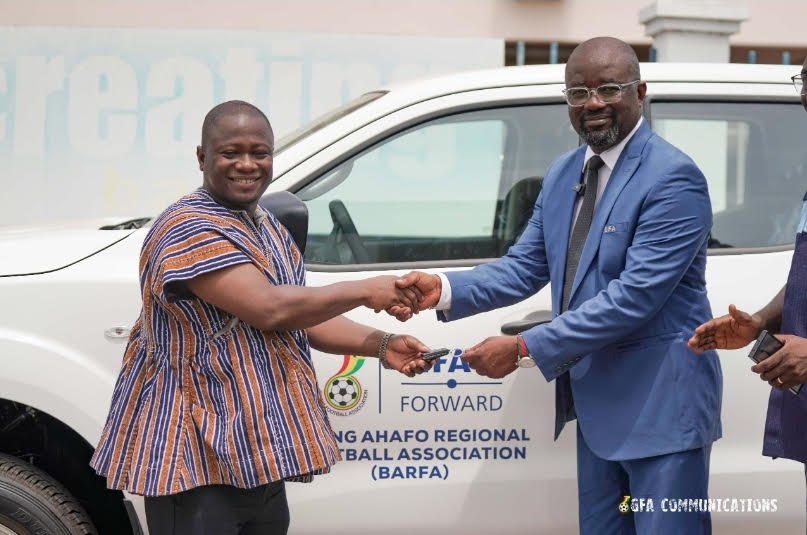
Eight Regional Football Associations (RFAs) today received Nissan Navarra pickups as part of the FIFA Forward program, an initiative aimed at strengthening football development across the country.
The beneficiary regions were: Brong Ahafo Regional FA, Upper West Regional FA, Central Regional FA, Western Regional FA, Eastern Regional FA, Upper East Regional FA, Volta Regional FA and Ashanti Regional FA
These vehicles, provided under FIFA’s flagship development project, are intended to support the day-to-day administrative and operational activities of the RFAs.
The move is part of GFA’s broader vision to decentralize football development and empower regional bodies with the tools they need to function effectively.
The Greater Accra Regional FA and Northern Regional FA are also slated to receive their vehicles as part of a subsequent FIFA Forward program.
President Kurt Edwin Simeon-Okraku, who has been championing infrastructural and logistical upgrades across all levels of Ghana football, expressed confidence that the vehicles would boost efficiency and accessibility in the regions.
This development underscores the GFA’s commitment to maximizing the benefits of international support programs like FIFA Forward to promote grassroots football and ensure that all corners of the country are equipped to contribute meaningfully to the national football agenda.
The President was joined by the Executive Council and the Acting Director-General of the National Road Safety Authority (NRSA), Mr. Abraham Amaliba.




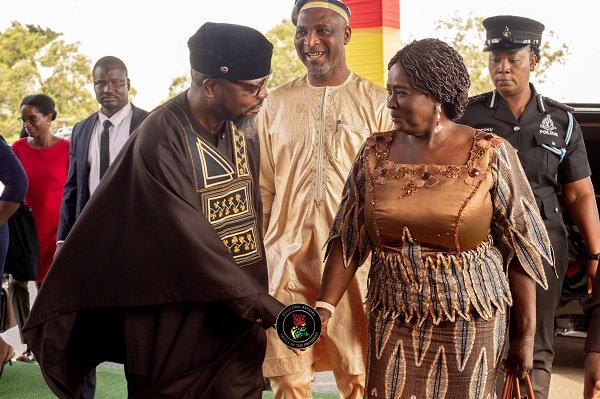
The Vice President of Ghana, Jane Naana Opoku-Agyemang, has announced that Ghana is leading efforts at the United Nations to have the transatlantic slave trade formally recognised as one of the greatest crimes against humanity.
She made the remarks while serving as Guest of Honour at a citizenship ceremony organised by the Diaspora Affairs Office and the Ministry of the Interior, where about 150 members of the African diaspora were granted Ghanaian citizenship at the Accra International Conference Centre yesterday.
The Vice President emphasised that recognising the transatlantic slave trade would affirm global commitment to truth, remembrance and justice for people of African descent.
She also highlighted Ghana’s continued role as a place of reconnection for the diaspora, referencing historic sites such as Cape Coast Castle and Elmina Castle.
In his remarks, the Minister for Interior, Muntaka Mohammed-Mubarak, said that the ceremony represented the culmination of a legal and administrative process through which individuals with strong ties to Ghana have formally become citizens of the Republic.
He noted that through the Ministry of the Interior and its partner institutions, the Government of Ghana remains committed to ensuring that the process of acquiring citizenship is transparent, credible, and consistent with the laws of Ghana.
Addressing the ceremony, the Director of Diaspora Affairs at the Office of the President, Kofi Okyere-Darko said the occasion symbolises far more than the formal granting of nationality.
“What we mark today extends far beyond the granting of citizenship; it represents the restoration of a connection shaped by history carried across continents through generations and now meaningfully reaffirmed here in the land from which it first began,” he said.
Darko noted that while citizenship is often seen as a legal status, it also carries a deeper emotional and cultural significance.
He explained that many members of the African Diaspora have long felt a strong connection to the continent through ancestry and cultural heritage, making their decision to become Ghanaian citizens a full-circle moment.
“For many of you, the path that led here was guided by ancestry, by a cultural memory, by a persistence sense that somewhere on this continent that was where it all begun.
“Today that history comes full circle. Ghana is not welcoming strangers; Ghana is receiving family,” he said.
The ceremony was also attended by Minister for Tourism, Abla Dzifa Gomashie.
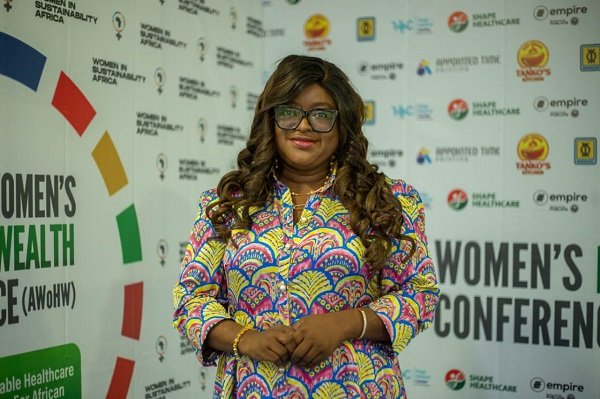
Ghanaian media personality, entrepreneur and Convener for Women In Sustainability Africa (WiSA), Nana Yaa Serwaa Sarpong has advised women to build their capacity to make money, but must not do everything for it.
According to her, this will cater for their needs and rather than making them dependent on others.
In doing so, she advised them not to chase money, adding that it will only make them do anything for it, which will bring regrets later.
She made these remarks when speaking at the African Women’s Health and Wealth Conference (AWoHW) held on March 5, 2026, at the Shippers House in Accra.
“Women must make money but not chase it, because doing so will make them do anything and everything for money,” she said.
Also, she charged them to look at what they spend on, advising them to focus on acquiring assets rather than liabilities.
In all of these, she urged them to prioritise their health, because it is what will enable them to keep working.
Nana Yaa Serwaa also encouraged them to build more social capital, which will help them create a network and good relationships, adding that opportunities come through human beings.
According to her, savings can only be sustained when one has discipline: “If you spend beyond what you make, it would be difficult to cater for tomorrow.”
She revealed that as part of efforts to empower women, measures have been put in place to train 16,000 women in sustainable farming and very soon, it would be rolled out.
WiSA is a Coordinating Pan-African Organisation that works with other CSOs, NGOs, Corporate Institutions, local and International Development Organizations and individuals to bring all women, men, young people and women groups together (especially those at the grassroots level) to foster the achievement of the SDGs across Africa.
WiSA stands for the development of new perspectives and catalytic ideas towards accelerating growth for the achievement of the SDGs including closing the Gender Inequality gap.
By Edem Mensah-Tsotorme