Bussiness
Germany re-focuses devt partnership on food processing


One major problem Ghana is facing is the inability to add value or process its products, leading to post-harvest losses and paltry earning on such resources.
Many decades after independence the country continues to export natural and raw materials in their raw state, thus earning little on such products.
For example, cocoa, the main cash crop and a major foreign exchange earner, is largely continued to be exported in its raw form.
Particularly in the area of agriculture, lack of processing makes a lot of food go waste during the period of glut and create shortages during the lean season.
A visit to the tomato and water melon producing communities during the major season is a pitiable sight.
The farmers out of frustration sell their produce at cheaper prices or allow them to rot on the farm.
Efforts by successive governments, for example, to create silos and other storage facilities, to store food products such as grains, appear to have done little to address post-harvest-losses.
The 2020 Food Security Analysis conducted by the Ghana Statistical Service (GSS) indicated that about 3.6 million (12 per cent of the population) were food insecure.
It said 2.8 million people, representing 78 per cent of the sampled population lived in the rural area, while 0.8 million representing 22 per cent of the sampled households lived in the rural areas.
Per, the report, food insecurity does not mean there is hunger in Ghana, but that people do not have food at the right time, price and place with the required nutritional value.
It defined food insecurity as “the lack of consistent access to enough food, an active healthy life”, and food security as “the physical and economic access to sufficient, safe and nutritious food, by all people at all times to meet their dietary and food preference for an active and healthy life”.
The survey conducted by the Ghana Statistical Service between November and December 2020, covered 65,309 households across all the districts of the 16 regions of the country.
As the report explained, food insecurity did not mean hunger in Ghana, but that people did not have food at the right time, prices and place.
Post-harvest losses could account for the food insecurity situation in the country since farmers do not have storage facilities, or processing plants and technology to preserve their food.
Advanced economies such as Switzerland, US, Canada, Japan, United Kingdom and Germany, for example, do not produce cocoa, but export chocolate to the rest of the world.
This is because they have mastered in food processing and developed technology and machinery for food preservation.
While, the global chocolate industry is worth $150 billion, Ghana and Cote d’Ivoire, which account 60 per cent of the global cocoa production, earn less than $6 billion in a year.
This is because, the two major cocoa producers, continue to export the cocoa beans in their raw form.
It is, therefore, encouraging that the new focus of Germany’s bilateral and economic co-operation relations with Ghana is going to focus on food processing.
In an interview with the German Ambassador to Ghana at the National Agricultural Capacity Building Roadshow organised by Agrihouse Foundation in Accra recently, Daniel Krull, said his country had been a great development partner of Ghana.
He said for the past 20 years, the German Government had supported development projects to the tune of 700 million Euros.
He said the Government of Germany had approved 50 million Euros to, among others, support good governance projects and revenue collection.
Mr Krull said Germany had supported agricultural production for the past 20 years and now wanted to move from food production to support food processing.
According to him, food processing would help create jobs for the youth and address food insecurity in the country.
Mr Krull said Germany did not produce coffee but exported coffee and coffee products to the global market.
“Germany is able to export coffee because one of our strengths is technology and competence in food processing and we believe if Ghana wants to participate more in food processing, it has to do with building more industries here in Ghana,” he said.
He said Germany was supporting private enterprises in Ghana like in Tomato Processing Plants, stressing this “is our main focus.”
Apart from supporting Tomato Processing Plants in Ghana, the German government is supporting farmers to use solar-powered water pumps.
The German government and for that matter the German Embassy should be commended for their efforts to refocus their development priority with Ghana to food processing.
Placing emphasis on food processing has become so important, now that Ghana is playing host to the African Continental Free Trade Area (AfCFTA).
Ghana can harness the benefits AfCFTA presents if it is able to process its raw materials for exports and also earn value.
According to the World Bank, the African Continental Free Trade Area (AfCFTA) Agreement would create the largest free trade area in the world measured by the number of countries participating.
It said the pact projects to connect 1.3 billion people across 55 countries with a combined gross domestic product (GDP) valued at US$3.4 trillion and has the potential to lift 30 million people out of extreme poverty. With the country’s arable lands, Ghana could become the food basket for Africa.
This goal can be achieved if attention is given to value addition and food processing to help add value to the country’s food products to ensure their longer shelf life.
Under the government’s One District, One Factory initiative, it should support private sector investment on food processing to help add value to the country’s numerous food crops for export.
In this vein, incentives and tax holidays should be given to companies which intend to venture into food processing. Such incentives would encourage other investors to invest in food processing to address post-harvest losses and food insecurity in the country.
It is also suggested that government should develop policies and programmes aimed at supporting value addition.
In conclusion, The Spectator commends Germany for its continuous development assistance to the country and immense support to the private sector.
We congratulate the new German Ambassador to Ghana, Mr Krull and wish him a fruitful stay in Ghana and believe his service would further deepen and cement the diplomatic, bilateral, and economic bond between the two countries.
Writer’s email: gbetomenyo81@gmail.com
(0246943864)
By Kingsley Asare


Ghanaian dancehall artiste Charles Nii Armah Mensah, known as Shatta Wale, has won two awards at the 43rd International Reggae and World Music Awards (IRAWMA) held in Florida over the weekend.
He picked up the Best African Dancehall Entertainer award as well as Concert of the Year for ShattaFest.
In a statement, Shatta Wale’s management expressed appreciation to the organisers and supporters of the awards.
“Management would like to sincerely appreciate the organisers of the IRAWMA awards for the recognition and continuous support for African music on the global stage.
“We also extend our deepest gratitude to fans across the world, especially the Shatta Movement fraternity, for their unwavering support, votes, and dedication throughout the years,” the statement said.
The statement added that the latest wins reaffirm the artiste’s position as one of Africa’s leading musical exports and a prominent figure in global dancehall culture.
The awards bring Shatta Wale’s total haul at the IRAWMA to 11, highlighting his continued presence on the international reggae and dancehall scene.
At last year’s edition, he won three awards: Best African Dancehall Entertainer, Best Music Video for “Killa Ji Mi”, and Best Crossover Song for “Commando” featuring Bounty Killer. -GNA
Bussiness
Global Market Volatility: Gov’t absorb GH¢2.00 per litre on diesel and GH¢0.36 per litre on petrol

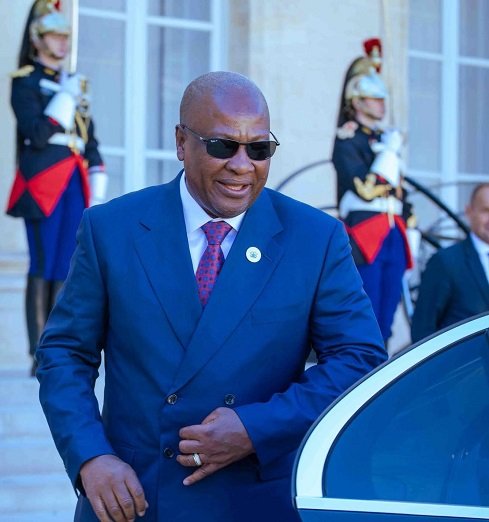
Effective Thursday, April 16, 2026, which is the next pricing window, the Government will absorb GH¢2.00 per litre on diesel and GH¢ 0.36 per litre on petrol.
This intervention is intended to cushion customers and ease the cost burden on households, transport operators, and businesses.
The measure, approved by Cabinet, is in response to rising prices of petroleum products on the international market, which have significantly impacted ex-pump prices in Ghana.
This temporary intervention will remain in force for a period of one (1) month.
During this period government will continue to closely monitor developments in the global oil market and assess the need for further policy adjustments.
A statement signed by Minister of Government Communications, Felix Ofosu Kwakye noted that they remain commited to maintaining price stability, protecting livelihoods, and supporting Ghana’s economic recovery in the face of external shocks.