Features
Finance Minister claims economy is back on track …But the ordinary Ghanaians say impact is not being felt in their pockets

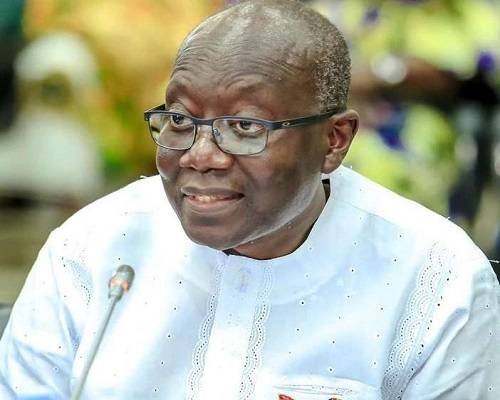
Ken Ofori-Atta
There are two schools of thought about a recent statement attributed to the Finance Minister, Ken Ofori-Atta with regards to the economy which he claimed had taken shape following the injection of the first tranche of loans from the International Monetary Fund (IMF) to revamp Ghana’s ailing economy and bring it back on track.
While the government spearheaded by the Finance Minister, who is the exchequer and economic and financial advisor to the President, aided by IMF officials believe that there are concrete signs of improvement in the economy which are beginning to show or manifest, other school of thought particularly the ordinary Ghanaians believe that the government is being evasive, insincere and hypocritical with the truth. They feel that they are being short-changed and deceived by the government and that nothing really is happening because the signs of economic growth are not being felt in their lives, let alone in their pockets. Their thinking was that all the factors that led the country to the IMF to seek economic bailout still persist and that nothing has changed, claiming that the value is still the same.
ECONOMIC WATCHERS AND THINK TANKS PROJECTIONS
The economic watchers and think tanks have projected a slowdown in the economy to 1.5% in 2023 and remain depressed in 2024 at 2.8per cent, but it is expected to recover to its potential growth by 2025. Some of the economic challenges facing Ghana are unemployment, corruption, inconsistent economic policies, poor human capital development, poor health system, crime and terrorism. Our biggest problem is a debt crisis, high inflation and the devaluation of the local currency, the cedi. These are the challenges that led the country to conclude an agreement with the IMF for a bailout.
The Government of Ghana recently reached a Staff Level Agreement (SLA) with the IMF for a first review of the IMF-supported Post COVID-19 Programme for Economic Growth (PC-PEG). That consensus came after five months of negotiations and paved the way for further progress toward approval of the first review by the IMF Executive Board scheduled for November 2023.
FINANCE MINISTER’S SPEECH
Speaking to the press after that meeting, the Finance Minister Ken Ofori-Atta, expressed optimism about the economic outlook saying: “The economy is responding positively and strongly to the news of government and IMF reaching an SLA for the first review, and we are eager to leverage this momentum to the very moment when the IMF Executive Board approved the first review in November”. He said the SLA was an indicative of the strong performance in meeting end-June 2023 performance indicators – including six quantitative performance criteria and three indicative targets as well as three structural benchmarks. These achievements he said, underscored Ghana’s commitment to economic recovery and stability.
Hear the Minister further: “Year-to-date data reflect significant improvements in economic performance. The gross domestic product has rebounded strongly, averaging 3.2 per cent in the first two quarters of 2023. Inflation on the other hand has been on a relatively downward trend, dropping to 40.1 per cent in August 2023 while the cedi has remained stable with a cumulative depreciation of about 23.5 per cent year-to-date. The fiscal front shows a surplus of about GHc2billion in H1 2023, exceeding the target”.
EMPTY PAPER TALK
Indeed, on paper, these are fine development, especially for the economists since they understand the issue and the corresponding economic language better and therefore can digest and interpret it in the best manner they can. But on a more serious note, the majority of Ghanaians who assess and weigh the performance of the economy with their living conditions, will not side with the government assessment because they don’t feel the transformation of the economy in their pockets since it is not visible. It is the same old story as they find it very difficult to make ends meet. They are still buying food items and other consumables at exorbitant prices, cost of transportation is still high, fuel prices keep escalating, payment of school fees for their children and wards has become so difficult, marriages are fallen apart and on rocks due to financial misunderstandings from couples and a whole lot of economic challenges.
EXPECTATIONS FROM GHANAIANS
Just as the government assured the nation that going to the IMF for economic bailout would solve most of these economic difficulties and improved the living conditions of the people within the shortest possible time, Ghanaians were therefore of the high hopes and expectation that, it would not be long for them to see signs of improvement in their living conditions. However, six months into the programme, nothing is showing and also, they are not feeling the impact of the IMF bailout.
Those so-called economic jargons such as gross domestic product, high inflation, macro and micro economic developments among others, which are difficult to be understood and assimilated and are always foisted on the ordinary Ghanaians make them angry and agitated, because they do not make sense to them in any way. As for the IMF praising Ghana for managing the funds well, that is normal because the benefit they will derive from Ghana in the long run.
Right now, what Ghanaians are expecting from government that will let them feel comfortable with their lives is to lay bare in simple terms the true facts relating to the current situation with the IMF bailout and the corresponding benefits that will reflect their lifestyles. Ghanaians are now discerning and wide awake and, therefore they will not sit down and allow falsehood to be peddled or forced down their throats to swallow. They will rather prefer that the government keep mute on issues concerning the economy instead of throwing dust into their eyes through deceit and falsehood. Ghanaians are noted to be magicians when it comes to how they manage themselves and they will like to remain as such.
Contact email/WhatsApp of author: ataani2000@yahoo.com
0277753946/0248933366
By Charles Neequaye


Attention-Deficit or Hyperactivity Disorder (ADHD) is often mistaken for laziness or indiscipline. In consulting rooms across Accra and in reports from school teachers, the pattern repeats: children who are bright but forgetful, parents who feel helpless, teachers who see incompleteness.
Research is clear-Barkley (2015) and others describe ADHD as a difference in the brain’s regulation of alertness, impulse and working memory, not a lack of effort.
The family’s role begins with structure. Regular sleep, predictable meal and homework times, and a simple visual list (uniform → books → water → corridor) provide the external scaffolding of these children need. Praise what is completed—“You opened the book and wrote the first sentence”-instead of rebuking what is missing.
Schools can help by seating the child front-row and centre, giving short written plus verbal instructions, allowing brief movement breaks, using quiet nonverbal cues and, where possible, grading effort and method as well as neatness. These adjustments reduce conflict and raise submission rates without lowering standards.
Couples and caregivers should share roles: one grounds, one pivots, and both protect rest. Shame-“bad parenting, bad child”-needs replacing with fact: different wiring, needs scaffolding.
Outcomes improve not by promises of perfection but by daily routines, clear limits and warmed connection. One homework slot kept, one instruction chunked, one calm repair after blurting-these small wins shift the family climate and let the child be seen beyond the label.
Resource
• CPAC (award-winning Mental Health and Counselling Facility): 0559850604 / 0551428486
Source: REV. COUNSELLOR PRINCE OFFEI’s insights on special needs support, relationships, and mental health in Ghana. He is a leading mental health professional, lecturer, ADR Expert/Arbitrator, renowned author, and marriage counsellor at COUNSELLOR PRINCE & ASSOCIATES CONSULT (CPAC COUNSELLOR TRAINING INSTITUTE) – 0551428486 /0559850604.
WEBSITES:
https://princeoffei22.wixsite.com/author
https://princeoffei22.wixsite.com/website
After two weeks of hectic activity up north, I drove to the Tamale airport, parked the car at the Civil Aviation car park as usual, paid the usual parking fee and boarded the plane for Accra.
Over the last two weeks, I had shuffled between three sites where work was close to completion.
One was a seed warehouse, where farmers would come and pick up good quality maize, sorghum and other planting material.
The other was a health facility for new mothers, where they were given basic training on good nutrition and small scale business.
And the third was a set of big boreholes for three farming communities.
The projects usually ran on schedule, but a good deal of time was spent building rapport with the local people, to ensure that they would be well patronised and maintained.
It was great to be working in a situation where one’s work was well appreciated. But it certainly involved a lot of work, and proactivity. And I made sure that I recorded updates online before going to bed in the evening.
When the plane took off, my mind shifted to issues in Accra, the big city. The young guys at my office had done some good work. They had secured five or six houses on a row in a good part of the city, and were close to securing the last.
When we got this property, unusually, Abena greeted them casually, and appeared to be comfortable in the guy’s company.
I was quite disappointed to hear that, because until the last few weeks, it seemed as if Abena and I were heading in a good direction. Apart from the affection I had for her, I liked her family. I decided to take it easy, and allow things to fall in whatever direction.
Normally I would take a taxi to her house from the airport, and pick her up to my place. This time I went to my sisters’ joint, where they sat by me while I enjoyed a drink and a good meal.
“So Little Brother,” Sister Beesiwa said, “what is it we are hearing about our wife-to-be?”
“When did you conclude that she was your wife-to-be? And what have you heard? I’ve only heard a couple of whispers. Ebo and Nana Kwame called to say that they have seen her in the company of—”
“Well said Little Brother,” Sister Baaba said. “By the way, Nana Kwame called an hour ago to ask if you had arrived because he could not reach you. Someone had told him that Jennifer had boasted to someone that she had connected Abena to a wealthy guy who would take care of her.”
I was beginning to understand. For some time, Abena had been asking me what work I was doing up north, and after I had explained it to her, she kept asking. So I think Jennifer fed her with false stories about me in order to get her to move to the Ampadu guy. Jennifer must have been well compensated for her efforts.
“In that case,” Sister Beesiwa said, “you should be glad that Abena is out of your way. She is easily swayed. Anyone who would make a relationship decision based on a friend’s instigation lacks good sense. I hope the guy is as wealthy as they say?”
“Who gets wealthy running a supermarket chain in Ghana?” Sister Baaba said. “Our supermarkets sell mostly imported products. Look at the foreign exchange rate. And remember that Ghanaians buy second-hand shoes and clothes. Supermarkets are not good business here. Perhaps they are showing off that they are wealthy, but in reality they are not doing so well.”
“Amen to that,” I said. “I’m beginning to understand. For some time, Abena had been asking me what work I was doing up north, and after I had explained it to her, she kept asking. So I think Jennifer fed her with false stories about me in order to get her to move to the Ampadu guy. Jennifer must have been well compensated for her efforts.”
She said that David Forson was only an agricultural extension worker in the north who did not have the resources to take care of a beautiful girl like her. And apart from being wealthy, the guy comes from an influential family, so Abena had done much better leaving a miserable civil servant like you for him.
“Amen to that,” I said. “I’m beginning to understand. For some time, Abena had been asking me what work I was doing up north, and after I had explained it to her, she kept asking. We would be able to sell all five houses to one big corporate customer, and we had already spoken to a property dealer who was trying to find a buyer in order to get a good commission.
That was going to be my biggest break. I had asked the boys to look for a large tract of land on the outskirts of the city where we could develop our own set of buildings, blocks of storey houses and upscale apartments. Things were going according to plan, and I was quietly excited. However, things were not going so well regarding my relationship with Abena.
My buddies Ebo and Nana Kwame had called to say that they met Abena and her friend Jennifer enjoying lunch with a guy, and Ebo believed that Jennifer was ‘promoting’ an affair between Jennifer and the guy. They were of the view that the promotion seemed to be going in the guy’s favour, because only an agricultural extension worker in the north who did not have the resources to take care of a beautiful girl like her.
And apart from being wealthy, the guy comes from an influential family, so Abena had done much better leaving a miserable civil servant like you for him.
“As I’ve already said, I will stop by her place, but I will mind my own business from now. Hey, let’s talk family. How are our parents? And my brothers-in-law? And my nephews and nieces? Why don’t we meet on Sunday? I’m going to drop my bags at my place, and go to see Mama and Dad.”