News
Don’t interfere with accidents at mining sites – expert

A Plant Metallurgist working at Aboso GoldFields Limited, Ing. Mrs Gladys O. Sarkpor, has warned host communities to desist from interfering with cyanide accident scenes at mining sites, especially when the chemical is being transported to the Damang Mine.
She explained that cyanide was a general term for a group of chemicals containing carbon and nitrogen, which was very dangerous and therefore, pleaded with the communities, especially children, not go near emergency sites.
Mrs Sarkpor gave the warning when she made presentation on the International Cyanide Management Code (ICMC) awareness and emergency response at an emergency meeting of the Damang Mine Community Consultative Committee (DMCCC) at Huni Valley, in the Western Region last Thursday.
She stressed: “In case of emergency response during cyanide transportation, do not interfere. We don’t want the community to be involved in the evacuation. Move away from the scene and allow the driver of the truck to notify the office and AGL Cyanide Emergency Response to handle it.
“Don’t allow children to go near the scene for curiosity sake; it looks like salt and they will be tempted to touch it. The site should be cordoned and everybody except the team should be about one kilometre away from the scene.”
Mrs Sarpoh said that sources of cyanide included sodium cyanide, hydrogen gas, potassium cyanide and sodium cyanide and it is generally used in the production of gold.
She mentioned that the chemical was highly poisonous when mixed with moisture in air, steam, acid or water, and was also dangerous when some lethal dose was taken orally or inhaled.
The plant metallurgist told the meeting that exposure routes of cyanide to the human body were inhalation, face splash and consumption.
She continued: “Cyanide looks like camphor and bigger than salt and transported by road only between sunrise and sunset, the truck which must be road worthy at all times is fitted with tracking systems.”
Mrs Sarkpor said, cyanide loads travel in convoy from Tema Port with escort emergency response and well secured away from the public.
“In case of cyanide accidents call AGL security control on 0277555311. Cyanide is poisonous and dangerous. We will evacuate everybody; as far as possible, everybody should go home because you can inhale it.
We will do our part to protect human life and the environment, but you also have a role to play so that together, we are all safe from cyanide accidents,” she said.
Mrs Sarkpor assured that AGL was committed to safeguarding the transportation of cyanide to the Mine site and would protect mine plants against any spillage into the communities, adding “our safety engineers are well-equipped with personal protective equipment to handle emergencies.”
The Municipal Chief Executive of Prestea-Huni Valley, Dr Isaac Dasmani, encouraged communities to take the lessons on cyanide serious so as to safeguard their safety and security of the environment.
From Clement Adzei Boye, Huni Valley


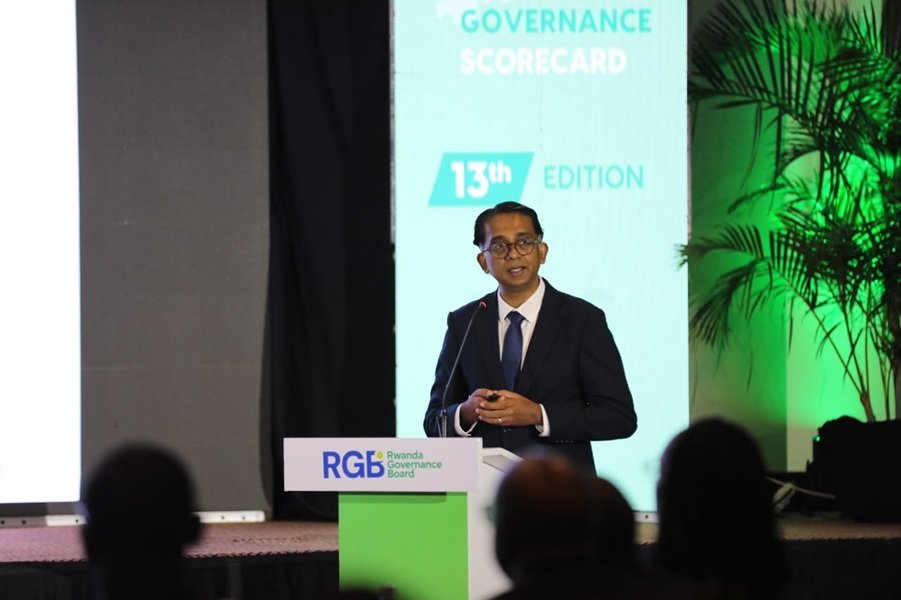
Ghana has made progress in the way it manages public resources and delivers services to citizens, with improvements in financial management and access to education and healthcare helping to raise its governance score.
The country ranked 92nd out of 133 countries worldwide and ninth in Africa in the 2026 Chandler Good Government Index (CGGI), according to a report released last Thursday.
The improvement offers a positive sign for Ghana, although the country still faces challenges in areas such as leadership, long-term planning and creating an attractive environment for businesses.
The index showed that Ghana’s performance in Financial Stewardship, which measures how governments manage public finances and maintain fiscal sustainability, almost doubled this year after declining between 2021 and 2024.
Its score in Helping People Rise, which looks at how government policies and services improve people’s lives, also increased for the second consecutive year, reflecting progress in areas including education and healthcare.
However, the country recorded declines in Leadership and Foresight and Attractive Marketplace, indicating areas where further attention may be needed.
Ghana’s performance comes at a time when several African countries are also making progress in governance. The report found that 71 per cent of African countries assessed in both 2025 and 2026 improved their overall scores.
Dinesh Naidu, Director of Knowledge at Chandler Governance Group, said the continent’s strongest gains were in financial management, followed by efforts to improve citizens’ lives.
He said the progress suggested that improvements in government capabilities were beginning to translate into tangible benefits, including better access to education and healthcare.
However, Africa continues to face significant challenges. Although average scores improved in six of the index’s seven pillars over the past year, the region’s overall average remains below its 2021 level.
The report also found that 23 of the 35 African countries assessed ranked outside the global top 100, while none made it into the top 50.
Globally, 61 per cent of the 120 countries assessed in both 2025 and 2026 recorded higher scores, representing the highest annual share of countries improving since the index began in 2021.
The Chandler Good Government Index assesses government capabilities and effectiveness across 133 countries, representing 94 per cent of the world’s population.
It uses 35 indicators grouped under seven pillars to help governments identify their strengths, recognise gaps and learn from the experiences of other countries.
Mr Naidu said rankings should not be treated as an end in themselves but as a guide to identifying areas that need improvement.
He said sustained progress depended on strong institutions, responsible use of public resources and the ability of governments to turn policies into meaningful outcomes for citizens.
For Ghana, the latest results point to progress in some important areas, while highlighting the need to strengthen other aspects of governance to ensure that improvements are felt in the daily lives of ordinary people.
By Esinam Jemima Kuatsinu
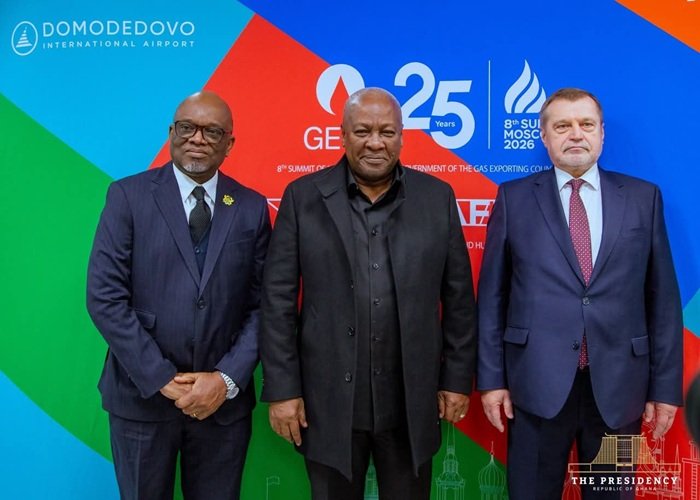
President John Mahama has arrived in Moscow, Russia, from Ethiopia to participate in the 3rd Russia-Africa Summit.
The summit is being hosted by Russian President Vladimir Putin.
During the visit, President Mahama will join fellow African leaders at the Economic and Humanitarian Forum and summit plenary sessions.
He is also scheduled to hold high-level bilateral talks with President Putin and attend a Kente exhibition organised by the Russia-Ghana Parliamentary Forum.
As part of the visit, the President will receive honorary doctorate degrees from the Russian University of Transport and the Peoples’ Friendship University of Russia.
He will also engage Russian businesses and state institutions to advance bilateral cooperation between Ghana and Russia.
By Edem Mensah-Tsotorme