News
Dealing with drug abuse among youth… PCG calls for renewed, collaborative intervention to curb menace

- /home/u249204778/domains/spectator.com.gh/public_html/wp-content/plugins/mvp-social-buttons/mvp-social-buttons.php on line 27
https://spectator.com.gh/wp-content/uploads/2026/08/A-group-picture-of-pastors-of-Presbyterian-Church.jpg&description=Dealing with drug abuse among youth… PCG calls for renewed, collaborative intervention to curb menace', 'pinterestShare', 'width=750,height=350'); return false;" title="Pin This Post">
- Share
- Tweet /home/u249204778/domains/spectator.com.gh/public_html/wp-content/plugins/mvp-social-buttons/mvp-social-buttons.php on line 72
https://spectator.com.gh/wp-content/uploads/2026/08/A-group-picture-of-pastors-of-Presbyterian-Church.jpg&description=Dealing with drug abuse among youth… PCG calls for renewed, collaborative intervention to curb menace', 'pinterestShare', 'width=750,height=350'); return false;" title="Pin This Post">
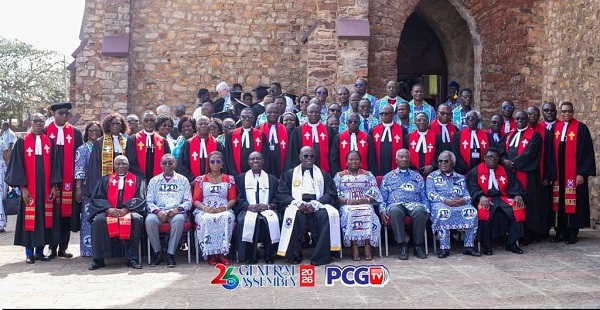
The Presbyterian Church of Ghana has raised alarm over the spate of drug abuse among the youth, describing the situation as a ‘ticking time bomb’ that requires immediate and collaborative intervention.
It said the infiltration of drugs into educational institutions was becoming increasingly alarming, with reports of drug peddling at the basic, secondary and tertiary levels which threatens the future of students.
The church gave the caution in a communiqué issued at its just ended 26th General Assembly held at Abetifi-Kwahu in the Eastern region.
The assembly, which is the highest decision-making body of the Church, was held on the theme: ‘Celebrating our heritage: Building on the foundation already laid.’
It had in attendance commissioners and representatives from all presbyteries and courts of the church, government officials, ecumenical partner churches, among other dignitaries.
According to the Church, the substance abuse crises was dire in informal settlements across the country with the misuse of marijuana, the street drug known as ‘kush’, as well as substances such as ‘Red’, which it identified as containing Tapentadol and Carisoprodol, and Tramadol, wasting away many young people.
It said although the Ghana Blue Cross, a substance abuse focused non-profit organisation within the PCG, had been involved in efforts to combat the menace for more than 120 years, it indicated that the changing nature and persistence of the phenomenon called for renewed and decisive action.
The PCG urged that the threat is not treated just as a social or health concern but as a matter of national security, given its potential impact on the country’s young population and future workforce.
It called for strict monitoring of the cultivation and processing of therapeutic cannabis and industrial hemp permitted in Ghana for medicinal purposes, cautioning that the initiative should not be allowed to create another avenue for the proliferation of illicit drugs.
Moreover, it urged the Ghana Police Service, religious organisations and other civic stakeholders to strengthen collaboration and establish a unified stand against the growing drug menace to particularly protect young people.
By Abigail Annoh

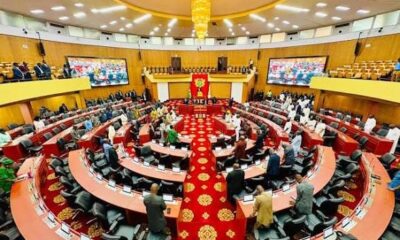






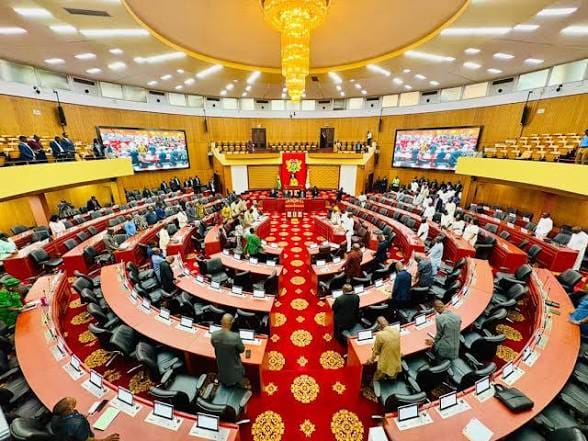
Parliament has clarified public commentary on social media regarding a notice on its notice board that read “No Vacancy for National Service Personnel 2026/2027. Kindly go for reposting.”
In a statement, signed by the Director of Media Relations, David Sebastian Damoah, Parliament said the notice has been misconstrued and was not a policy statement, a freeze on national service placements, or a change in its support for the National Service Scheme.
According to Parliament, the notice was a routine administrative message to prospective personnel who reported to the House, informing them that it has received more personnel than it can accommodate for the 2026/2027 service year and that they should seek reposting to other institutions.
It said it remains committed to the National Service Scheme and values the contribution of service personnel to its work, and regrets any confusion or inconvenience the wording may have caused.
By Edem Mensah-Tsotorme

Ghanaian public advocate Hopeson Yaovi Adorye has been elected to the Board of Directors of the World Taxpayers Association (WTA).
The election took place on Sunday, October 5, 2026, during the Association’s conference in Kraków, Poland.
His election marks a significant addition to his international leadership portfolio and provides a platform for Ghanaian and African perspectives to contribute to global discussions on taxpayer rights, responsible taxation, transparency and prudent management of public resources.
Reacting to his election, Mr. Adorye expressed appreciation to the leadership and members of the WTA for the confidence reposed in him.
“I am deeply honoured by this confidence and conscious of the responsibility that comes with it. Taxpayers are at the heart of every economy, and they deserve fairness, transparency, accountability and value for the taxes they pay. I look forward to working with colleagues from across the world to strengthen the voice of taxpayers and promote responsible fiscal governance,” he said.
According to him, taxation should not be viewed solely as a mechanism for raising government revenue, but also as an important component of the social contract between citizens and the state.
Mr. Adorye said governments have a responsibility to ensure taxes are collected fairly and public resources are utilised efficiently to deliver quality infrastructure, healthcare, education, security and other essential services.
His election also creates an opportunity to bring African experiences into international conversations on taxation and public expenditure.
Mr. Adorye, who is Executive Director of Taxpayers League Ghana, has previously served as Global Board Chairman of the International Youth Network for UN Security Council Resolution 2250, an NGO associated with the United Nations Economic and Social Council (ECOSOC).
He is expected to use his new role to champion fiscal accountability, taxpayer education, good governance and stronger citizen participation in public financial management.