News
CSM: another killer disease that must be tackled


Ghana reported its first two cases of the novel Corona Virus Disease (COVID-19) on March 12, 2020. The cases relating to this pandemic were confirmed when two people returned from Norway and Turkey respectively.
Since then, the number of COVID-19 cases confirmed by the Ministry of Health, continue to increase by the day.
As of Wednesday, May 20 2020, Ghana’s number of confirmed cases had risen to 7,616 with 34 confirmed deaths with 2,421 recoveries.
According to official report from the Ministry of Health, out of the 7,616 confirmed cases, 60 percent of the number were males and 40 percent of the number being females.
Out of the 16 regions in Ghana, it was only the Ahafo Region which had not recorded any case at the time.
Although the country has been overwhelmed with the number of COVID-19 cases, some parts of the country are battling not only this pandemic but also another serious disease that threatens the very livelihood of the people.
Unfortunately, Ghanaians in the northern part of the country are battling the Cerebrospinal Meningitis (CSM).
The bacteria are transmitted from one person to another through droplets of respiratory or throat secretions, close and prolonged contacts.
Thus sneezing and coughing without covering your mouth or nose spread this disease: Kissing as well spreads this disease.
These modes of contact help to spread the disease very fast. These contacts are known to be a sure way to increase the spread of the disease.
According to the World Health Organisation (WHO), Cerebrospinal Meningitis (CSM) is an infection of meninges, the thin lining surrounding the brain and the spinal cord.
It is proven that the average incubation period of Cerebrospinal Meningitis (CSM) is four days which only infects humans.
Stiff neck, severe headache, high fever, seizures, vomiting, no or less appetite among others are symptoms of the virus as explained suggested by WHO.
The bacteria are hyper endemic in the northern areas of the sub-Saharan Africa where the people get infected during the dry season; due to dusty winds and upper respiratory tract infections as a result of cold nights.
Seven people out of 21 positive cases of Cerebrospinal Meningitis (CSM) in the Upper East Region have died as a result of the disease.
However, the Upper West Region has recorded about 45 deaths out of about 315 confirmed cases of the disease in the region. This is a highly contagious infection that affects young, adults and teenagers..
Even though COVID-19 is a global pandemic which has gained the attention of the government, Cerebrospinal Meningitis as a disease is causing more harm to a section of the citizens but happens to get less attention from the government.
Cerebrospinal Meningitis (CSM ) is killing more people just like COVID-19 in Ghana. It is disturbing that Cerebrospinal Meningitis (CSM) has not been tackled effectively due to financial constraints.
However, this same financial constraint seems not to be an issue for government in dealing with the COVID-19 disease.
According to health experts, an infected person by the Cerebrospinal Meningitis can be treated through vaccination; unlike the COVID-19 where the world, including Ghana, is awaiting a vaccine to treat it.
Cerebrospinal Meningitis (CSM) has been in existence since 1959 in the Northern sector of Ghana till date.
Medical experts have explained that government can help increase immunisation coverage in order to help stop the spread of CSM.
Government needs to pay more attention in tackling this disease by setting up a fund where money will be allocated for the treatment of CSM.
Also, more health practitioners should be trained in the northern parts of Ghana where the disease is endemic.
Loretta Yebowaa Hayford
Student, Ghana Institute of Journalism


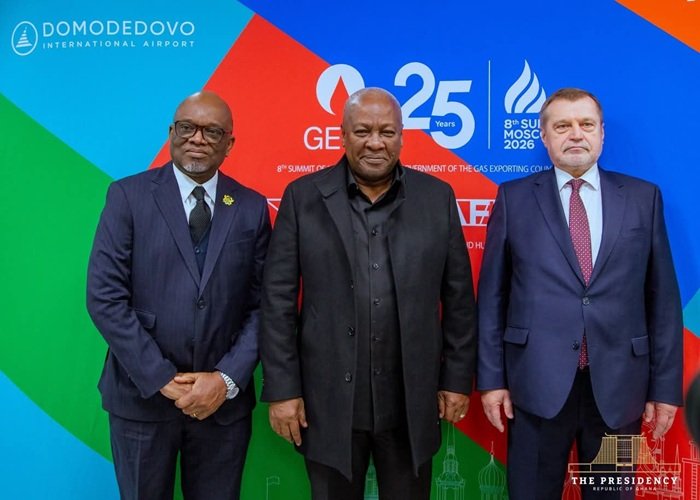
President John Mahama has arrived in Moscow, Russia, from Ethiopia to participate in the 3rd Russia-Africa Summit.
The summit is being hosted by Russian President Vladimir Putin.
During the visit, President Mahama will join fellow African leaders at the Economic and Humanitarian Forum and summit plenary sessions.
He is also scheduled to hold high-level bilateral talks with President Putin and attend a Kente exhibition organised by the Russia-Ghana Parliamentary Forum.
As part of the visit, the President will receive honorary doctorate degrees from the Russian University of Transport and the Peoples’ Friendship University of Russia.
He will also engage Russian businesses and state institutions to advance bilateral cooperation between Ghana and Russia.
By Edem Mensah-Tsotorme

The Greater Accra Regional Organiser of the New Patriotic Party (NPP), Moses Abor, has met with the Bono Regional Chairman of the party, Kwame Baffoe, popularly known as Abronye DC, to address concerns arising from recent social media developments.
In a statement shared , Mr. Abor said he yesterday visited Chairman Baffoe over comments he made on his show, which had raised concern among some party activists.
According to him, he also engaged Charles Opoku Presidoo and ironed out grievances he had earlier held regarding the matter.
Mr. Abor said he was pleased that in the spirit of unity and the party’s shared commitment to return to power in 2028, they had a constructive conversation and addressed the concerns amicably.
“With the matter now resolved, I encourage all Party activists to let the matter rest and redirect our energy toward holding the NDC accountable for its failures and misleading claims,” he said.
He urged party members to continue making the case to Ghanaians on why Dr. Mahamudu Bawumia is the right person to lead the country in 2028.
By Edem Mensah-Tsotorme