Features
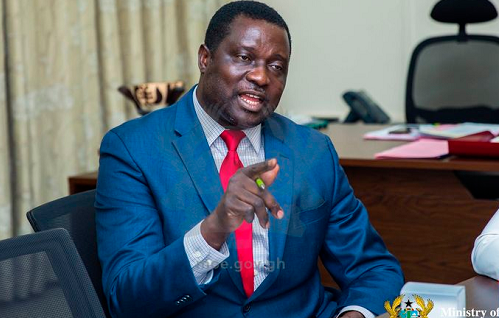
Burning issues Don’t politicise education matters

- /home/u249204778/domains/spectator.com.gh/public_html/wp-content/plugins/mvp-social-buttons/mvp-social-buttons.php on line 27
https://spectator.com.gh/wp-content/uploads/2022/02/Dr-Yaw-Adutwum-Pix.png&description=Burning issues Don’t politicise education matters', 'pinterestShare', 'width=750,height=350'); return false;" title="Pin This Post">
- Share
- Tweet /home/u249204778/domains/spectator.com.gh/public_html/wp-content/plugins/mvp-social-buttons/mvp-social-buttons.php on line 72
https://spectator.com.gh/wp-content/uploads/2022/02/Dr-Yaw-Adutwum-Pix.png&description=Burning issues Don’t politicise education matters', 'pinterestShare', 'width=750,height=350'); return false;" title="Pin This Post">
When it comes to hard working individuals in the country, we need to recognise them and give praise to them where praise is due instead of condemning them simply because we do not understand what they stand for regarding the systems they want to introduce to bring improvement in areas where they have been given a task to operate and achieve success.
Not quite long ago we heard of all kinds of attacks from certain individuals against the Honourable Minister of Education, Dr. Yaw Adutwum. These criticisms are not fair to him because certain individuals who cannot manage the educational system in the country attacked him by saying that he was spoiling the educational system in the country and, therefore, should be relieved of his post as Minister of Education.
UNFORTUNATE COMMENTS
Comments such as these are very unfortunate, especially when they come from those who cannot contribute in any way to make the system better. It is important for us to be circumspect in our criticisms of others whenever we have the opportunity to do so.
Criticisms are always welcome and must be offered to anybody who plays a clean role in the public sector for the good of the country. Criticisms are always welcome but they must be constructive rather than destructive. If this is not done, we can create chaos for the country as a whole.
CONSTRUCTIVE AND DESTRUCTIVE CRITICISM
Constructive criticism refers to a situation where observers are able to see loopholes in what some other person is doing in the country and pointing out the mistakes in a kind hearted manner. Such an approach is always good for society so we need to encourage people to go by this kind of criticism. Constructive criticism has helped countries to develop rather than destroy them. Places like US, UK and many other countries have benefitted immensely from this kind of criticism.
In the case of Africa, on the other hand, people are more interested in destructive criticism which is meant to destroy people put in charge of matters as away of making them fail in society. If we expect those in authority to fail in what they are doing, then we should not expect progress and achievement in any sectors of the economy.
The Minister of Education is one person who has sacrificed his life to save the country so as to ensure that the educational system is modified to become productive and effective so as to serve the interest of the country. Education always has the purpose to ensure that the needs of the country are identified and explored in a manner that will bring solutions to the people in that country. If solutions are found because of the educational system the end result will benefit all the people in the country and thereby make life better for them.
PURPOSE OF EDUCATION
Many years ago, one leader in Africa Julius Nyerere made a point that “education is like sending somebody from a village to go and find something, a solution, and bring it back to save that village. The person then sets off and goes to look for that solution. After finding what he is looking for the person comes back with what he has found to address the problems and challenges facing the village.”
If the challenges and problems are successfully addressed, then what that person brought has served a good purpose and, for that reason, it would mean that the mission has been accomplished in a manner as anticipated by the village. When this happens, we say that what the person has done is like an established educational system. This educational system is, therefore, good and must be adopted.
For Many years people in this country and in many parts of Africa have pointed out and made it clear that the educational system being operated is not serving the purpose for which it is intended. This is because people come out of our science studies without being able to solve simple practical problems facing the country. If we are unable to use our scientific knowledge to solve our problems, then there is something wrong with the educational system which we are operating.
Again, the unemployment rate is growing higher and higher because we are putting emphasis on grammar or Reading and Writing skills instead of on the development of vocational skills. In addition to vocational skills, technical skills are also important. All these, together with grammar education or reading and writing is needed for the full development of the country.
TECHNICAL AND VOCATIONAL SKILLS
The country must develop, but this can only come about if emphasis is put on vocational and technical skills. We seem to have realised this under the current administration led by the current president, Nana Addo Dankwa Akufo-Addo. The person in the seat of education is Dr. Adutwum who is doing his best to bring improvement into the country’s system of education.
He is one of the hardworking people operating in the United States and was found by the current president during a visit to that country. Seeing the good work he was offering to the US, the current president persuaded him to come home and he agreed to do so to serve his own country. According to this man he spoke to some of his managers in the US who also agreed with him that he could come home to his country and help in the national reconstruction programme going on in Ghana.
This is how this Minister of Education left his good job in the US to come home and help in the reconstruction of the nation. It is, therefore, reasonable and proper that we see the good role he is playing as a great sacrifice for his country. It is a great sacrifice because he could have stayed in the United States if he were that selfish and sought to feed himself and his family alone. However, because of his patriotic spirit he decided to come home.
Since his return he has been performing wonderfully well and the government is happy with the pace of work by him and his Ministry. We, therefore, need to encourage him to stay on but not to discourage him to go away. If we discourage him to go away, he will readily be accepted back by his former employers and it is our country that would lose the privileges and benefits attached to his role as Minister of Education.
COMPETENCE AND HUMILITY
He is a competent and humble person who must be encouraged by all for the accomplishment of the task given him. If you do not understand any steps he has taken or is taking, kindly approach or consult him for a clearer picture. We must not destroy the good materials we have so that the country as a whole will benefit from his progress and intelligence even though we can criticise incompetent people.
The Minister of Education must be commended. He deserves strong commendation for the good works he is doing so the opponents in the country must learn to appreciate him to rebuild this country. The semester system which he approved for implementation in pre-tertiary schools was meant to bring relaxation to teachers, parents and students, but he was misunderstood. This explains why he said that the country should go back to the old system, that is, the term system.
Let us appreciate him for what he is doing for the good of the country, so that at the end of it all we shall all benefit from his good intentions.
Contact email/whatsApp address of author:
Pradmat2013@gmail.com (0553318911)
By Dr. Kofi Amponsah-Bediako


GHANA’S Parliament is a peaceful one. The arguments on the floor of the House can be fierce, but the House doesn’t catch fire. Ghana’s democracy has passed the acid-test of constitutional pluralism, and her legislature is a model of democratic beauty others are learning from.
Sometimes it is edifying following proceedings in Parliament and you are likely to catch the voice of Honourable Alban Bagbin in full flight. He doesn’t talk much. His English vocabulary does the talking.
Last week, I heard another MP talking on bad dressing, and I must congratulate him on his brilliant exhibition of vocabulary, delivered in Westminster tradition.
Such explosive delivery titillates the floor of the House and brings joy to members and Mr Speaker.
In the parliament of some countries, there is no need for such niceties. The floor of the House is regarded as a battle ground. Others, including lady members, see it as a boxing ring, where the spoken word is often jettisoned and supplanted with punches and upper-cuts.
PART-TIME
So the average parliamentarian trains part-time as a boxer, in case boxing skills will be needed in the House to iron out knotty points.
The ladies’ pedicure and manicure are carefully designed to fulfil a dual purpose. One is to showcase trendiness and the other is to scratch the faces of opponents in the House whether they are ladies or gentlemen.
Sometimes, the Speaker has to keep shouting and banging for well over 15 minutes as a recalcitrant MP dashes across and grabs the tie of another MP, thus precipitating a free-for-all brawl. Some MPs return home with a half nose, a missing left ear and a double forehead.
None of the offending parties is sanctioned because brawling in parliament is seen as a democratic process, since some MPs are so stubborn that only a sidekick to the ribs can mellow them. Meanwhile, a free-for-all is good exercise for the MPs, some of whom have grown too fat due to over-feeding.
Fortunately, the parliament of Sikaman has a civil democratic culture and debates get fierce but punches are not unleashed. For comic relief however, MPs do some break dancing once in a while.
When ROPAB was passed into law, some MPs caused a stir by bursting into song and dance. Mr. Speaker was be wildered, but obviously pleased that his announcement of the passage of the bill had brought joy to the House.
Others were not happy, though. The bill and the debates had caused them enough distress. As for the passage, it was like cutting their throats. They groaned in their hearts. No punches, no karate. That is democracy in its maturing stage. It is tempered with reason and civility. One day, it will be their turn to laugh and dance.
Now, the MP who spoke on bad dressing did a good job by all standards and added value to his delivery by going highfalutin. He wanted a law to be enacted against bad dressing, because it was not good for society.
What constitutes bad dressing? That is a very difficult question. Judging what is good or bad as far as dressing is concerned will obviously depend on the setting or context.
For example, going virtually naked on a holiday beach is considered good dressing. But when a man and his wife storm a church room in their birth-time suits (naked) the pastor and his deacons will surely take cover. It means a sartorial revolution has precipitated and only the Holy Spirit can hold tempers at bay.
STYLISH
In the streets of Sikaman, a lady with a very short skirt is admired by some as trendy and stylish. Others would think she is indecent and a bad influence. But the question that arises ultimately is this: Don’t people have the right to wear what they want to wear, so long as the unseemly parts of their bodies are not laid bare?
Certainly, nobody will go totally naked in the streets, unless the person is either in-sane or is a Black Stars supporter painted in the national colours. Even then, he’d be in what is called ‘pioto,’ with his ‘instrument’ well-positioned. That is called proper dressing.
So in the streets, this kind of dressing will be considered good or bad depending on the setting and the extent of exposure of the private parts (breasts, thighs, lower back, buttocks, etc).
Personally, I feel the churches should be very scrupulous about the dressing of those who go in to worship. The ushers should be tasked with ushering away badly-dressed worshippers. Incidentally, they are the worshippers who like the front pews, and the pastor is so distracted he can’t preach any meaningful sermon.
However, a law on dressing is something I won’t advocate, for the simple reason that, first, there is no clear definition of what is bad dressing and second, society must be left to evolve its own dress culture so that fashion and creativity in fashion design will not be stifle Any law to regulate dressing will kill such creativity.
This article was first published on Saturday July, 2006
Most people think stress is just in your head. When you feel overwhelmed, overworked, or emotionally drained, you might think you just need a good night’s sleep or a quick mental break.
However, science and biology show us something entirely different. Chronic, long-term stress is not just an emotion—it is a full-body physical condition. When you live in a constant state of survival mode, pushing past your limits without real rest, your body pays a very heavy physical price.
Here is a clear, step-by-step look at how ongoing stress physically breaks down the human body, explained simply.
Step 1: The endless flood of stress chemicals
What happens normally: When you face a sudden emergency, your body releases stress hormones like adrenaline and cortisol. They give you a quick burst of energy, speed up your heart, and help you react fast. This is a great survival tool for short bursts.
How stress breaks you down: If you never truly relax, your body never turns off that alarm. Your bloodstream stays flooded with cortisol and adrenaline day after day. Over time, having these chemicals constantly sloshing around acts like a slow poison. It damages your blood vessels, raises your blood pressure, messes with your metabolism, and even wears down your DNA, making you age faster.
Step 2: The silent internal fire (Chronic Inflammation)
What happens normally: When your brain senses danger or stress, it assumes you might get hurt, so it tells your immune system to cause inflammation (swelling and heat) to fight off germs and heal injuries.
How stress breaks you down: When stress lasts for months or years, your immune system gets confused and leaves that “fire” burning permanently. Instead of healing an injury, this silent internal inflammation starts attacking your healthy cells, joints, and organs. Over time, it paves the way for serious health issues, heart trouble, and total body fatigue.
Step 3: Turning your muscles into armor (Fascial Hardening)
What happens normally: Your body is wrapped in a web of strong connective tissue called fascia that holds your muscles, bones, and organs together. When you face pressure or trauma, that tissue automatically tightens up to protect you like a suit of armor.
How stress breaks you down: If you stay tense for years, that tissue never softens back up. It freezes in place, creating tight, painful physical knots (often called emotional lesions). Blood and oxygen can’t flow easily through those locked-up areas, leaving you stiff, aching, and physically unable to truly let go of tension.
Step 4: Burning out your body’s engine (Nervous System Overdrive)
What happens normally: Your nervous system has two main gears:
The Gas Pedal (fight-or-flight mode for dealing with emergencies).
The Brake Pedal (rest-and-digest mode for healing and repairing your body).
How stress breaks you down: Chronic stress forces your foot down hard on the gas pedal 24/7. Your heart beats faster than it should, your digestion shuts down, and your body is denied the deep rest it needs to repair itself. Eventually, your heart and nervous system run completely out of fuel from sheer exhaustion.
Reclaiming your health and sovereignty
Chronic stress wears you down slowly by keeping your body chemically toxic, inflamed, and locked-up in physical armour, and running on empty.
By understanding that stress is a physical breakdown rather than just a bad mood, you can stop glorifying endless endurance. It allows you to recognise when your body is screaming for a reset, helping you shift away from burnout and back toward true physical calm, balance, and sovereignty.
SKIP THE QUEUE, TAP THE NEWS
You can now read the Ghanaian Times and The Spectator newspapers from the comfort of your device via TimesNewsPlus.
Join our WhatsApp Channel: https://whatsapp.com/channel/0029VbBElzjInlqHhl1aTU27