News
Black Star Experience is not same as Year of Return


Ghana’s tourism and creative economy continue to experience renewed growth as government strengthens efforts to position the country as Africa’s leading cultural and heritage destination.
While many still associate Ghana’s global tourism success
with the landmark Year of Return campaign of 2019, it is important to understand that the country has since moved into a new phase of sector growth under the Black Star Experience, a broader and forward-looking national programme being
advanced under the leadership of President John Dramani Mahama.
Over the past year, the Ministry of Tourism, Culture and Creative Arts and its agencies have intensified efforts to grow the sector positively, creating renewed momentum across tourism, arts, and the creative industries.
These efforts form part of the Mahama administration’s wider commitment to reposition tourism and
culture as key drivers of economic growth, job creation, and global engagement.
Under President Mahama’s leadership, tourism and the creative arts have regained prominence as strategic pillars for national development.
Government’s renewed focus has provided stronger coordination across agencies, boosted stakeholder
confidence, and created fresh opportunities for creatives, event promoters, tourism operators, and investors within the sector.
At the ministerial level, Hon. Abla Dzifa Gomashie, Minister for Tourism, Culture and Creative Arts, has been working to strengthen Ghana’s cultural ecosystem and tourism value chain through the various agencies under the ministry.
The Ghana Tourism Authority (GTA), Ghana’s primary tourism marketing agency, has also continued to record notable progress in destination promotion and stakeholder
engagement.
Under the leadership of Mrs. Maame Efua Sekyi-Aidoo Houadjeto, the
Authority has sustained campaigns and partnerships that keep Ghana visible in competitive tourism markets while supporting industry players to raise service and product standards.
Understanding the difference between Ghana’s flagship tourism initiatives is
therefore important. The Year of Return was a commemorative campaign marking 400 years since the first enslaved Africans were taken to the Americas.
It invited the African diaspora, particularly African Americans and Afro-Caribbeans, to reconnect with their ancestral homeland.
The initiative resonated globally, drawing record visitor arrivals and creating powerful emotional and economic connections.
The Black Star Experience, however, represents a more expansive and sustainable national agenda. Rather than being tied to a single commemorative year, it is
structured as a long-term programme designed to position Ghana as the Cultural Capital of Africa, offering year-round cultural, entertainment, heritage, and creative experiences.
While the Year of Return focused on historical reconnection, the Black Star
Experience looks ahead, promoting Ghana’s living culture, contemporary creative industries, festivals, music, film, cuisine, fashion, and lifestyle experiences to both global and continental audiences.
A key strength of the current approach under the Mahama administration is the emphasis on sustainability and inclusiveness.
The Black Star Experience aims to
ensure that tourism benefits extend beyond Accra to communities and heritage destinations nationwide, creating jobs and economic opportunities across regions.
In essence, the Year of Return reopened the door between Ghana and the global African diaspora.
The Black Star Experience now expands that journey, inviting the
world not only to return, but to continually experience Ghana’s culture, creativity, and hospitality.
As Ghana builds on the progress made over recent years, the renewed energy and direction under President John Dramani Mahama signal a promising chapter for tourism and the creative economy, one that seeks to transform Ghana from a moment of global attention into a permanent destination of cultural excellence, investment opportunity, and shared prosperity.
Edward Boafo Owusu
Programs Lead,
Black Star Experience Secretariat








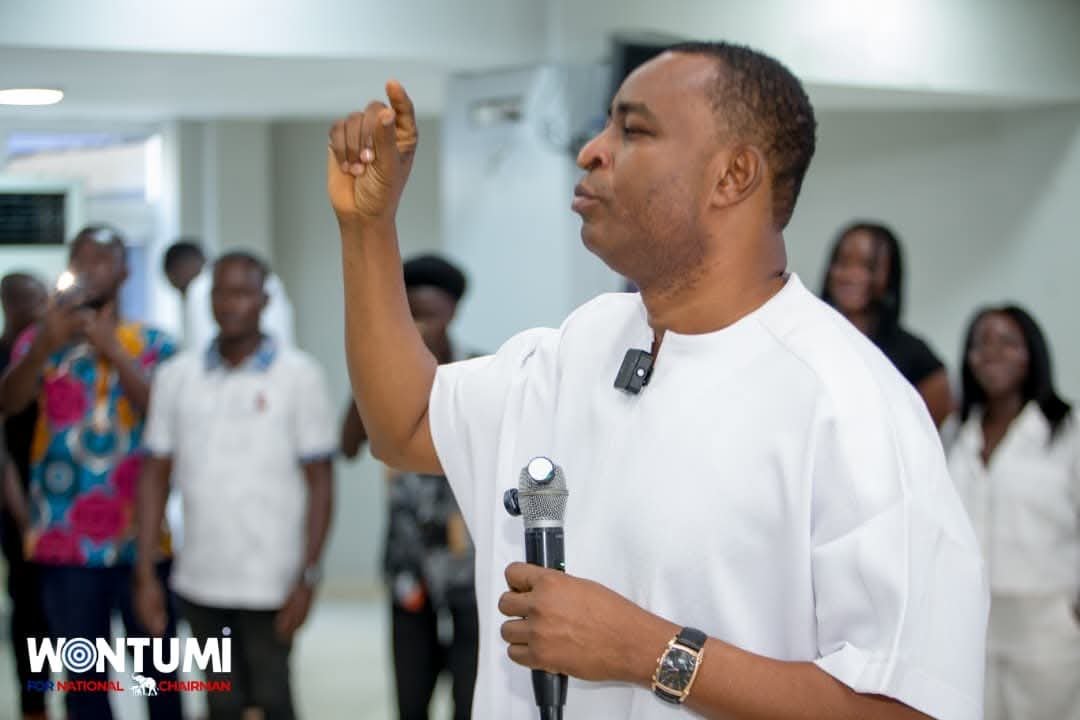
The state has closed its case in the Republic v Akonta Mining and two others.
The case was heard earlier today at the Accra Criminal Court, where state prosecutors and CID investigators from the Ghana Police Service closed the Republic’s case.
In all, the prosecution called three witnesses to prove its case, two former employees of Akonta Mining Company Limited and a detective from the Ghana Police Service.
According to an update on the case, the two former employees testified to Mr Bernard Antwi-Boasiako’s deep involvement in Akonta Mining Company’s alleged illegal mining activities in the Tano-Nimiri Forest Reserve.
The police detective tendered in evidence drone footage and other audio-visual materials and official communications in support of the testimonies of the two former Akonta Mining employees.
The accused persons, through cross-examination of the witnesses, sought to dissociate themselves from every mining activity in the Tano-Nimiri Forest Reserve.
At the close of the prosecution’s case, counsel for the accused persons asked the court to allow him to call the first prosecution witness back into the witness box for further cross-examination.
The court gave him up to Friday, October 30, to file a formal motion to recall the witnesses.
The case has been adjourned to November 4 for the motion to be heard.
By Edem Mensah-Tsotorme
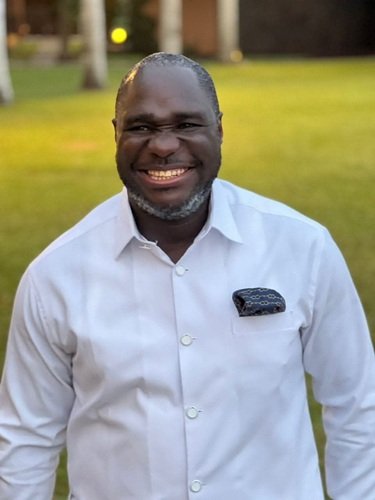
Dr Palgrave Boakye-Danquah, spokesperson to NPP Ashanti Regional Chairman Bernard Antwi Boasiako, popularly known as Chairman Wontumi, has called on the government and Parliament to undertake major reforms in Ghana’s prison system, including the construction of a dedicated prison hospital and the introduction of regulated conjugal visits.
In a press statement issued on Tuesday, October 27, 2026, Dr Boakye-Danquah shared Chairman Wontumi’s observations and recommendations following his remand on July 20, 2026.
According to the statement, Chairman Wontumi’s experience in prison has given him the opportunity to interact with prison officers and inmates and observe the challenges facing the Ghana Prisons Service.
The statement noted that the NPP chairman believes the correctional system must move beyond punishment to focus on rehabilitation, welfare and productivity.
One of his major concerns is the lack of dedicated, well-equipped prison hospitals, ambulances and standby generators in several prison facilities.
Dr Boakye-Danquah said Chairman Wontumi had raised concerns about the difficulties in providing medical care to seriously ill inmates, including those suffering from tuberculosis.
He is therefore calling for the construction of a modern prison hospital to serve facilities across the country. In the interim, he has proposed emergency arrangements with the 37 Military Hospital and the Police Hospital.
On the welfare of prison officers, Chairman Wontumi has urged the government to review their salaries, accommodation and conditions of service.
He has also called for proper classification of inmates, arguing that minor offenders should not be housed alongside armed robbery convicts and that persons facing trial for serious offences, including treason and terrorism, should be appropriately separated from other inmates.
The statement further highlighted concerns about the need for counselling and behavioural support for young inmates, particularly those serving sentences for defilement-related offences.
Chairman Wontumi has also called for a clear policy on the classification and management of LGBTQI+ inmates within the prison system.
On family relationships, he has proposed the creation of designated private areas where prisoners can receive visits from their spouses and children.
He believes regulated conjugal visits could help preserve marriages, reduce tension among inmates and support rehabilitation.
“The prisoner is the one in prison, not the children or spouse,” the statement noted, explaining his position on the need to protect family relationships during incarceration.
Chairman Wontumi has appealed to the Ministry of Food and Agriculture to support prison farms with the necessary equipment to improve food production.
According to the statement, the Ghana Prisons Service has access to vast lands and skilled labour but faces a shortage of agricultural equipment, with only one tractor reportedly available for farming and garbage-related activities.
He has further proposed greater collaboration between prison authorities and the justice sector, suggesting that regional prison commanders should be included in relevant discussions because of their knowledge of prison conditions and inmate rehabilitation.
On infrastructure, Chairman Wontumi has called on the government and private sector to invest in modern prison facilities and factories, arguing that the system has seen limited structural improvements over the years.
Appeal to Parliament
Dr Boakye-Danquah said Chairman Wontumi had made a special appeal to Parliament to lead efforts towards comprehensive prison reform.
He is urging the Speaker of Parliament to initiate discussions on prison conditions as a human rights and national development issue.
He has also called on the Majority and Minority caucuses to work together to pass a new Prison Reform Act and approve funding for a dedicated prison hospital, ambulance services, standby generators and agricultural equipment.
Additionally, he wants the Parliamentary Select Committees on Defence and Interior, Health, and Food and Agriculture to undertake working visits to prisons across the country to assess conditions firsthand.
According to the statement, Chairman Wontumi believes bipartisan cooperation between the Majority and Minority caucuses is necessary to secure the legal and financial reforms required to improve the prison system.
He has called for broader prison reforms across Africa, expressing hope that Ghana could lead the continent in improving correctional facilities.
Reflecting on his experience since July 20, Chairman Wontumi stated: “At this experience since July 20th till date, prison doesn’t reform as it should be. I pray that the entire Africa will learn from Ghana.”
The statement added that Chairman Wontumi remained in high spirits.
By: Jacob Aggrey