News
Away from Fantasy to Real life in the Chic Boss Collection


There is a point in a brand’s evolution where it must answer a rude but necessary question: can you dress a woman for her real life, not just for her fantasy? With Ranto Clothings’ “Chic Boss Collection,” released August 5, 2023 under Creative Director Bright Urhobo, we get a decisive answer and it is a YES!, with an attitude.
This look, in its apparent simplicity, is Ranto Clothings making its claim for the modern African working woman’s uniform. Not “the boss” as a cartoon stereotype with shoulder pads shouting, but the boss as a presence of calm, structured, intentional.
Let’s begin with the white shirt. We’ve seen endless iterations of the white button-down in fashion, but what Urhobo does here is different: he gives it a boardroom backbone without losing femininity.
The collar is classic, pointed, and deliberately not exaggerated. This matters. Too-wide collars slip into parody and “CEO costume.” Here we have proportion, cleanliness, and a refusal of drama.
The shirt is cut with enough volume in the sleeve and upper arm to move, this is not a constricting, taut, hyper-tailored men’s shirt forced onto a woman’s frame. The fit through the torso is relaxed rather than shrunken. You can tuck it without puckering. You can sit in it for eight hours.
And that, honestly, is radical. African women in professional spaces are too often encouraged to perform “seriousness” through discomfort: corseted waists, immobile peplums, “don’t breathe too hard or it will shift” blouses. Urhobo pushes against that. He offers authority through clarity instead of tightness.
The fabric, from what we can see, is a standard cotton or cotton blend, it is crisp, matte, with enough structure to hold a straight line down the placket but not so stiff it looks starched into aggression. The finish is clean, not glossy. This shirt doesn’t shout. It speaks.
Then we arrive at the trousers.
Black, high-rise, and cut in a subtly flared leg, they immediately recall a certain 1970s softness, those trousers that let women walk into formerly all-male rooms and not ask permission.
Except here, Urhobo switches the expected wool suiting fabric for what reads visually as faux leather or coated fabric. The result is interesting. He’s not just giving us “officewear.” He’s giving us officewear with a bite.
The fabric choice is key. A matte or semi-matte leather-like textile carries connotations: nightlife, edge, sexual agency. Putting that on a tailored trouser base pulls power downward into the hip and thigh. It takes away the old corporate instruction to neutralize the body. The body is not neutralized here. It is framed, seamed, and allowed.
Look closely at the construction: the trousers aren’t sloppy. There’s a defined waistband, a front closure with a visible button, and vertical seam detailing that runs along the leg.
That seaming is clever, it sculpts and lengthens without resorting to darts that would wrinkle on coated fabric. It also reins in the tendency leather-look trousers sometimes have to balloon at the knee or collapse at the ankle.
The leg shape opens gently below the knee. Not a dramatic bell-bottom and not skinny either. It’s a measured flare, the kind that balances the proportions of the body and works well with a heel. And yes, there is a heel.
From a distance, the look sketches a strong inverted triangle. The shoulders are held wide and square by the stance and cut of the shirt, the waist narrows, and the trousers fall in an elongated line to the floor. This is deliberate.
The “Chic Boss” woman is grounded. Her power sits in her stance, in the set of her legs, not only in her upper body.
Let’s talk fabrication again, because it’s the deciding element in whether this look is merely “basic pieces” or something more designed.
The Shirt fabric; breathable, functional, with enough honesty in its weave to feel like daywear, not “evening-white.” This keeps it in the realm of realism.
Trouser fabric; assertive, tactile, with a faint sheen. This injects fashion into what could otherwise be a Zara-level formula. It’s this textile decision that lifts the look into runway conversation. You’re not just looking at “white shirt + black pants.” You’re looking at tension between classic cotton and engineered gloss.
Urhobo understands that tension is the engine of modern dressing. The woman of 2023 (and let’s be honest, 2025, 2030) no longer has the patience for full looks that demand costume changes. She wants hybridity.
This look achieves this successfully because it’s believable. Editors can style fantasy, yes, but buyers invest in credibility. This is credible. Women can actually wear this. In Lagos. In London. In Nairobi. In Paris. It travels.
And it photographs well. The white shirt throws light up into the face. The black trousers pull the gaze down the line of the body. The sandal breaks the severity before it becomes authoritarian. In campaign shots and press runs, this reads as “approachable power,” which is precisely the commercial sweet spot.
If there is a critique and any collection that dares to call itself “Chic Boss” should invite critique, it is this: tailoring at this level begs for obsessive finishing.
The shirt cuffs, for instance, could become a signature if they were slightly exaggerated, French-cut, or if there was a subtle stitch detail that marked them as Ranto.
The trousers, too, could carry a barely visible monogram stitching at the seam or a signature hardware at the waistband button. That is how you build brand codes that last longer than a trend cycle.
But that is long-game thinking. This is a young brand doing the foundational work first.
By Hassan Ssentongo

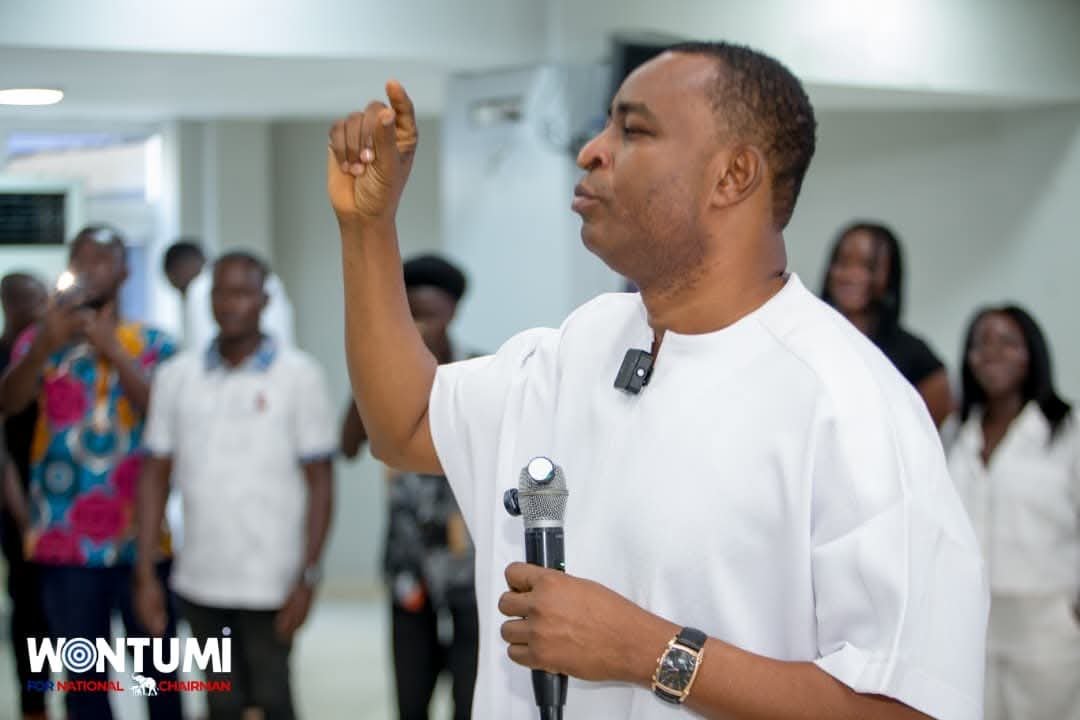
The state has closed its case in the Republic v Akonta Mining and two others.
The case was heard earlier today at the Accra Criminal Court, where state prosecutors and CID investigators from the Ghana Police Service closed the Republic’s case.
In all, the prosecution called three witnesses to prove its case, two former employees of Akonta Mining Company Limited and a detective from the Ghana Police Service.
According to an update on the case, the two former employees testified to Mr Bernard Antwi-Boasiako’s deep involvement in Akonta Mining Company’s alleged illegal mining activities in the Tano-Nimiri Forest Reserve.
The police detective tendered in evidence drone footage and other audio-visual materials and official communications in support of the testimonies of the two former Akonta Mining employees.
The accused persons, through cross-examination of the witnesses, sought to dissociate themselves from every mining activity in the Tano-Nimiri Forest Reserve.
At the close of the prosecution’s case, counsel for the accused persons asked the court to allow him to call the first prosecution witness back into the witness box for further cross-examination.
The court gave him up to Friday, October 30, to file a formal motion to recall the witnesses.
The case has been adjourned to November 4 for the motion to be heard.
By Edem Mensah-Tsotorme
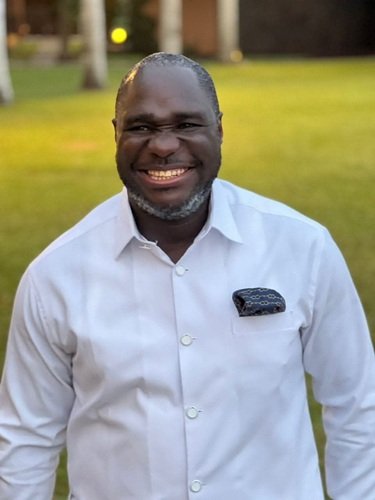
Dr Palgrave Boakye-Danquah, spokesperson to NPP Ashanti Regional Chairman Bernard Antwi Boasiako, popularly known as Chairman Wontumi, has called on the government and Parliament to undertake major reforms in Ghana’s prison system, including the construction of a dedicated prison hospital and the introduction of regulated conjugal visits.
In a press statement issued on Tuesday, October 27, 2026, Dr Boakye-Danquah shared Chairman Wontumi’s observations and recommendations following his remand on July 20, 2026.
According to the statement, Chairman Wontumi’s experience in prison has given him the opportunity to interact with prison officers and inmates and observe the challenges facing the Ghana Prisons Service.
The statement noted that the NPP chairman believes the correctional system must move beyond punishment to focus on rehabilitation, welfare and productivity.
One of his major concerns is the lack of dedicated, well-equipped prison hospitals, ambulances and standby generators in several prison facilities.
Dr Boakye-Danquah said Chairman Wontumi had raised concerns about the difficulties in providing medical care to seriously ill inmates, including those suffering from tuberculosis.
He is therefore calling for the construction of a modern prison hospital to serve facilities across the country. In the interim, he has proposed emergency arrangements with the 37 Military Hospital and the Police Hospital.
On the welfare of prison officers, Chairman Wontumi has urged the government to review their salaries, accommodation and conditions of service.
He has also called for proper classification of inmates, arguing that minor offenders should not be housed alongside armed robbery convicts and that persons facing trial for serious offences, including treason and terrorism, should be appropriately separated from other inmates.
The statement further highlighted concerns about the need for counselling and behavioural support for young inmates, particularly those serving sentences for defilement-related offences.
Chairman Wontumi has also called for a clear policy on the classification and management of LGBTQI+ inmates within the prison system.
On family relationships, he has proposed the creation of designated private areas where prisoners can receive visits from their spouses and children.
He believes regulated conjugal visits could help preserve marriages, reduce tension among inmates and support rehabilitation.
“The prisoner is the one in prison, not the children or spouse,” the statement noted, explaining his position on the need to protect family relationships during incarceration.
Chairman Wontumi has appealed to the Ministry of Food and Agriculture to support prison farms with the necessary equipment to improve food production.
According to the statement, the Ghana Prisons Service has access to vast lands and skilled labour but faces a shortage of agricultural equipment, with only one tractor reportedly available for farming and garbage-related activities.
He has further proposed greater collaboration between prison authorities and the justice sector, suggesting that regional prison commanders should be included in relevant discussions because of their knowledge of prison conditions and inmate rehabilitation.
On infrastructure, Chairman Wontumi has called on the government and private sector to invest in modern prison facilities and factories, arguing that the system has seen limited structural improvements over the years.
Appeal to Parliament
Dr Boakye-Danquah said Chairman Wontumi had made a special appeal to Parliament to lead efforts towards comprehensive prison reform.
He is urging the Speaker of Parliament to initiate discussions on prison conditions as a human rights and national development issue.
He has also called on the Majority and Minority caucuses to work together to pass a new Prison Reform Act and approve funding for a dedicated prison hospital, ambulance services, standby generators and agricultural equipment.
Additionally, he wants the Parliamentary Select Committees on Defence and Interior, Health, and Food and Agriculture to undertake working visits to prisons across the country to assess conditions firsthand.
According to the statement, Chairman Wontumi believes bipartisan cooperation between the Majority and Minority caucuses is necessary to secure the legal and financial reforms required to improve the prison system.
He has called for broader prison reforms across Africa, expressing hope that Ghana could lead the continent in improving correctional facilities.
Reflecting on his experience since July 20, Chairman Wontumi stated: “At this experience since July 20th till date, prison doesn’t reform as it should be. I pray that the entire Africa will learn from Ghana.”
The statement added that Chairman Wontumi remained in high spirits.
By: Jacob Aggrey