News
Amansie West records high malaria cases among children

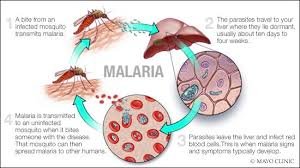
The sharp increase in malaria cases among children under five years in the Amansie West District is beginning to raise concerns among health workers in the area.
According to health officials, malaria cases generally in the district has shot up with data revealing more than 38,000 cases at the Out-patient Departments (OPD) in 2025.
This marks over 2,000 increase over the 2024 figure of 36,000.
But worryingly, it is the increase among infants that is beginning to occupy the attention of the health workers in the district.
According to the data available, malaria cases among the kids have jumped from the 8,000 recorded in 2024 to 10,000 in 2025, marking a 25 per cent increase.
That was linked directly to abandoned pits left by illegal mining activities, commonly known as ‘galamsey.’
The Amansie West District Director of Health Services, Mr Bernard Badu Bediako, stated in an interview that these abandoned pits have become high-volume mosquito breeding grounds across the district.
Commemorating the occasion of the 2026 World Malaria Day, Mr Bediako called for a united front to eliminate the disease from the district.
The problem, he emphsasised, was also compounded by the situation where both children and adults don’t complete the course of their malaria treatment.
Consequently, he urged residents of the district to complete the full course of anti-malaria medication rather than abandon treatment after beginning to feel well, a practice he identified as a key driver of persistent infection.
He also strongly encouraged the consistent use of long-lasting insecticide-treated nets, acknowledging complaints from some residents about discomfort but stressed that “sleeping under treated nets remained far safer than the risk of severe malaria.”
Mr Badu commended the management of Asanko Gold for supporting the fight against malaria, and announced that public education had been intensified across communities, with health authorities now shifting emphasis from malaria control to outright elimination.
Marking this year’s commemoration, Asanko Gold Ghana Limited organised a free health screening exercise for residents of Manso Abore and surrounding communities, covering malaria testing, blood pressure and blood sugar checks, and general medical consultations.
The company also distributed over 2,000 insecticide-treated mosquito nets to Senior High School students within the catchment area.
The company’s General Manager, Justice Fenteng, in a speech read on his behalf, said Asanko Gold’s commitment extended well beyond commemorative activities, pointing to ongoing investments in healthcare infrastructure, including the construction of Community-based Health Planning and Services (CHPS) compounds at Tetrem and Krofrom to bring essential medical services closer to rural communities.
“These are long-term investments aimed at improving access to healthcare and strengthening our communities,” Fenteng stated.
He called on residents of Manso and its environs to regularly use mosquito nets, maintain clean surroundings, seek early testing, and take preventive measures seriously, stressing that eliminating malaria required collective action beginning from individual homes.
From Kingsley E. Hope, Kumasi

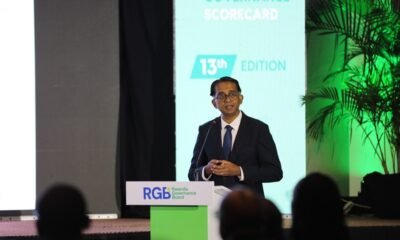





Ghana has made progress in the way it manages public resources and delivers services to citizens, with improvements in financial management and access to education and healthcare helping to raise its governance score.
The country ranked 92nd out of 133 countries worldwide and ninth in Africa in the 2026 Chandler Good Government Index (CGGI), according to a report released last Thursday.
The improvement offers a positive sign for Ghana, although the country still faces challenges in areas such as leadership, long-term planning and creating an attractive environment for businesses.
The index showed that Ghana’s performance in Financial Stewardship, which measures how governments manage public finances and maintain fiscal sustainability, almost doubled this year after declining between 2021 and 2024.
Its score in Helping People Rise, which looks at how government policies and services improve people’s lives, also increased for the second consecutive year, reflecting progress in areas including education and healthcare.
However, the country recorded declines in Leadership and Foresight and Attractive Marketplace, indicating areas where further attention may be needed.
Ghana’s performance comes at a time when several African countries are also making progress in governance. The report found that 71 per cent of African countries assessed in both 2025 and 2026 improved their overall scores.
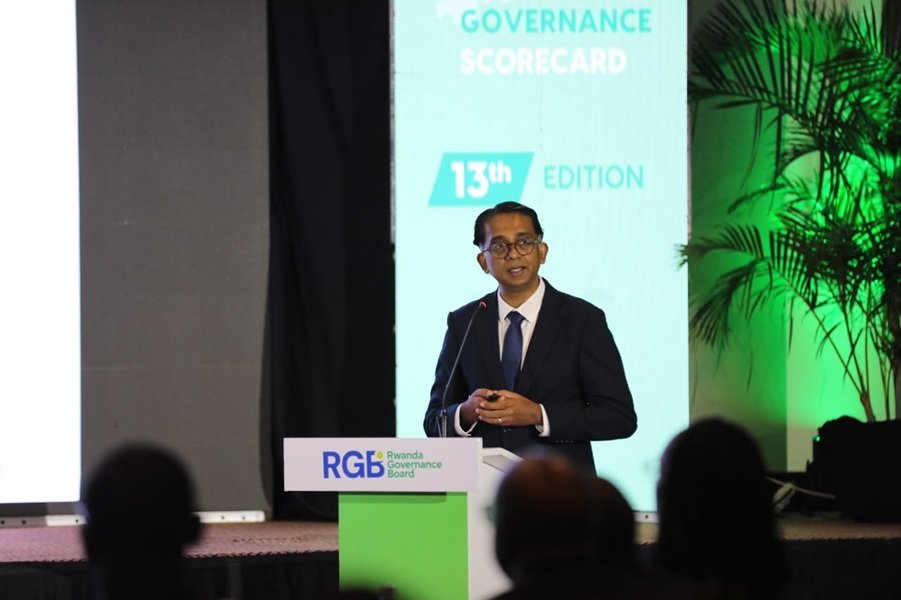
Dinesh Naidu, Director of Knowledge at Chandler Governance Group, said the continent’s strongest gains were in financial management, followed by efforts to improve citizens’ lives.
He said the progress suggested that improvements in government capabilities were beginning to translate into tangible benefits, including better access to education and healthcare.
However, Africa continues to face significant challenges. Although average scores improved in six of the index’s seven pillars over the past year, the region’s overall average remains below its 2021 level.
The report also found that 23 of the 35 African countries assessed ranked outside the global top 100, while none made it into the top 50.
Globally, 61 per cent of the 120 countries assessed in both 2025 and 2026 recorded higher scores, representing the highest annual share of countries improving since the index began in 2021.
The Chandler Good Government Index assesses government capabilities and effectiveness across 133 countries, representing 94 per cent of the world’s population.
It uses 35 indicators grouped under seven pillars to help governments identify their strengths, recognise gaps and learn from the experiences of other countries.
Mr Naidu said rankings should not be treated as an end in themselves but as a guide to identifying areas that need improvement.
He said sustained progress depended on strong institutions, responsible use of public resources and the ability of governments to turn policies into meaningful outcomes for citizens.
For Ghana, the latest results point to progress in some important areas, while highlighting the need to strengthen other aspects of governance to ensure that improvements are felt in the daily lives of ordinary people.
By Esinam Jemima Kuatsinu
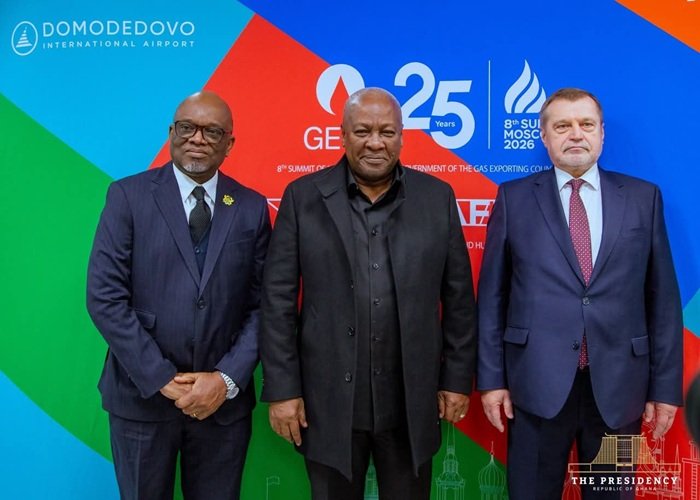
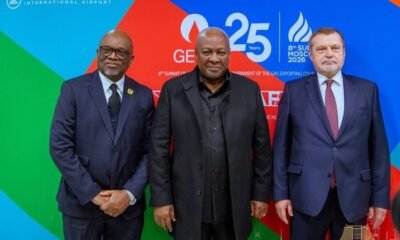
President John Mahama has arrived in Moscow, Russia, from Ethiopia to participate in the 3rd Russia-Africa Summit.
The summit is being hosted by Russian President Vladimir Putin.
During the visit, President Mahama will join fellow African leaders at the Economic and Humanitarian Forum and summit plenary sessions.
He is also scheduled to hold high-level bilateral talks with President Putin and attend a Kente exhibition organised by the Russia-Ghana Parliamentary Forum.
As part of the visit, the President will receive honorary doctorate degrees from the Russian University of Transport and the Peoples’ Friendship University of Russia.
He will also engage Russian businesses and state institutions to advance bilateral cooperation between Ghana and Russia.
By Edem Mensah-Tsotorme