News
AMA kicks off major decongestion exercise in Accra

- /home/u249204778/domains/spectator.com.gh/public_html/wp-content/plugins/mvp-social-buttons/mvp-social-buttons.php on line 27
https://spectator.com.gh/wp-content/uploads/2025/05/1001486950-1000x600.jpg&description=AMA kicks off major decongestion exercise in Accra', 'pinterestShare', 'width=750,height=350'); return false;" title="Pin This Post">
- Share
- Tweet /home/u249204778/domains/spectator.com.gh/public_html/wp-content/plugins/mvp-social-buttons/mvp-social-buttons.php on line 72
https://spectator.com.gh/wp-content/uploads/2025/05/1001486950-1000x600.jpg&description=AMA kicks off major decongestion exercise in Accra', 'pinterestShare', 'width=750,height=350'); return false;" title="Pin This Post">
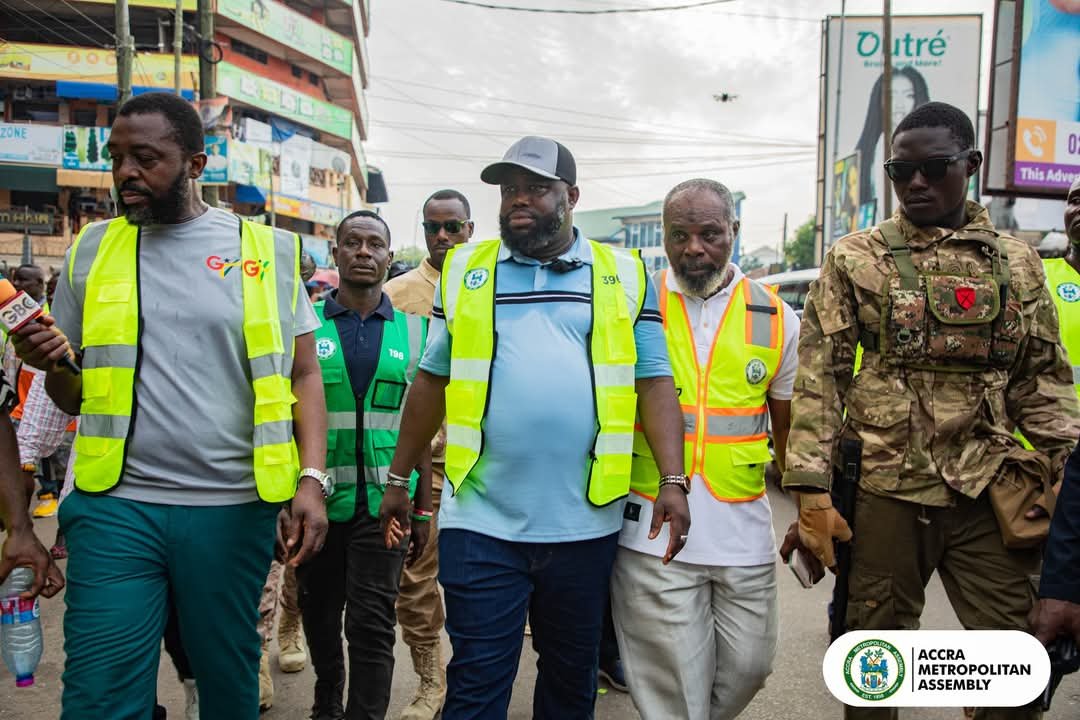
The Accra Metropolitan Assembly (AMA) on Tuesday, May 20, 2025, officially commenced a long-anticipated decongestion exercise across major parts of the Central Business District (CBD) to clear unauthorised trading activities from pavements and on the streets.
The operation, which began at 4:00 a.m. and was supervised by the Mayor of Accra, Michael Kpakpo Allotey, targeted Kinbu Street and extended through Makola, CMB, Circle, and Kaneshie.
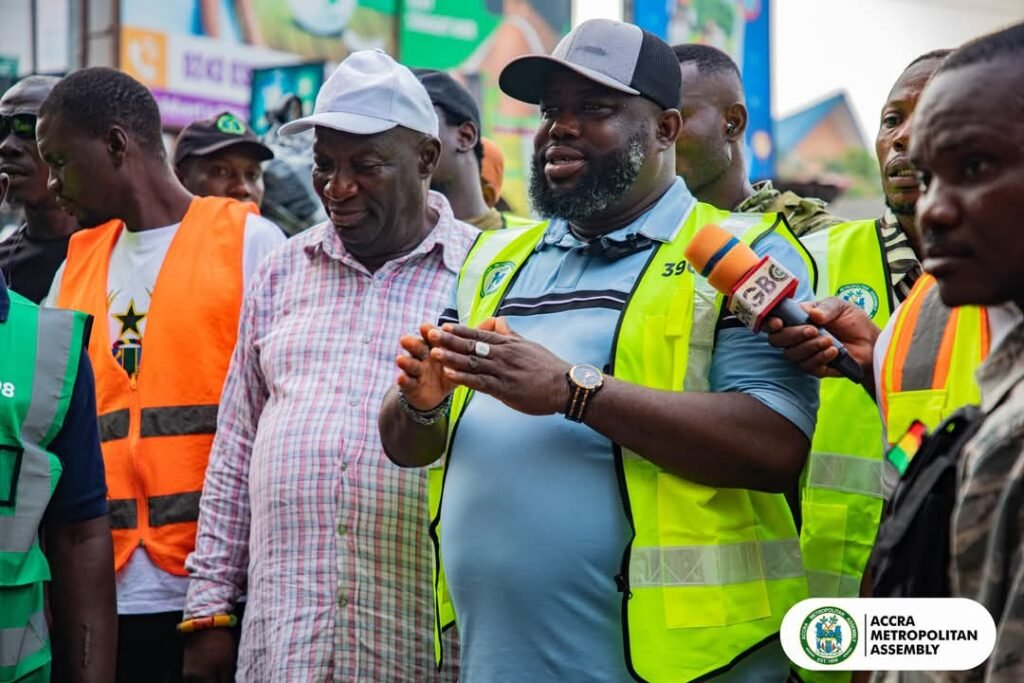
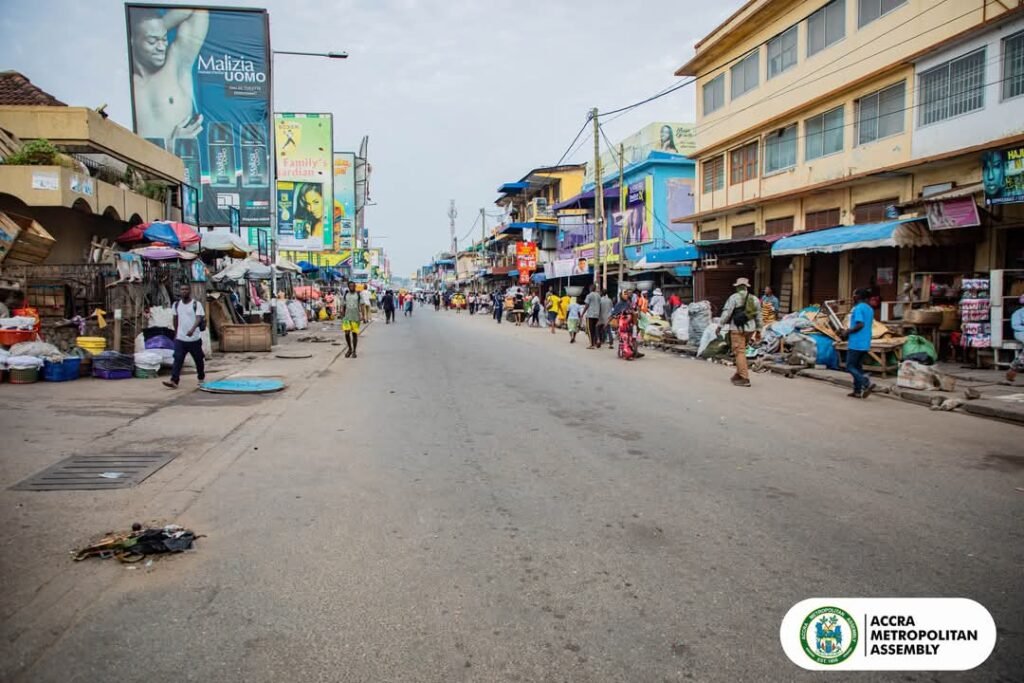
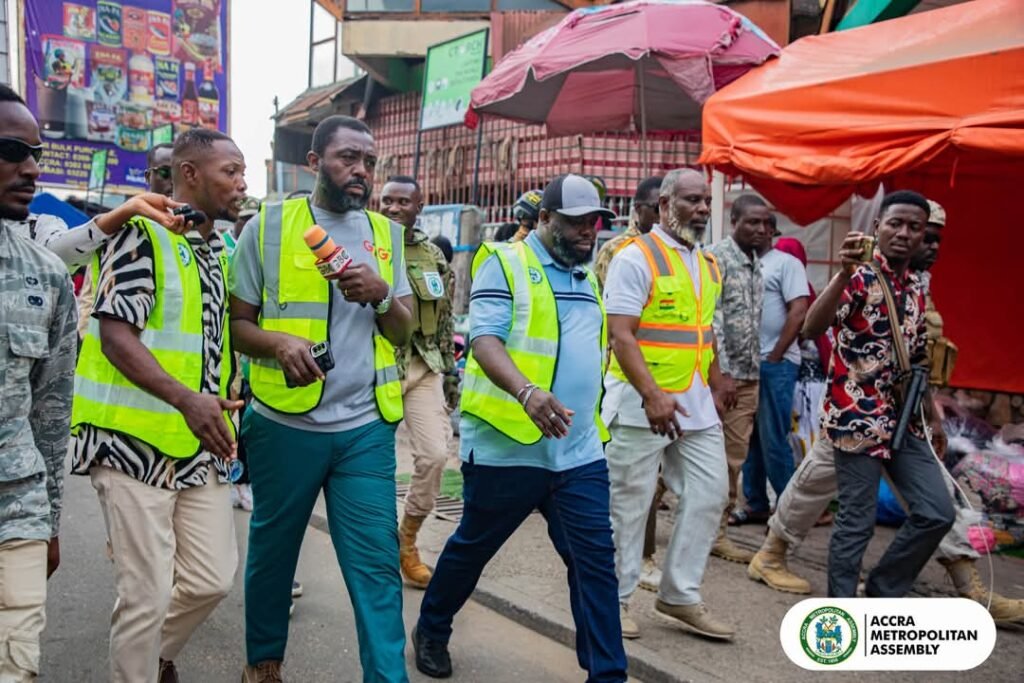
In an interaction with hawkers, during the exercise, Mayor Allotey reiterated that the operation was a necessity, not an act of aggression, stressing that it aimed to clean Accra and make it a model capital for the sub-region.
He used the opportunity to announce several measures under the government’s 24-hour economy agenda, including the installation of solar-powered streetlights and a new rotational trading system that would allow traders to sell for longer hours on selected days.
He announced plans to select trader leaders to oversee sanitation responsibilities in various trading enclaves, warning that failure to keep areas clean would result in severe penalties, including confiscation of wares.
Addressing some transport operators who have taken over portions of the streets for loading, the Mayor cautioned them to stay away from loading on the streets and move into the stations for safety, saying, “You’re the same people now causing the problem.”
“Some of you complain politicians are destroying the country, but what you’re doing here is also wrong. If we destroy this city, we’ll all suffer,” he cautioned.
Briefing the media after the initial rounds of enforcement, Mr.Allotey emphasised that the exercise was not a nine-day wonder or designed to frustrate traders, but to restore order and dignity to the capital.
“We are not here to sack anyone. The President didn’t appoint me to mistreat traders. That’s why I speak to you with humility and explain our plans. For today, we won’t seize your items. But from tomorrow, if we find you violating the rules, we will confiscate your goods and give them to charity,” he warned.
The Mayor assured traders of his open-door policy, urging them not to retaliate when they encounter misconduct from city guards.
“If any AMA worker offends you, don’t fight them. Come directly to my office — you don’t need an appointment. I am the Mayor for the people,” he said.
While touring the Circle area, Mayor Kpakpo Allotey revealed plans to construct affordable mini shops for hawkers along cleared areas to offer a more sustainable trading option.
The Municipal Chief Executive (MCE) for the Korle Klottey Municipal Assembly (KoKMA), Alfred Ato Allotey-Gaisie, commended the traders for the level of cooperation received, noting that the operation had been largely successful.
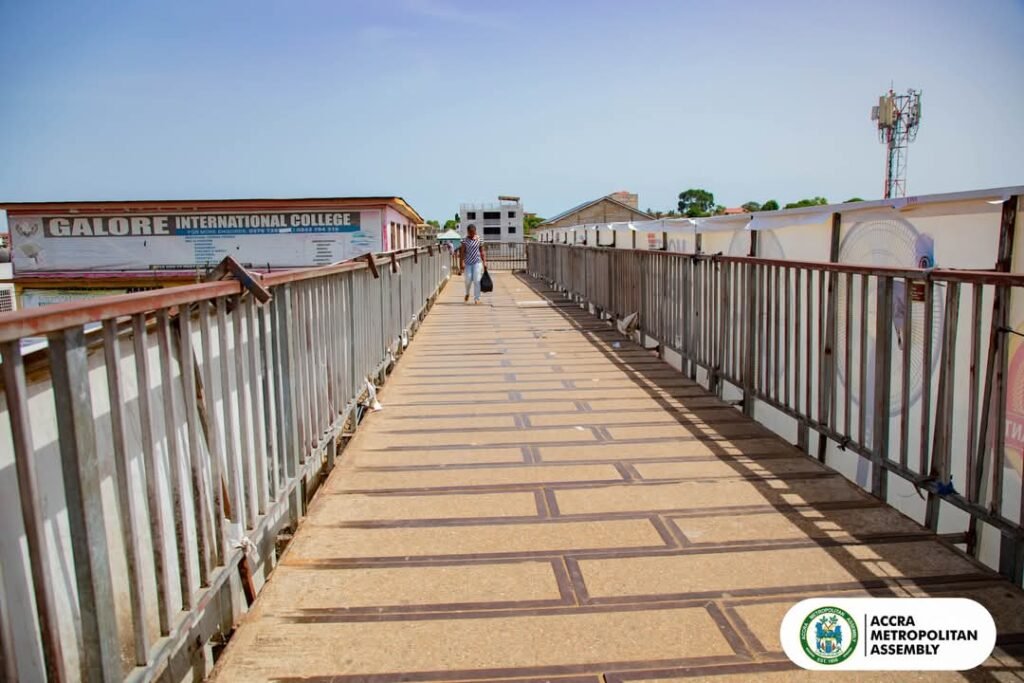
“We started from the Kinbu area and moved through Makola, CMB, Circle, and Kaneshie. Especially at Kaneshie, we saw that traders had moved back to the demarcated areas. The bridge is completely cleared,” he said.
Mr.Gaisie stressed that the operation would continue daily until Friday to ensure full compliance, clarifying that not all traders would be moved entirely from the streets.
“We’ll do the same thing tomorrow and the day after. Our aim is not to harass anyone, but to ensure free movement for both pedestrians and vehicles. Already, we’ve seen massive improvement today. We’ve drawn a red line and will arrange traders along it. We’re not displacing everyone,” he stated.
He also hinted at a rotational system for trading in congested zones such as Katamanto and parts of the CBD, proposing two designated days in a week where traders can operate along certain streets into the night.
“This will help them earn their income without returning to illegal spots. We don’t want to frustrate anyone. Everyone has the right to feed their families — but we also have a responsibility to maintain law and order,” Mr. Gaisie noted.




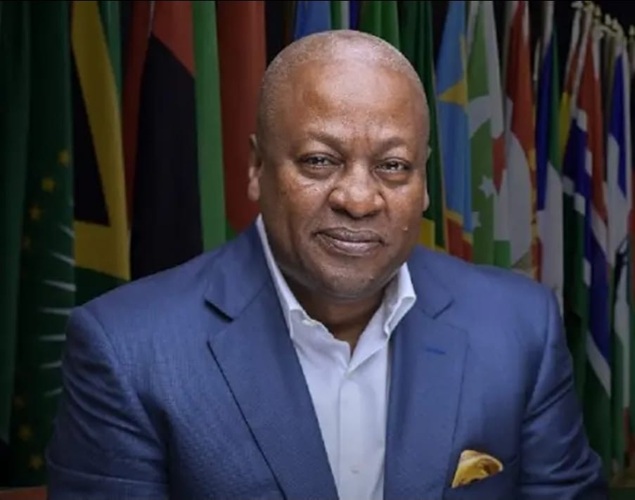
President John Dramani Mahama will be joining African heads of state, business leaders, investors and innovators shaping Africa’s next chapter, at the inaugural Alamein Africa Forum scheduled to take place from 2nd to 4th October 2026 in the historic city of Alamein on Egypt’s Mediterranean coast.
The three-day Alamein Africa Forum is established as a permanent African Business Forum to convene biennially in Egypt.
It is to become the continent’s premier gathering where political power meets entrepreneurial prowess, bridging the established engines of African growth with the new sectors defining its future.
Co-organised by the Government of Egypt, African Export – Import Bank (Afreximbank), the African Union and AUDA-NEPAD, it is expected to bring together more than twenty (20) heads of state and government representatives alongside business leaders, bankers and development institutions.
Ghana’s President, who on 23rd September 2026 declared Ghana is open for business in New York after ringing the ceremonial closing bell at the Nasdaq Stock Market will be leading the Ghanaian delegation, to include the Minister for Trade, Agribusiness, and Industry, Elizabeth Ofosu – Adjare, to the forum.
Other members of the Ghanaian delegation are the Head and Presidential Advisor for Ghana’s 24-Hour Economy and Accelerated Export Development Programme, Hon. Augustus Goosie Tanoh, Ghana’s Special Envoy to the Alliance of Sahel States, Colonel Larry Gbevlo – Lartey alongside key Ghanaian private sector players.
Bringing together leaders in politics, business and policy from across the continent, the Alamein Africa Forum will provide a unique opportunity to shape Africa’s growth agenda by aligning policy and investment priorities, mobilising partnerships for implementation and strengthening financing and investment pathways.
The private sector must become an integral part of Agenda 2063, the African Union’s strategic fifty-year masterplan to transform the continent. The private sector is the core economic engine required to turn the African 2063 from an aspirational government roadmap into realized infrastructure, jobs, and value-added trade.
By Chris KONEY
News
Contractors move to site to begin construction of 120-Bed Trauma Hospital at Bole – Felix Kwakye Ofosu
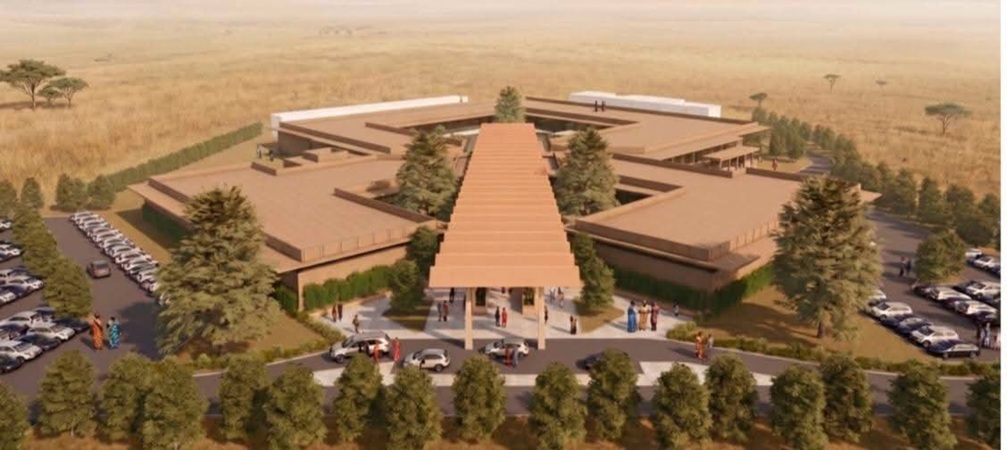
Minister for Government Communications, Felix Kwakye Ofosu, has revealed that contractors have moved to site to begin construction of a 120-bed Specialised Trauma and Emergency Hospital at Bole in the Savannah Region.
According to the Minister, the 16,000 square metre facility will be equipped with modern medical infrastructure to provide emergency and trauma care.
The hospital will have a 24-hour Accident and Emergency Unit, trauma resuscitation bays, emergency operating theatres, an Intensive Care Unit (ICU) and a High Dependency Unit (HDU).
It will also include specialised trauma wards, a burns treatment unit, orthopaedic and surgical units, as well as imaging and diagnostic facilities, among others.
By Edem Mensah-Tsotorme