Fruitful Living
‘Allahu As-Samad’

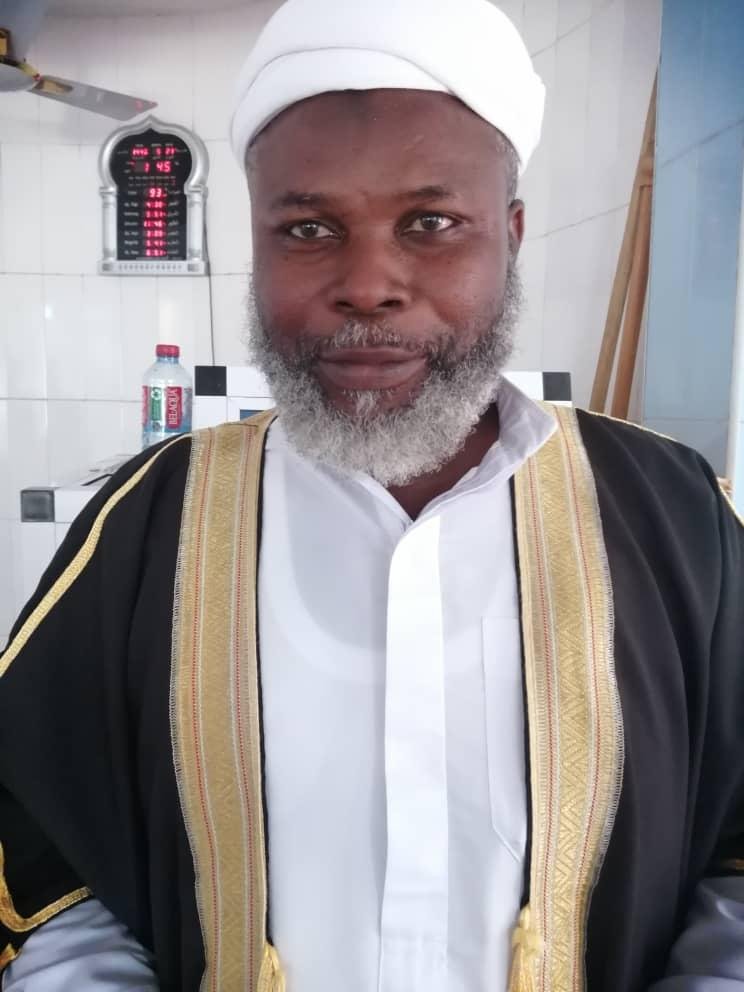
Introduction to the Concept of As-Samad
Servants of Allah, one of Allah’s most profound names, As-Samad, is mentioned in Surah Al-Ikhlas, where Allah describes His oneness and perfection:
“Say, ‘He is Allah, [Who is] One. Allah, the Eternal Refuge (As-Samad). He neither begets nor is born, nor is there to Him any equivalent.’” (Qur’an 112:1-4).
The name As-Samad encompasses the idea of Allah’s absolute independence and self-sufficiency. Ibn Abbas (RA) explained that As-Samad refers to the one to whom all creation turns in times of need, while He Himself is free from any need (Tafsir Ibn Kathir).
Allah requires no sustenance, no assistance, and no support in carrying out His plans. Yet all creation—human beings, animals, plants, and even angels—rely entirely on Him for their existence, sustenance, and success.
Allah’s Independence Demonstrated in Creation
Allah’s independence is evident in the perfection of His creation. He brought the universe into existence with unparalleled mastery. Allah states:
“Indeed, your Lord is Allah, who created the heavens and the earth in six days and then established Himself above the Throne. He manages every affair…” (Qur’an 10:3).
The heavens, the earth, the mountains, the seas, and every living creature were created without the assistance of anyone. Even the most intricate systems—such as the orbiting of planets, the growth of plants, and the functioning of the human body—operate under Allah’s command.
This is further emphasised in another verse:
“To Allah belongs whatever is in the heavens and whatever is in the earth. And Allah is free of need, the Praiseworthy.” (Qur’an 31:26).
Evidence from the Sunnah
The Sunnah of the Prophet Muhammad further emphasises Allah’s independence and self-sufficiency. In a powerful hadith qudsi, Allah says:
“O My servants, all of you are astray except for those whom I have guided, so seek guidance from Me, and I shall guide you. O My servants, all of you are hungry except for those whom I have fed, so seek food from Me, and I shall feed you. O My servants, all of you are naked except for those whom I have clothed, so seek clothing from Me, and I shall clothe you.” (Muslim, Hadith 2577).
This hadith reflects Allah’s perfection in fulfilling the needs of creation while remaining independent and unaffected by those needs. Allah’s perfection in providing is limitless, as reflected in another narration:
“Allah’s Hand is full, and it does not diminish by His continuous giving day and night.” (Bukhari, Hadith 4684).
Human Dependence on Allah
Unlike Allah, humans are intrinsically dependent on Him for every aspect of their existence. Allah says:
“O mankind, you are those in need of Allah, while Allah is the Free of need, the Praiseworthy.” (Qur’an 35:15).
This dependence is not a weakness but a natural state that reminds us to turn to Allah in all matters. The Prophet Muhammad advised his companions to rely on Allah, saying:
“If you ask, ask Allah; if you seek help, seek help from Allah.” (Tirmidhi, Hadith 2516).
Believers are encouraged to place their trust in Allah, as He alone controls every affair:
“And whoever relies upon Allah – then He is sufficient for him. Indeed, Allah will accomplish His purpose.” (Qur’an 65:3).
By Imam Alhaji Saeed Abdulai,
1BN – Michel Camp

“There is no one righteous, not even one; there is no one who understands; no one seeks God. But now a righteousness from God, apart from law, has been made known, to which the Law and the Prophets testify. This righteousness from God comes through faith in Jesus Christ, to all who believe. For there is no difference.” — Rom. 3:10, 21–22 (NIV)
INTRODUCTION
We bring you this week the concluding part of “A Righteousness Revolution,” published last week. For ease of reference, we recap the last paragraph of last week’s article. Please enjoy and pass it on!
THE GOAL OF THIS TRANSFORMATION
What is the goal of this metamorphosis? Scripture states it in a number of different ways, which overlap and can be seen as different ways of expressing the same basic concept. Scripture often does this because our minds are inadequate to comprehend, and our language inadequate to express, the full scope of God’s revelation to us.
TO BECOME LIKE GOD IN CHARACTER
The whole concept can be summed up in the simple and astonishing statement that we are to become like God. Not like God in power; we can never aspire to that, although we can move in much greater power than many Christians have ever imagined. But like God in character.
We are to “put on the new self, created to be like God in true righteousness and holiness” — Eph. 5:24; the “new self, which is being renewed in knowledge in the image of its Creator” — Col. 3:10. “We, who with unveiled faces all reflect the Lord’s glory, are being transformed into His likeness with ever-increasing glory, which comes from the Lord who is the Spirit” — 2 Cor. 3:18. “When He appears we shall be like Him” — 1 John 3:2. We are to “participate in the divine nature” — 2 Pet. 1:4. We can have “the mind of Christ” — 1 Cor. 2:16; Phil. 2:5. (Emphasis added in each case.)
Adam and Eve were created in the image of God — Gen. 1:26. With Adam’s Fall, much of that image was lost. But with Christ’s sacrifice for us, those who accept Him as Lord and Saviour can be restored into God’s image.
“Just as we have borne the likeness of the earthly man [the first Adam], so shall we bear the likeness of the man from heaven [the second Adam, Jesus Christ]” — 1 Cor. 15:49.
Jesus said, “Most assuredly, I say to you, he who believes in Me, the works that I do he will do also; and greater works than these he will do, because I go to My Father” — John 14:12.
We think of this (if we dare think of it at all) as meaning that we can heal, cast out demons and even raise people from the dead. It does mean that, and people who have faith in Jesus Christ are doing that now. But does it not mean more?
Jesus said that He did only what He saw the Father doing and spoke only the words the Father gave Him. Can we, should we, expect to do the same? He said, “I and the Father are one.” Can we expect this for ourselves? He said, “Anyone who has seen Me has seen the Father” — John 14:9. Can this be said of us?
Paul told the Corinthians that they were “clearly an epistle of Christ, ministered by us, written not with ink but by the Spirit of the living God, not on tablets of stone but on tablets of flesh, that is, of the heart” — 2 Cor. 3:3 (NKJV).
Is this not part of what it means to “be” His witness — Acts 1:8 — so that people can look at us and see Christ? We are to be witnesses by who we are, not just what we say. Jesus expects that there will be something different about us, that people will be able to look at us and know that we are His disciples — John 13:35.
He said of His disciples, “They are not of the world, even as I am not of it” — John 17:16.
His demands are to imitate and model Christ’s behaviour and to be clear reflections of the Lord — Matthew 5:16.
ESTABLISHING OUR ATTITUDE OF RIGHTEOUSNESS
Writing from a prison cell in Rome, the apostle Paul wrote about the attitude a Christian should have: “Whatever happens, conduct yourselves in a manner worthy of the gospel of Christ” — Philippians 1:27.
He is telling us that no matter what unexpected disruptions, frustrations or difficulties come our way, we are to respond with a Christ-like attitude.
Paul later writes, “Your attitude should be the same as that of Jesus Christ” — Philippians 2:5. He also encourages us in Ephesians 5:1 to be “imitators of Christ as dearly beloved children.”
As children love to imitate what they see and repeat what they hear, we also are charged to imitate and model Christ’s behaviour and to be clear reflections of the Lord.
Jesus maintained a perfect attitude in every situation because He prayed about everything and worried about nothing. We, too, should seek God’s guidance about every aspect of our lives and allow Him to work out His perfect will without interference.
Jesus’ attitude was never to become defensive, discouraged or depressed because His goal was to please the Father rather than to achieve His own agenda.
In the midst of trials, He was patient. In the midst of suffering, He was hopeful. In the midst of blessing, He was humble. Even in the midst of ridicule, abuse and hostility, He “made no threats . . . and did not retaliate. Instead He entrusted Himself to Him who judges justly” — 1 Peter 2:23.
MY BROTHERS AND SISTERS: LOVING MUHAMMAD MEANS FOLLOWING MUHAMMAD
We say: “We love the Prophet.”
Alhamdulillah.
But the real test of love is not how loudly we shout when someone insults him.
The real test is: Do we behave as he behaved?
Allah says: “Indeed, you are surely of outstanding character.” (Qur’an 68:4)
And Allah says: “Indeed, in the Messenger of Allah you have an excellent example.” (Qur’an 33:21)
Therefore, if we claim to defend Muhammad (pbuh) but abandon his patience, mercy, justice and wisdom, we must ask ourselves:
Are we really defending him or are we betraying his example?
AN INSULT DOES NOT MAKE A PRIVATE PERSON A JUDGE AND EXECUTIONER
This point must be understood clearly.
Islam has laws concerning crimes.
Islam has courts.
Islam has legitimate authority.
Islam does not turn every angry individual into judge, jury and executioner.
The Qur’an says: “O believers! Stand firm for justice.” (Qur’an 4:135)
And the Prophet gave severe warnings against unlawful killing.
He said: “Whoever kills a person under covenant will not smell the fragrance of Paradise.”
(Sahih al-Bukhari, 3166)
Therefore, no Muslim should stand in a mosque and mobilize ordinary people to kill another person because of an insult.
That is not prophetic leadership.
That is not emotional courage.
That is not the Sunnah.
And it is certainly not a license for vigilantism.
If an offence has been committed, report it.
If a crime has been committed, let the competent authorities investigate it.
If punishment is legally warranted, let lawful judicial institutions determine it.
The Ghana Police Service has itself reminded religious leaders and the public that freedom of religion or expression cannot be used to justify inciting violence or encouraging people to harm others.
For Muslims, this is not merely a question of Ghanaian law.
It is also a question of taqwā (fear of Allah).
THE PROPHET TAUGHT US HOW TO SPEAK
Allah says: “Invite to the way of your Lord with wisdom and good instruction, and argue with them in the best manner.” (Qur’an 16:125)
This is the Islamic methodology of da’wah:
Wisdom.
Good counsel.
Best argument.
Not abuse.
Not threats.
Not mob action.
Not revenge.
WHAT SHOULD WE DO WHEN SOMEONE INSULTS THE PROPHET MOHAMMED (PBUH)?
Servants of Allah, remember these SEVEN STEPS.
1. PAUSE
Do not react while you are angry.
Allah praises those: “Those who restrain anger and pardon people.” (Qur’an 3:134)
2. VERIFY
Do not forward every video.
Do not believe every audio.
Do not react to an edited clip without knowing the context.
10 | P a g e
Allah says: “Then verify.” (Qur’an 49:6)
3. DO NOT RETALIATE WITH AN INSULT
Remember Qur’an 6:108.
We do not insult Jesus (Peace be upon him).
We do not insult Christianity.
We do not insult churches.
We do not insult the Bible.
We can disagree theologically while remaining respectful.
The author is the chief Imam of katamanso Municipal and Certified Counsellor and Governance Exper