Hot!
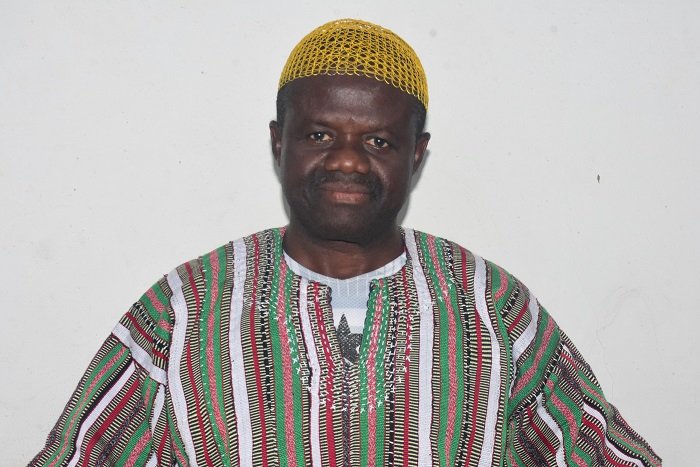
Alhaji Salifu Abdul-Rahaman appointed The Ghanaian Times Editor

- /home/u249204778/domains/spectator.com.gh/public_html/wp-content/plugins/mvp-social-buttons/mvp-social-buttons.php on line 27
https://spectator.com.gh/wp-content/uploads/2025/08/Appointment-Alhaji-Salifu-Abdul-Rahaman.jpg&description=Alhaji Salifu Abdul-Rahaman appointed The Ghanaian Times Editor', 'pinterestShare', 'width=750,height=350'); return false;" title="Pin This Post">
- Share
- Tweet /home/u249204778/domains/spectator.com.gh/public_html/wp-content/plugins/mvp-social-buttons/mvp-social-buttons.php on line 72
https://spectator.com.gh/wp-content/uploads/2025/08/Appointment-Alhaji-Salifu-Abdul-Rahaman.jpg&description=Alhaji Salifu Abdul-Rahaman appointed The Ghanaian Times Editor', 'pinterestShare', 'width=750,height=350'); return false;" title="Pin This Post">
Alhaji Salifu Abdul-Rahaman has been appointed as the substantive Editor of The Ghanaian Times.
His appointment, which took effect from Friday, August 1, 2025, followed approval by the Board and Management of the New Times Corporation (NTC), after months of searching to replace the former Editor, Mr Dave Agbenu.
A letter signed by Mr Martin Adu-Owusu, the Managing Director of the NTC, and sighted by the news desk said: “Reference to your application for the advertised position of Editor of The Ghanaian Times Newspaper and successful interview dated July 16, 2025, we are pleased to appoint you as Editor of the newspaper effective August 1, 2025. Congratulations on your new role!”
Prior to his appointment, Alhaji Abdul-Rahaman served in the capacity as Acting Editor of the newspaper for nearly seven months.
Risen through
the ranks
Having risen through the ranks as a cub reporter, Chief Reporter, Assistant Editor, Senior Assistant Editor and Deputy Editor of the newspaper. Alhaji, as he is affectionately called by his colleagues, comes to his new position with a wealth of experience under his belt.
He was officially employed in October 2003, after serving as a stringer for a couple of years with the Corporation and as he puts it, “I have over the years gained a wealth of in-depth experience in news gathering, editing, and editorial management, as well as institutional memory.”
“It is with great excitement that I am confirmed as Editor after seven months of unwavering dedication to duty as Acting Editor. I express my gratitude to Allah (God), and to the Board, Management, and workers of the NTC for their unflinching support and cooperation in my journey so far,” he told this reporter.
Alhaji Abdul-Rahaman said his goal was to help the NTC retain its loyal readership and reposition The Ghanaian Times as the most preferred newspaper in terms of accuracy, readership, and business, in today’s highly competitive media landscape.
This, he explained, aligns with the NTC’s vision of being the most reliable and sustainably profitable multimedia business organisation in Ghana, West Africa, and beyond.
Committment
“I am deeply committed to the values of ethical journalism, professionalism, and innovation. I will continue to work with the Editorial team and Management to strengthen our news-gathering and dissemination systems and uphold The Ghanaian Times’ editorial independence and credibility,” he said.
With a renewed sense of purpose, he is expected to bring his wealth of experience and institutional knowledge to provide the Editorial team with exemplary leadership and technical direction into the next chapter of excellence, in line with the newspaper’s slogan: The Most Authoritative Newspaper—the reader’s preferred medium of news and information.
Prior to joining the journalism profession, Alhaji Abdul-Rahaman worked from 1990 to 1997 as a field worker at the Navrongo Health Research Centre, rising through the ranks to become a Principal Field Supervisor.
His early work included the Ghana Vitamin A Supplementation Trial (Ghana VAST), which contributed to improving the health of study subjects in the Kassena-Nankana area of the Upper East Region.
During his time at the Navrongo Health Research Centre, he worked under Dr Fred Binka now Professor (Emeritus), a renowned epidemiologist and Chair of the Ghana Health Service Governing Board on the Mosquito Bed Net Studies, which later influenced national health policy.
Alhaji Abdul-Rahaman holds a Diploma in Journalism and a Bachelor of Arts in Communication Studies from the Ghana Institute of Journalism, now the University of Media, Arts and Communication (UNIMAC).
He also holds a Master of Social Studies degree from the prestigious University of Ghana, Legon and is a proud alumnus of Navrongo Senior High School (NABIA), Northern School of Business in Tamale and Zamse Secondary Technical School in Bolgatanga .
Alhaji Abdul-Rahaman is a member of the Ghana Journalists Association and served on the Inter-Ministerial Ad Hoc Committee at the Ministry of Foreign Affairs for the planning and execution of activities to mark United Nations Day and the International Day of United Nations Peacekeepers.
Awards
He has a number of awards and honours to his credit.
Notably, he received the UNICEF and Department of Children’s award for his article “Female Genital Mutilation is Outmoded”, published in the April 18, 2002 issue of the Daily Graphic.
He is also a proud recipient of an award from the Africa Media and Malaria Research Network.
Additionally, he received a certificate for successfully participating in the High-Level Partnership Programme for Economic Development Strategy (Ghana), held from August 16 to August 22, 2015 in South Korea.
Among the high-profile assignments he has covered include; the National Reconciliation Commission, the Bediako Commission on Pension Reforms, the Ghana@50 Commission of Enquiry, the Georgina Wood Committee investigations into the disappearance of cocaine from the MV Benjamin vessel, proceedings of the Parliament of Ghana, and the Pan-African Parliament in Midrand, South Africa.
Alhaji Abdul-Rahaman has also covered international assignments in South Africa, Saudi Arabia, Somalia, Niger, and Togo.
BY TIMES REPORTER


The Tema Regional Police Command has arrested a 32-year-old man for allegedly posing as a soldier and extorting money from unsuspecting members of the public at Ashaiman.
The suspect, identified as Bright Atsu Kudiabor, was arrested by the Ashaiman Police on Wednesday, September 16, 2026, at about 7:00 a.m.
According to the Police, he was arrested at an area known as “I Shall Return”, where he was allegedly parading himself as a soldier and demanding money from people.
The Police said Kudiabor, who is an ex-convict, was initially arrested by personnel of the Ghana National Fire Service in Ashaiman with assistance from other members of the public.
A search conducted on him after he was handed over to the Police reportedly led to the recovery of a set of military camouflage uniform.
The suspect is currently in Police custody and assisting with investigations.
The Tema Regional Police Command said he would be processed for court after investigations are completed.
The Police urged the public to remain vigilant and report anyone who falsely presents themselves as a soldier or a member of another security agency to deceive or extort money from the public.
By: Jacob Aggrey
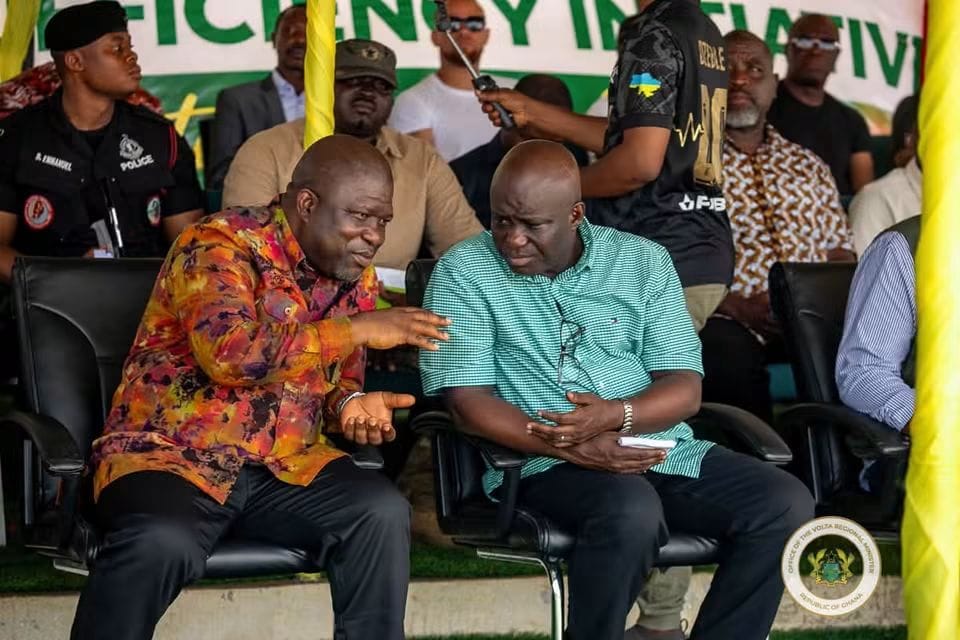
Volta Regional Minister, James Gunu, says the Volta Region holds enormous agricultural potential and efforts must be geared towards connecting farmers to the needed resources to unlock that potential.
He said focus must be on linking farmers to resources, technology, financing and markets to increase production, create jobs and build sustainable livelihoods.
Hon. Gunu made the remarks at the national launch of the Ghana Tomato Self-Sufficiency Initiative (GHATSI) held at Anloga in the Volta Region on Tuesday, September 15.
The initiative, under the theme “Produce at Home. Feed the Nation. Export the Surplus,” seeks to boost local tomato production, processing and marketing while reducing Ghana’s heavy reliance on imported tomatoes.
The launch was attended by the Minister for Food and Agriculture, Eric Opoku, his Deputy, John Setor Dumelo, Feed Ghana Coordinator, Bright Demordzi, Members of Parliament, traditional leaders, MMDCEs, farmers and other stakeholders.
Mr.Gunu expressed appreciation to the Minister for Food and Agriculture for the support announced for the region, including two excavators, 200 cartons of organic fertiliser, and GH¢200,000 for Ms. Kuatudzo Esther Dela, a tomato farmer and processor from Ziope.
He described the initiative as an important step towards making agriculture a stronger driver of food security, job creation and economic growth in the Volta Region.
By Edem Mensah-Tsotorme