Hot!
Road Crashes: Laws on road traffic offenses to be reviewed


- /home/u249204778/domains/spectator.com.gh/public_html/wp-content/plugins/mvp-social-buttons/mvp-social-buttons.php on line 27
https://spectator.com.gh/wp-content/uploads/2021/11/1.21254539.jpg&description=Road Crashes: Laws on road traffic offenses to be reviewed', 'pinterestShare', 'width=750,height=350'); return false;" title="Pin This Post">
- Share
- Tweet /home/u249204778/domains/spectator.com.gh/public_html/wp-content/plugins/mvp-social-buttons/mvp-social-buttons.php on line 72
https://spectator.com.gh/wp-content/uploads/2021/11/1.21254539.jpg&description=Road Crashes: Laws on road traffic offenses to be reviewed', 'pinterestShare', 'width=750,height=350'); return false;" title="Pin This Post">
Mr Kwaku Ofori Asiamah, Minister of Transport, says the Ministry has started a review of the Road Traffic Act 2004 and the Road Traffic Regulations 2012 to better address Ghana’s current road crash menace.
He said work was progressing smoothly and that, they would present all paperwork before Parliament next week and proceed to cabinet for further engagements.
The Minister said this on Wednesday at the Launch of the National Road Safety Authority’s (NRSA) “Stay Alive Road Safety Campaign” in Accra.
The Campaign, being the second phase of the “ARRIVE ALIVE” Road Safety Campaign launched last year, will enable the NRSA, Driver and Vehicle Licensing Authority (DVLA) and the Motor Traffic and Transport Department (MTTD) in collaboration with other stakeholders, combine education, advocacy, training and enforcement to fight the menace of road traffic crashes and casualties.
The Minister said the review would, include the automation of traffic enforcement to electronically detect, apprehend and issue fines to traffic law violators.
He said for drivers who had been involved in too many crashes, they would be labelled as high-risk drivers and could have their licenses taken from them or prevented from driving certain vehicles.
Mr Asiamah said commercial drivers would also be made to attend drivers’ refresher courses either on a bi-annual or yearly basis to upgrade their knowledge base.
He said over 90 per cent of road crashes were attributable to indiscipline on the part of road users, saying, “The act of excessive speeding, overtaking without due care to other vehicles, driving tired on the part of drivers, jaywalking, non-wearing of crash helmet and passing red-light among others are some of the common man related factors confronting road safety management strategies.”
The Minister said an Inter-Ministerial Committee that was put together by President Nana Addo Dankwa Akufo-Addo on April 15, 2021, to make recommendations that would reduce road traffic crashes in Ghana suggested that there should be a scale-up in the implementation of the Nationwide Road Safety Campaign.
The Committee also recommended the enforcement of regulations on two drivers for long distance journeys, mandatory rest period for drivers and pre-departure checks at transport terminals.
It also said there should be installation of speed limiters in certain vehicles, mandatory refresher training for commercial vehicle drivers, provision of Road Signs, Road-line Markings, Street Lights and Crash Barriers on major highways.
He said the Committee suggested an increase in highway patrols to intensify routine road checks and reactivation of the “War against Road Indiscipline” exercise, and the automation of traffic enforcement to electronically detect, apprehend and issue fines to traffic law violators.
The Minister urged the media to be at the centre of the campaign and use their platforms to intensify awareness on road safety.
Mrs May Obiri-Yeboah, Director General, NRSA, said the campaign would make road users more accountable and take full responsibility for the carnage on roads, rather than attribute it to the work of the devil.
She said it would also induce positive behavioural change for road users to, at all times observe and advocate for compliance with road traffic regulations and report infractions.
The Director-General, said again, the Campaign would illicit greater commitment to safety for policy makers, implementers and enforcers.
She said the NRSA would embark on joint enforcement and compliances activities with the MTTD and DVLA to ensure unconditional observance of road traffic regulations.
Mrs Obiri-Yeboah urged motorists and road users to exercise greater caution in the days leading to the Christmas festivities and the New Year.
She said ahead of the Christmas festivities, the NRSA would roll out the short code 194 to allow road users to report road safety violations to the Authority by text or voice.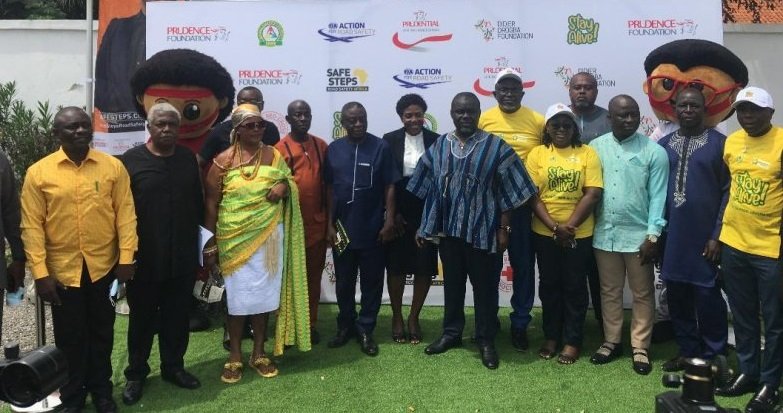
Mrs Obiri-Yeboah said the short code would equally be linked to a WhatsApp number.
She told the Ghana News Agency that the Authority had plans on developing incentive packages for citizens who reported infractions by other road users and assured of utmost anonymity of persons who assisted with evidence of any breach in road safety regulations. -GNA


General Secretary of the New Patriotic Party (NPP), Justin Kodua Frimpong, has filed his nomination to contest the position of General Secretary again as the party begins its rebuilding efforts ahead of the 2028 general elections.
He was accompanied by party stalwarts and supporters who were in high spirits, expressing confidence that he is the right person to hold the position.
Speaking after filing his nomination, Mr Kodua Frimpong assured the rank and file of the party that he would not disappoint them.
“I can assure you that the faith the rank and file of the party have had in me, I will never disappoint them,” he said.
He also pledged to run a clean campaign devoid of personal attacks.
“I can assure you that our internal campaign will be devoid of personal attacks,” he told his fellow contestants and the rank and file of the party as he seeks to retain his position.
His tenure has seen the party through the 2024 general elections, where the NPP lost power to the National Democratic Congress (NDC) after eight years in government.
The party is currently in a rebuilding phase, with internal elections scheduled to elect new national executives to lead its reorganization towards the 2028 polls.
The General Secretary position is considered one of the most influential in the party’s administrative structure, responsible for the day-to-day running of the party secretariat and implementation of party decisions.
By Edem Mensah-Tsotorme

The University of Ghana Medical Centre (UGMC) has disputed claims made on social media by comedian Michael Blackson concerning the treatment given to his late mother, saying a review found that the allegations did not accurately reflect what happened during her stay at the hospital.
In a statement issued in Accra on August 5, 2026, the management of UGMC expressed condolences to Mr. Blackson and his family over the death of his 83-year-old mother, who died at the facility on July 16, 2026.
The hospital said it had taken the concerns raised by Mr. Blackson seriously and conducted a thorough review in line with its clinical and administrative procedures.
According to the statement, the facts presented by Mr. Blackson on social media contained “numerous inaccuracies” and did not accurately reflect the medical care provided to his mother.
UGMC explained that she was referred to the facility from another hospital and received treatment there from May 27 to July 16, 2026, a period of about eight weeks.
The hospital stated that it would not release details of her diagnosis, treatment, medical records or other aspects of her care because it had a duty to protect patient confidentiality, even after death.
It said the decision was intended to respect the dignity of the deceased and the privacy of her family.
UGMC further stated that all clinical decisions at the facility are made by qualified healthcare professionals based on medical judgment, established standards of care and the best interests of the patient.
The statement added that such decisions are made in consultation with authorised family representatives where necessary and that billing and financial procedures are governed by institutional policies and are separate from clinical decision-making.
The hospital noted that it values feedback from patients and their families and considers both positive and negative comments important for improving the quality of care.
Mr. Blackson had earlier used social media to criticise the care his mother received at UGMC, prompting the hospital’s response.
By: Jacob Aggrey