Features
The saga of the dancing kiosk


- /home/u249204778/domains/spectator.com.gh/public_html/wp-content/plugins/mvp-social-buttons/mvp-social-buttons.php on line 27
https://spectator.com.gh/wp-content/uploads/2026/07/Some-people-being-carried-through-flood-waters.jpg&description=The saga of the dancing kiosk', 'pinterestShare', 'width=750,height=350'); return false;" title="Pin This Post">
- Share
- Tweet /home/u249204778/domains/spectator.com.gh/public_html/wp-content/plugins/mvp-social-buttons/mvp-social-buttons.php on line 72
https://spectator.com.gh/wp-content/uploads/2026/07/Some-people-being-carried-through-flood-waters.jpg&description=The saga of the dancing kiosk', 'pinterestShare', 'width=750,height=350'); return false;" title="Pin This Post">
IN every society, there are people who please themselves and do things their own way, whether people will talk about them or not. Check out the man who, by some good fortune, came by some money to purchase a beautiful Benz bus. Instead of becoming a bossy transport owner to whom daily accounts will be rendered, he decides otherwise.
He hires a driver but no driver’s mate. He becomes the mate himself and the bold inscription on the back of the bus is ‘MAN NO FOOL’. Of course, he does not rank himself a fool. He has long observed the way drivers collaborate with mates to play Kwaku Ananse tricks with daily accounts. He is far and above such tricks.
What about the married man who decides to enforce the principles of division of labour? Early one morning, he decreed that he would start doing the daily market shopping all by himself because he suspected that his wife was “tearing chobo”
This domestic tyrant had, a month before this unilateral family decree, arrogated to himself the power of the kitchen ladle. According to him, he was not feeling the chop-money’s worth in his stomach and, therefore, decided to overthrow his wife and establish a new kitchen regime.
He declared himself the chief cook and the wife a steward. He told his enquiring friends that he was forced to take the stringent measure because whenever his wife fetched the soup, his share looked like that of a prisoner although he is the one who “moves the chopmoney”.
He calls his actions “domestic pragmatism” and when the wife completes the cooking, she arranges the plates and bowls and calls out to the chop-money man to come and fetch the soup and allocate the meat.
Also, consider the noble ways of a man and wife who have a kiosk in which they sell their wares. Because they cannot carry their goods home back and forth everyday, and taking care not to be burgled, they decide to sleep in the kiosk every night although they have a house.
Last week Tuesday, they were fast asleep when the rains started. Deep in slumber, each one of them began dreaming he (or she) was dancing in a jamboree. It was indeed a real boogey, but two people side by side and dreaming simultaneously about dancing was too mysterious on a rainy day to be true.
When they came around and opened their eyes they realised that is was not a disco night, after all. The kiosk in which they were sleeping was rather water-borne and was doing the Michael Jackson dance, tossing up and down enroute to the abode of death. The magnificent dream dance turned out to be a Music-For-Your Dancing Kiosk.
Unfortunately, the dream dancers did not die in the floods. They lived to tell their story. They were one of the fortunate ones who escaped death by the skin of their teeth. Others were not so fortunate with water.
Death and Mourning!
It turned out that on that Tuesday, 24 residents of Accra were sentenced to death by water squad. It was a pitiful experience for many when the rains, the heaviest in 59 years, destroyed property, drowned human beings and animals and precipitated the worst traffic jam that ever hit the capital.
I was at home when Radio GAR (no longer GBC FM) announced that the situation was quite precarious and that the flood action was happening live Circle, the Odaw River overflowing, blah, blah, blah! Well, when you live in a planned city like Tema, you see rain but not floods and boogeying kiosks.
Neck Insurance
I had gotten dressed up for work but the announcement made me take off everything and got firmly tucked in bed as the rain drizzled even at about 9:30 a.m. having fallen from 11:00 p.m. the previous day with such intensity that I was surprised Tema was not inundated.
When I got to Circle the next day and saw the extent of damage, I was overawed. I heard people had to transform into human transport, carrying people in waist-deep water across for a fee of ₵500. Luckily I wasn’t around to be carried. I would have been charged ₵1,500 because the carrier would have had to first, insure his poor neck against dislocation since my weight is quite helluva! In any event of injury he would have tossed me into the water, anyway, to save his neck. You joke with your neck and you’ll die young!
When I got to the office on Wednesday, it was a mess. Workers and labourers were carting out soaked material and drying the offices. I had left my office radio on the carpet floor and I guess it did a bit of swimming before it was rescued. When it got dried a bit, I tried it and it cackled to life.
Jesus Christ, the radio must be holy-ghost filled. Perhaps, it walked on the water. I was so glad and tuned in to BBC, hoping something would be said about the floods in Sikaman. Nothing! Only Bosnian Serbs and their atrocities and that kind of boring stuff. People killing themselves and never stopping,
And it came to pass that Mr Nat Nunoo-Amarteifio, the AMA boss, came on the air later on to undertake a post-mortem of the disaster. Among other things, he talked about the level of the sea and lagoon rising to meet the floods. As for that explanation I was not convinced at all, but I won’t comment
You see, one veteran journalist whom I respect so much because of his prophetic genius, is TOM DORKENOO. He is, a man from whom I often take counsel because of his experience in life and journal-ism. Whatever he predicts comes to pass and recently I suggested that he should establish a church so that he could prophesy both day and night.
Uncle Tom as he is fondly known, wrote an article in his column two years ago, enumerating in graphic detail, reasons why Accra is a disaster area as far as floods are concerned, concluding that if the authorities do not take radical steps in tackling the drainage issue and allied problems, we must expect deaths and disaster in all forms and ramifications.
A year later, people died in the floods. The dose was repeated this year with 24 people losing their lives. Many have lost their animals and property and have been thrown into debts they can never redeem.
It is not enough for Nunoo-Amarteifio to come on the air to talk about actions he wants to take concerning the drainage system and unauthorised buildings. He should get down to work and see to it that everything that is contributing to the yearly floods is tackled appropriately.
If he is in doubt, he should look for back copies of the ‘Weekly Spectator’ and scan for Uncle Tom’s article. Tom is a man of the environment. He has talked extensively on floods and earthquakes.
Yes EARTHQUAKES! How prepared are we?
This article was first published on Saturday, July 15, 1995

The emotional lives of women are deep and complex. They are shaped by biology, the brain, and how women interact with the world around them. While everyone feels emotions, science shows unique patterns in how women process and express them.
1. How the brain and body work
Emotions are not just feelings in the mind. They are physical processes controlled by the brain and body:
Connected brain halves: Studies show that women often have strong connections between the left and right sides of the brain. This helps women link logic with intuition and feelings very quickly.
Strong memories: The brain’s emotional centre helps women remember emotional events with vivid detail. This builds strong gut feelings and helps women learn from past experiences.
Hormone changes: Hormones like estrogen and progesterone change throughout the month. Estrogen can boost good moods and energy, while progesterone can cause calmness or quiet reflection. These shifts are natural physical responses.
2. Empathy and connection
Women often show high levels of empathy and social skill:
Mirror neurons: People have brain cells called mirror neurons that let us feel what others feel. Research suggests these networks help women deeply sense and understand the emotions of people around them.
The “Tend-and-Befriend” Response: When stressed, men often react with fight or flight. Women often use a “tend-and-befriend” response. Driven by bonding hormones, women are wired to care for others and seek support from friends and community during hard times.
3. Society and expectations
Society also shapes how women express their feelings:
Different rules: Girls are often taught to be nurturing and expressive. However, society sometimes judges women harshly if they show anger or act too assertive at work. This forces women to balance their true feelings with outside expectations.
Emotional labor: Women often carry the weight of keeping families and workplaces happy. While this builds strong bonds, it can also lead to tiredness if they do not take time for themselves.
4. Resilience and Intuition
These biological and social factors give women great emotional strength:
The Power of Sharing: Many women are good at processing sadness, joy, and love by talking with others. This helps them heal and grow.
Listening to intuition: “Woman’s intuition” is real. It is not magic; it is the brain quickly putting together past experiences, physical clues, and deep observations into a clear gut feeling.
Conclusion
Women’s emotions are a powerful and sophisticated system. They are driven by brain science, body chemistry, and deep empathy. Understanding these systems helps us see the vital role women play in building strong relationships and communities.
By Robert Ekow Grimmond-Thompson
Features
Confronting newborn abandonment in Ghana: When a cry for help is heard in a dustbin – Part 2
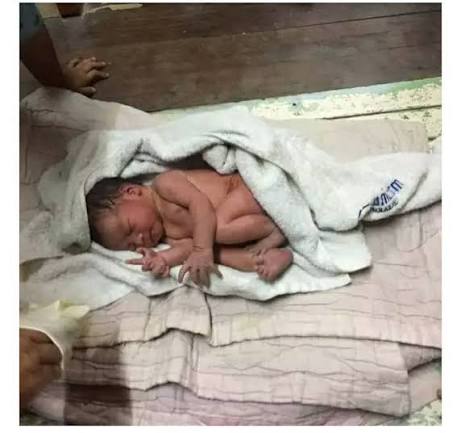
The root causes: It is never just one reason
My years of counselling at CPAC show me abandonment is rarely an act of malice. It is the tragic endpoint of seven overwhelming distresses:
1. Severe maternal mental illness —The hidden emergency
a) Clinical Postpartum Depression (PPD): This is far beyond “baby blues.” It is a severe mood disorder that can appear weeks to months after birth. Due to a massive drop in hormones, extreme sleep deprivation, and emotional exhaustion, the mother feels deep sadness, worthlessness, and complete emotional numbness towards her baby. Picture: A new mother sits by her bed all day, staring blankly. Her baby cries for hours, but she cannot lift her hands to carry the baby. She whispers, “This baby would be better off without me.” She does not hate the baby; she feels she has completely failed as a mother.
b) Peripartum Psychosis (Postpartum Psychosis): This is a psychiatric emergency. Rare but extremely dangerous, appearing suddenly within the first 2-3 weeks after delivery. The mother completely loses touch with reality. She hears commanding voices telling her to abandon the baby, or believes the baby is possessed by an evil spirit or is a “spirit child” who will bring a curse. Picture: A mother genuinely believes she heard a voice saying, “Leave this child at the crossroads at midnight or your family will die.” She abandons the baby not out of hatred, but because her broken mind believes she is obeying a higher spiritual order to save her family.
c) Pre-existing untreated Schizophrenia: This is a chronic, severe mental disorder that existed before the pregnancy. The stress of pregnancy and labour shatters her fragile coping. She suffers from paranoid delusions — believing people want to poison her and the baby — flat affect (zero facial expression), and grossly disorganised thinking, making it impossible to plan how to feed or clean a baby. Picture: A young woman whose family called her illness “spiritual attack” instead of taking her for medication wanders away after delivery, completely forgetting she even gave birth, leaving the infant behind.
2. Extreme socio-economic deprivation: For many girls in some parts of Ghana such as Kasoa, Madina, or Bekwai, poverty is not a statistic; it is a daily panic. No money for antenatal care, no money for hospital delivery, no money for baby diapers or formula. When a mother cannot feed herself, the thought of feeding another mouth feels impossible. Some mothers say, “I left her where someone richer would find her, because I could not watch her starve to death in my hands.” It is a distorted act of survival.
3. Intense societal stigma and shame: In Ghana, pregnancy outside marriage, teenage pregnancy, or pregnancy from rape can bring extreme family rejection. The girl is called “spoilt,” beaten, banned from church, or sacked from school. The fear of bringing shame to the family name is heavier than the fear of police. So she hides the pregnancy for 9 months, delivers alone, and abandons in secret to protect her family’s “honour.”
4. Paternal abandonment — The Man Who Ran Away: Behind almost every abandoned baby is a man who vanished. He says, “It is not mine,” or “Abort it,” and switches off his phone. The mother is left utterly isolated — no emotional, financial, or social support. She is criminalised alone, but the abandonment started with him. Psychological research shows paternal denial is one of the strongest predictors of maternal panic and newborn abandonment.
5. Substance abuse disorders: Alcohol, tramadol, and other drug addiction impair the brain’s executive functioning — the ability to plan, judge consequences, and process emotions. A mother struggling with addiction may give birth in a highly intoxicated or withdrawal state, unable to comprehend the needs of the newborn, leading to neglect and eventual abandonment.
6. The spirit child cultural phenomenon and superstition: In some remote pockets of Northern Ghana and even in few parts of Central and Ashanti regions, public health research shows babies born with congenital deformities, severe disabilities, or whose mothers die in childbirth are branded as “spirit children” or cursed. In extreme instances, families, under cultural pressure, mandate that such babies be exposed or abandoned at shrines or bushes. This is not mental illness, but a harmful cultural belief system that still kills.
The invisible wounds
On the baby: Risk of death from hypothermia, sepsis, and infection. Survivors suffer Anaclitic Depression and Failure to Thrive due to lack of touch. As adults, they battle Reactive Attachment Disorder, chronic mistrust, and identity crisis — “Why did my mother leave me in a dustbin?”
On the mother: Lifelong hidden grief, intense guilt, chronic PTSD, depression, and elevated suicide risk. A prison cell does not heal this.
On the nation: Overburdened orphanages like Osu Children’s Home, draining health budgets, and overworked Social Welfare officers.
SKIP THE QUEUE, TAP THE NEWS

You can now read the Ghanaian Times and The Spectator newspapers from the comfort of your device via TimesNewsPlus.
Join our WhatsApp Channel: https://whatsapp.com/channel/0029VbBElzjInlqHhl1aTU27