News
Put cleft care on NHIS to reduce reliance on donor support – Dr Ernest Konadu-Asiedu

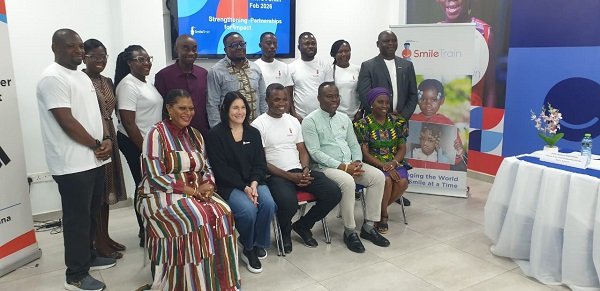
DR Ernest Konadu-Asiedu, Head of the Medical and Dental Unit at the Ministry of Health, has underscored the need to embed cleft care into Ghana’s national health policy framework.
Speaking at the Partner Forum held at the Smile Train Leadership has supported more than two million procedures globally since its founding in 1999.
Centre in Kumasi, Dr Konadu-Asiedu emphasised that cleft lip and palate were not merely surgical conditions but public health and developmental challenges, often linked to nutrition, speech, stigma, and long-term functional limitations.
Currently, Smile Train—the world’s largest cleft-focused non-profit organisation—provides free surgeries and In Ghana alone, over 3,000 children have received primary cleft surgeries, generating an estimated $67 million in economic benefit since 2003.
Cleft refers to a split or division, like a cleft in a rock or a cleft palate (a birth condition affecting the roof of the mouth). In a broader sense, it describes a separation or fissure.
He noted that while Smile Train continues to provide free surgeries, long-term sustainability requires Ghana to take ownership of cleft services within its health system.
Financing is also critical, and embedding cleft services into the National Health Insurance Scheme and exploring the Ghana Medical Trust Fund would reduce reliance on donor support.
His vision is for cleft care to be fully institutionalised, locally led, and sustainably delivered through Ghana’s health system, ensuring that children born with cleft conditions can access comprehensive, life-changing care even beyond Smile Train’s support.
Ms Susannah Schaefer, President and CEO of Smile Train, lauded Ghana’s pioneering role in cleft care in Africa, describing the National Cleft Care Centre in Kumasi as ‘a beacon of hope’ for children and families across the continent.
She emphasised the urgency of tackling stigma and misinformation surrounding clefts, pointing out that one in 770 children in Ghana is born with the condition.
Without treatment, they struggle to breathe, eat, and speak, and too often face bullying and isolation. By encouraging families to seek free, safe, and high-quality care, she said, children are given the chance to thrive, to smile, and to contribute to building the nation.
Prof. Solomon Obiri-Yeboah, Head of the National Cleft Care Centre, also noted that one in 770 children has cleft condition.
He celebrated the resilience of families and children living with clefts, describing them as an inspiration.
The six storey centre, the first of its kind in Africa, was fully sponsored with equipment by Smile Train at a cost of over $2 million and is located within the precincts of the Komfo Anokye Teaching Hospital.
From Kingsley E. Hope, Kumasi
Join our WhatsApp Channel now!
https://whatsapp.com/channel/0029VbBElzjInlqHhl1aTU27



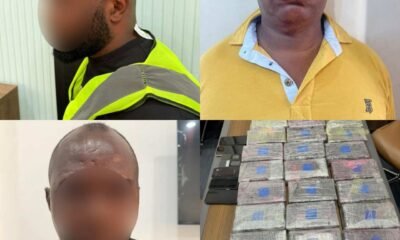



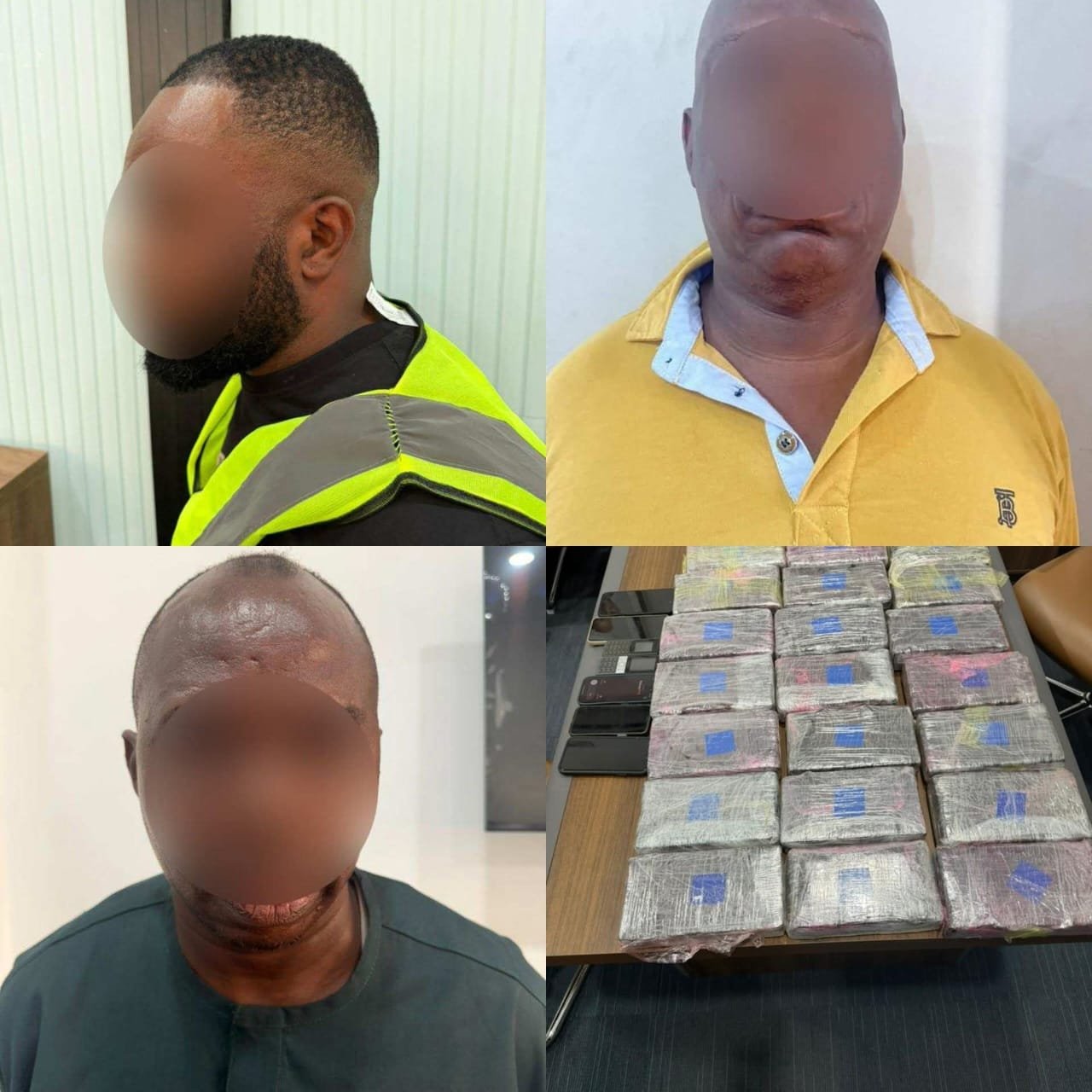
The Ghana Police Service has arrested three (3) suspects in connection with a case of possession of narcotic drugs and engaging in prohibited drug-related activities within the Accra metropolis.
On April 10, 2026, the Special Operations Assistant to the Inspector General of Police received intelligence that a group of individuals were planning to engage in the sale of suspected narcotic drugs at Dzorwulu in Accra.
A surveillance operation was mounted and on 11th April 2026, a Police team proceeded to the area and arrested two suspects, Bright Ayivor and Ifeanyi Ijeoba.
The suspects were found in possession of twenty-two (22) compressed substances suspected to be cocaine, which were being prepared for sale to a prospective buyer.
Further interrogation of the suspects led to the identification of a third suspect, Kwabena Botwe as a key figure in the drug trade.
A follow-up operation at Caprice resulted in his arrest after Police mounted surveillance during a planned transaction involving proceeds from the sale of the suspected drugs.
The suspect later led Police to his residence at Greda Estates, where a search resulted in the retrieval of an amount of GHc400,000 and a counting machine.
According to the police, during the operation, he attempted to bribe the arresting officers with an additional GHc420,000, which has been retained as evidence.
All the suspects are currently in Police custody assisting investigations and will be put before the court.
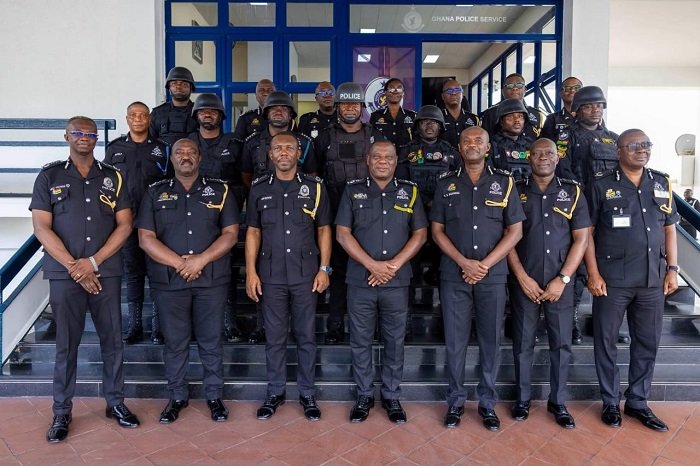
The Inspector General of Police (IGP), Mr. Christian Tetteh Yohuno, yesterday April 14, 2026, promoted seven officers of the Tema Regional Police Command to their next ranks for their role in a recent anti-robbery operation in Tema.
The promotions were awarded to officers who responded to a robbery attack on a Mobile Money vendor at Tema Community 5 leading to the shooting of two robbery suspects and the recovery of a firearm, ammunition, and other exhibits.
The officers promoted are Chief Inspector Enoch Nartey Nuer, Inspector Gershon Dekpey; Inspector Prince Asante; No. 45881 Sergeant Lukman Mohammed; No. 49900 Sergeant Eugene Kuudouru; No. 54157 Corporal Jerome Akator; and No. 59882 Lance Corporal Jonathan Sewurah.
The IGP, together with members of the Police Management Board (POMAB), congratulated the officers on their promotion and commended them for their courage, discipline, and commitment to duty.
The IGP urged the officers to view their promotion as a call to higher responsibility and encouraged all personnel to continue working with dedication and professionalism in the service of the nation.
- Sports5 days ago
Former Black Stars player opens up on personal struggles, alleges family betrayal

 News1 day ago
Kwahu Business Forum:My engagement with President Mahama has boosted my business — Lydia Forson
- News1 day ago
“We are working to transform the Kwahu Business Village into an international conference hub”