News
Ghana Zambian Relations: President Mahama calls for economic reset and deeper cooperation

- /home/u249204778/domains/spectator.com.gh/public_html/wp-content/plugins/mvp-social-buttons/mvp-social-buttons.php on line 27
https://spectator.com.gh/wp-content/uploads/2026/02/WhatsApp-Image-2026-02-05-at-15.10.19.jpeg&description=Ghana Zambian Relations: President Mahama calls for economic reset and deeper cooperation', 'pinterestShare', 'width=750,height=350'); return false;" title="Pin This Post">
- Share
- Tweet /home/u249204778/domains/spectator.com.gh/public_html/wp-content/plugins/mvp-social-buttons/mvp-social-buttons.php on line 72
https://spectator.com.gh/wp-content/uploads/2026/02/WhatsApp-Image-2026-02-05-at-15.10.19.jpeg&description=Ghana Zambian Relations: President Mahama calls for economic reset and deeper cooperation', 'pinterestShare', 'width=750,height=350'); return false;" title="Pin This Post">
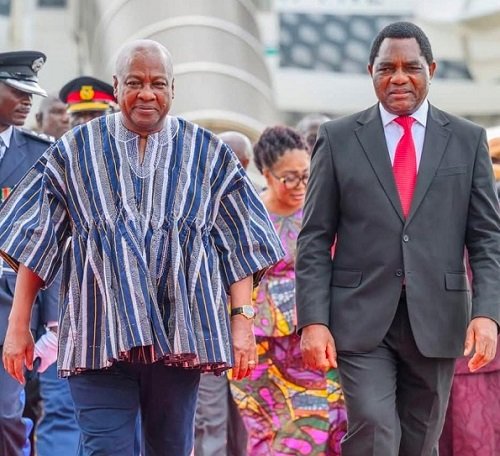
President John Dramani Mahama has called for stronger economic cooperation, African self reliance and reforms in global systems to support the continent’s development during a state visit to Zambia.
Addressing the Zambian Parliament in Lusaka, President Mahama described the invitation to speak before the House as a great honour, noting that his experience as a former Member of Parliament and President made him familiar with parliamentary traditions.
He conveyed warm greetings from the government and people of Ghana and expressed appreciation for the hospitality shown to him and his delegation since their arrival in Zambia.
President Mahama explained that the visit reaffirmed the long standing friendship between Ghana and Zambia, which he traced to the liberation struggles of Africa under the leadership of Osagyefo Dr Kwame Nkrumah and Dr Kenneth Kaunda.
He recalled Ghana’s historical support for Zambia’s independence, noting that many Zambian freedom fighters were influenced by Pan African ideals nurtured in Ghana.
He stressed that the responsibility of the current generation was to turn political solidarity into real economic and social benefits for citizens.
He pointed out that Africa was facing declining development assistance, rising defence spending and weak multilateral systems, a situation he described as a pandemic of unfulfilled potential.
The President indicated that millions of young Africans remained unemployed while many economies continued to extract wealth without building local capacity.
He urged African leaders to respond with realism and bold action.
President Mahama referred to the Accra Reset Initiative, which he has promoted on global platforms, including Davos, to encourage Africa to redefine its development path.
He observed that many African countries were trapped in triple dependency on external security actors, donor funding for health and education and foreign control of critical minerals.
He explained that the Accra Reset aimed to reform global systems that disadvantaged Africa, while promoting unity, self reliance and the use of the continent’s natural strengths for industrial growth.
He called for reforms in global governance, including greater African representation at the United Nations Security Council, and changes to international financial systems that keep Africa in debt.
Turning to Ghana’s experience, President Mahama outlined steps taken by his administration since returning to office one year ago.
He mentioned efforts focused on economic recovery, stability, job creation and inclusive growth, supported by fiscal discipline, productive investment and good governance.
He disclosed that the size of government had been reduced, public services were being digitalised to fight corruption and investments were being made in digital, green and industrial skills.
He added that Ghana had restructured its debts to prioritise investment in people.
The President noted that inflation in Ghana had dropped from 23.4 percent at the end of 2024 to 3.8 percent in January 2026, while the national currency had appreciated by 32 percent.
He added that Ghana was exiting the IMF programme with dignity and on sustainable terms.
He described these gains as beneficial not only to Ghana but also to regional integration, identifying Zambia as a natural partner.
He pointed to opportunities for cooperation in mining, agriculture, energy and manufacturing.
President Mahama emphasised the need for Africa to take greater control of its natural resources.
He criticised the practice of granting large concessions to speculators and called for stronger participation by indigenous companies in the extractive sector.
He highlighted Ghana’s establishment of a Gold Board to regulate gold exports, noting that exports from the artisanal and small scale mining sector had increased from 63 tonnes to 104 tonnes within ten months, generating more than 10 billion dollars in foreign exchange.
He added that Ghana had begun refining gold locally and planned to add value to manganese and bauxite.
As African Union Champion of African Financial Institutions, President Mahama disclosed advocacy efforts to repatriate part of Africa’s foreign reserves for investment in African institutions such as the African Development Bank, to support infrastructure and economic growth.
He stressed that no African country could succeed in isolation and called for regional manufacturing zones, integrated energy systems, shared digital infrastructure and unified negotiation on trade, minerals and climate finance.
On governance, President Mahama underscored the need for transparent and accountable leadership.
He urged that institutions mandated to fight corruption be allowed to operate independently and that abuse of public trust be punished.
He echoed the view that Africa needed strong institutions rather than strongmen.
He acknowledged democratic challenges in parts of West Africa but maintained that Ghana was determined to show that democracy could deliver prosperity under constitutional rule.
President Mahama commended Zambia for stabilising its economy, noting improvements in the Kwacha and ongoing reforms that were sending positive signals to investors.
He expressed Ghana’s readiness to deepen trade, investment and financial cooperation with Zambia.
He also expressed confidence in Zambia’s democratic institutions ahead of its general elections and announced that the two countries had signed ten Memorandums of Understanding to strengthen cooperation.
Among them was an agreement allowing visa free travel for all categories of passport holders between Ghana and Zambia.
The President reaffirmed Ghana’s commitment to peace and security cooperation with Zambia and highlighted Africa’s push for reparative justice.
He revealed that Ghana would sponsor a United Nations resolution to declare slavery the greatest crime against humanity and expressed hope that Zambia would support the initiative.
In his role as African Union Champion for Gender and Development, President Mahama outlined steps taken by Ghana to promote gender equity, including electing its first female Vice President, implementing a law to ensure at least 30 percent female representation in public appointments and plans to establish a women’s development bank.
He stressed the importance of the African Continental Free Trade Area in boosting intra African trade and industrialisation, and reaffirmed Ghana’s commitment to working closely with Zambia based on mutual respect and shared destiny.
By: Jacob Aggrey


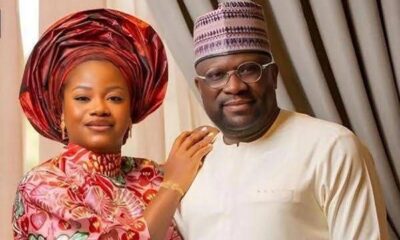

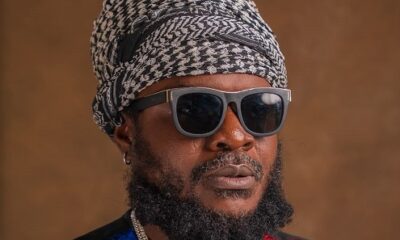



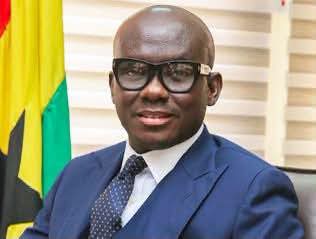
Lawyers for former NAFCO Chief Executive Officer, Hanan Abdul-Wahab Aludiba, say they will file an appeal despite a High Court directive for the Attorney General to amend two counts of defrauding by false pretences in the ongoing case.
The court on Wednesday ordered the AG to amend the two charges in the case involving the former NAFCO CEO and co-accused, Faiza Seidu Wuni.
Reacting to the ruling, counsel for Hanan Aludiba, Godfred Yeboah Dame, expressed dissatisfaction with the decision.
“Even though they’ve been ordered to amend some of the charges, we’ll still file an appeal. I think the decision was not so sound,” he said.
The case is part of ongoing prosecutions linked to alleged financial irregularities at the National Food Buffer Stock Company (NAFCO).
The High Court’s directive means the prosecution will have to revise aspects of the charge sheet before the trial proceeds further.
Background
Counsel for former NAFCO CEO Hanan Abdul-Wahab Aludiba, led by Godfred Yeboah Dame, filed an application seeking to have the charges against their client dismissed.
They contend the charges are fundamentally flawed and violate his right to a fair trial.
The State, represented by Deputy Attorney General Dr. Justice Srem-Sai, opposed the application, maintaining that the charges are valid and that the accused ought to face trial.
Lawyers for Hanan’s wife, Faiza Seidu Wuni, led by Augustine Obour, who would also benefit if the application succeeded, yielded their time to the lead counsel for the first accused.
By Edem Mensah-Tsotorme
News
High Court rejects dismissal request in NAFCO Case, orders prosecution to amend 2 of 16 Charges Against former CEO

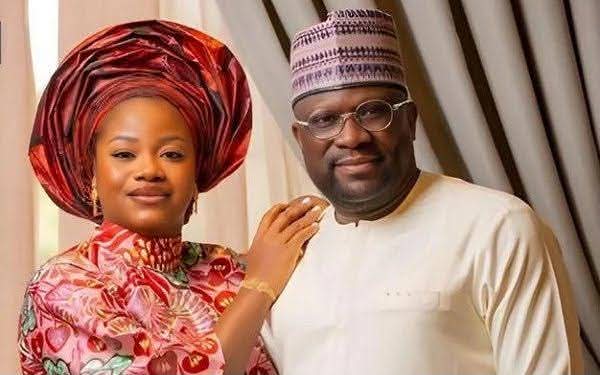
The High Court has declined a request by lead counsel for former National Food Buffer Stock Company (NAFCO) Chief Executive Officer, Hanan Abdul-Wahab Aludiba, to dismiss charges against him, but has directed the Attorney General to amend two of the 16 counts filed against him.
Presiding Judge, Justice Francis Apangabonu Achibonga, a Justice of the Court of Appeal sitting with additional responsibility as a High Court judge, ruled today that while the prosecution must revise Counts 9 and 14, the trial will proceed on all charges.
This means the trial of the couple will continue on a combined 20 counts.
Hanan Abdul-Wahab Aludiba is facing 16 counts, while his wife, Faiza Seidu Wuni, is facing 4 counts. Both pleaded not guilty on May 18, 2026 and are currently on bail.
Godfred Yeboah Dame, former Attorney General and lead counsel for the first accused, had argued for the dismissal of the charges. Reacting after the ruling, he said the decision was not sound and indicated plans to file an appeal.
“Even though they’ve been ordered to amend some of the charges, we’ll still file an appeal. I think the decision was not so sound,” he stated.
Augustines Obuor is lead counsel for the second accused, Faiza Seidu Wuni, whiles the Republic was represented by Dr. Justice Srem-Sai, Deputy Attorney General.
The case relates to alleged financial irregularities at NAFCO and is being closely watched as part of government’s efforts to hold public officials accountable.
The court has directed the prosecution to effect the amendments to Counts 9 and 14 before the trial proceeds further.
By Edem Mensah-Tsotorme