Health Essentials
The impact of mental health misconceptions on relationships and marriage

As we manoeuvre the complexities of relationships and marriage, it is essential to acknowledge the significant role mental health plays in our overall well-being.
Unfortunately, mental health is often shrouded in misconceptions that can have far-reaching consequences on our relationships.
In this article, we will explore five common misconceptions about mental illness and how they can affect our relationships and marriages.
Misconception 1: People with mental illness are violent and dangerous
One of the most pervasive misconceptions about mental illness is that people who suffer from it are violent and dangerous. This could not be further from the truth. Research has shown that individuals with mental illness are more likely to be victims of violence than perpetrators. In fact, studies have found that people with mental illness are two to three times more likely to be victims of violent crime than the general population.
In relationships and marriages, this misconception can lead to fear and mistrust. Partners may worry that their loved one’s mental health condition will lead to violent outbursts or unpredictable behaviour. However, with proper treatment and support, individuals with mental illness can lead healthy, productive lives.
Misconception 2: Having a mental illness means you are “crazy”
Another common misconception is that having a mental illness means someone is “crazy” or unstable. This stigma can prevent individuals from seeking help and can lead to feelings of shame and guilt.
In relationships, this misconception can create tension and conflict. Partners may not understand their loved one’s mental health condition, leading to frustration and resentment. However, by educating ourselves about mental health and seeking support, we can work to break down this stigma and build stronger, more supportive relationships.
Misconception 3: Post-Traumatic Stress Disorder (PTSD) only affects military personnel
PTSD is often associated with military personnel, but the reality is that anyone can develop PTSD after experiencing a traumatic event. This can include survivors of natural disasters, domestic abuse, or sexual assault.
PTSD can have a significant impact on relationships and marriages. Partners may struggle to understand their loved one’s symptoms, leading to feelings of frustration and helplessness. However, by seeking support and education, couples can work together to build a stronger, more supportive relationship.
Misconception 4: Mental Health conditions are rare
Mental health conditions are more common than we think. According to the World Health Organization (WHO), one in four people worldwide will experience a mental or neurological disorder at some point in their lives.
In relationships and marriages, mental health conditions can affect anyone. Partners may struggle to cope with their loved one’s mental health condition, leading to feelings of burnout and resentment. However, by seeking support and education, couples can work together to build a stronger, more supportive relationship.
Misconception 5: Seeking help for mental illness leads to stigma
Finally, many people believe that seeking help for mental illness will lead to stigma and judgment from others. However, seeking help is a sign of strength, not weakness. Seeking help for mental illness can actually strengthen the relationship. By working together to address mental health concerns, couples can build a stronger, more supportive relationship.
The importance of education and support
Education and support are key to breaking down the stigma surrounding mental health. By learning about mental health conditions and seeking support, couples can build stronger, more supportive relationships.
Communication is essential for the relationship’s health. Partners should feel comfortable discussing their mental health concerns and seeking support from each other. By doing so, couples can work together to build a stronger, more resilient relationship.
In conclusion, mental health myths can have a significant impact on relationships and marriages. By educating ourselves about mental health and seeking support, we can work to break down these misconceptions and build stronger relationships.
If you are struggling with mental health concerns or know someone who is, do not hesitate to seek help. With the right support and education, couples can build a stronger, more resilient relationship that can withstand the challenges of mental health concerns.
To be continued …
Source: Excerpts from “COURTSHIP MATTERS: Keys to a Fulfilling Lasting Marriage” Book by REV. COUNSELOR PRINCE OFFEI (Lecturer, Author, and Marriage Counsellor).
ORDER BOOK NOW:
https://princeoffei22.wixsite.com/author https://counselorprinceass.wixsite.com/edu-counseling-psych https://princeoffei22.wixsite.com/website
COUNSELOR PRINCE & ASSOCIATES CONSULT (CPAC COUNSELLOR TRAINING INSTITUTE)

This week I bumped into Deborah, one of my avid readers and I promised her I will be writing this weekend. So Deborah, this is for your reading pleasure and to pick some golden nuggets for the future.
The quest to find the best way to make one’s golden years, happy, exciting, healthy and a time most people look forward to continues unabated. One factor that keeps popping up is the need to grow friendships with people more than 20 years younger than yourself.
Do not take this for granted. It is a form of “social security” since these close friends who are much younger than you will step in to support you in more ways than you can ever imagine.
Some conditions may make life challenging for older adults but knowing these Geriatric Giants helps us to take the necessary steps to reduce our risk.
“Geriatric Giants” refers to a group of chronic health conditions that are common in the elderly, typically 65-year-olds and older.
These conditions quite often co-occur and can impact on the independence, dignity and overall wellbeing and quality of life of an elderly person.
These Geriatric Giants include:
- Impaired Intellect/ Memory (e.g. Dementia)
- one of the major battles we need to deal with is challenges with memory
- Exercise, adopt the Mind Diet, build a great social network and enjoy time outdoors
- Keep reading and solving puzzles for as long as possible
- Instability – leading to much feared falls
- A good reason to indulge in Balance Training and Core Strengthening exercises from today
- Ensure your home is safe; avoid clutter such as cables crisscrossing floors, toys etc. These are all trip hazards and should be avoided
- Many healthy, happy and fun-loving older adults have died soon after a fall with its attendant complications.
- Do whatever it takes to avoid falling
- Immobility (opening the doors to pressure sores, joint stiffness)
- Even when you are unable to move about on your own it is important to get support to change positions as often as possible or get an appropriate mattress or bed that prevents prolonged pressure over any single point.
- Make sure you passively or actively move joints daily.
- Incontinence (urine, faeces or both)
- This is one of the reasons older adults prefer to stay at home and avoid going out to meet friends etc.
- Iatrogenic Disorders – adverse effect of medication
- Quite often most older adults are on several medications and some side effects such as drowsiness may seem to cause more unhappiness and may even lead to falls.
- Inappetite – this may result in poor nutrition
- This may also be linked to loss of teeth thus making chewing very difficult or limited.
- The loss of smell and taste may also reduce the amount of food one may willingly eat.
The power to reduce the impact of the Geriatric Giants starts now and should be a lifetime commitment. It is never too early to start making the appropriate lifestyle modifications, nor is it too late to reduce the impact of the giants on one’s life.
Other conditions that significantly impact on the lives especially of the elderly are:
- Sleep Disorders
- Good sleep has the power to give us energy, improve our thought pattern and even helps us to make good choices.
- Good sleep sets the tone for a healthy life
- Constipation
- This is a challenge that confronts quite a number of older adults.
- Movement, fibre and lots of water go a long way to reduce the stress that frequent constipation generates.
- Fraility
- Muscle loss is real and as we age, we lose a significant percentage of our muscle plus our bones also become brittle.
- Make sure strength training is part of your exercise schedule
- Polypharmacy
- Another headache that needs to be confronted head-on
- Everyone especially older adults need a good primary care physician or a general practitioner who can coordinate all medicines from the different Specialists who may be attending to an elderly person. This ensures that unnecessary medicines are dropped
The goal of care at all times is to optimise the quality of life. As family, professional caregivers and friends we should always show respect so that the dignity of the elderly is preserved at all times. For those of us who are not yet in the age group with such challenges, we need to start the conversation about the type of care we will prefer and take steps to stay healthy and independent for as long as possible. The goal should be a long Healthspan and not just a long Lifespan.
AS ALWAYS LAUGH OFTEN, ENSURE HYGIENE, WALK AND PRAY EVERYDAY AND REMEMBER IT’S A PRICELESS GIFT TO KNOW YOUR NUMBERS (blood sugar, blood pressure, blood cholesterol, BMI)
Dr. Kojo Cobba Essel
Health Essentials Ltd (HE&W Group)
(dressel@healthessentialsgh.com)
*Dr. Essel is a Medical Doctor with a keen interest in Lifestyle Medicine, He holds an MBA and is an ISSA Specialist in Exercise Therapy, Fitness Nutrition and Corrective Exercise. He is the author of the award-winning book, ‘Unravelling The Essentials of Health & Wealth.’
Thought for the week – “There is no magic formula to being happy but making a conscious effort to be happy goes a long way.” – Dr. Kojo Cobba Essel
By Dr. Kojo Cobba Esse

The call to action
We must move beyond the cycle of temporary outrage. I propose a four-point blueprint for the Ministry of Health and the government: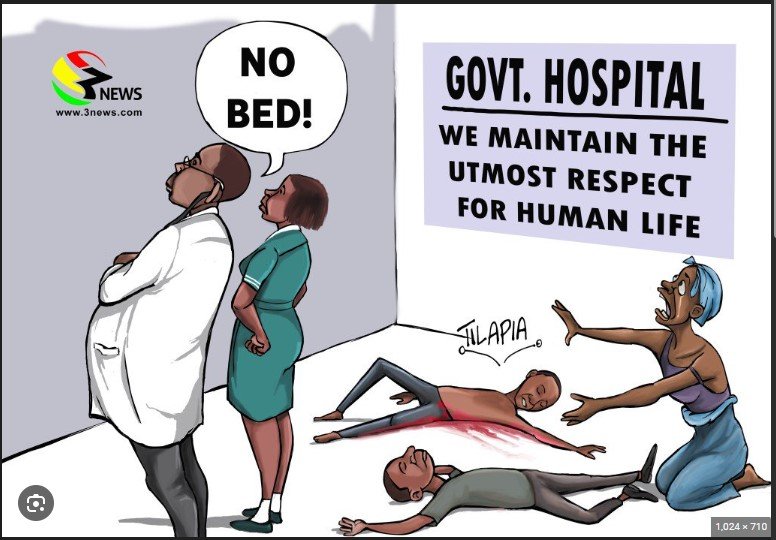
1. A Digital Bed-Tracking Command Centre: Legally mandate all public and major private hospitals to update a live, digital bed-registry every hour. The NAS must be able to see a vacancy before they move. This must be matched with the available resources and services so that the right patient will be sent to the right facility.
2. Strategic Capacity Expansion: We must stop building “prestige projects” and start building high-volume stabilisation centres. We need a targeted investment to triple the ER bed count in Accra and Kumasi within 24 months. This should then be extended to other regional capitals.
3. Specialised Emergency Hubs: Designate specific hospitals as “Centres of Excellence” for Cardiac and Stroke care (and for other health emergencies), ensuring they have 24/7 imaging and intervention capabilities as well as the requisite expertise to manage these conditions. Policy makers must incentivise public-private partnerships to ensure that a heart attack in Accra or Kumasi can be treated with the same urgency as one in New York.
4. Develop a nationwide trauma system: This is extremely important because trauma is a major cause of deaths in Ghana. In the US, each state has a statewide trauma system with three levels. Level 1 trauma centres are usually University Teaching hospitals that provide comprehensive trauma care and also play an important role in local trauma system development, regional disaster planning, increasing capacity and advancing trauma care through research. Level II trauma centres are expected to provide initial definitive trauma care for a wide range of injuries and injury severity.
Level III centres provide definitive care to patients with mild trauma. Having such systems is imperative to ensure proper treatment of trauma patients.
Even for those who survive trauma, disability is a major assault on economic potential and viability. Importantly all this cannot happen with a cash and carry system. Emergencies should be managed under a different model to save life and limb first. Obviously, there is a need to ensure that healthcare facilities will be able to recover their investments in emergency care, and that balancing act needs careful consideration.
Frontline clinicians are often forced to bear the public’s anger for infrastructure deficits they did not create and cannot fix. This is a failure of governance, not a lack of clinical care. Responsibility lies with the policy makers who manage the nation’s resources.
The “No Bed Syndrome” is a systemic disease. It cannot be cured with a directive from the Ministry of Health, parliament or a lecture on ethics. It requires a blueprint, a budget, and the political will to treat this like the menacing threat it is.
It is safe to say that non-emergent healthcare is excellent in Ghana for the most part if you can afford it. However, emergency care is suboptimal. We had a sitting president die from an emergency health issue and a former vice president also die from an emergency. If that is not enough warning, it is clear that anyone can be a victim of an emergency.
If we do not act, the next ambulance driving aimlessly through the streets of Accra could be carrying anyone, including the very people who have the power to fix this issue.
Prof. Jonathan Laryea is a Professor of Surgery at the University of Arkansas for Medical Sciences in Little Rock. Arkansas. He is board certified in General Surgery, Colorectal Surgery and Clinic Informatics.
He is a graduate of the University of Ghana Medical School (Class of 1997)