News
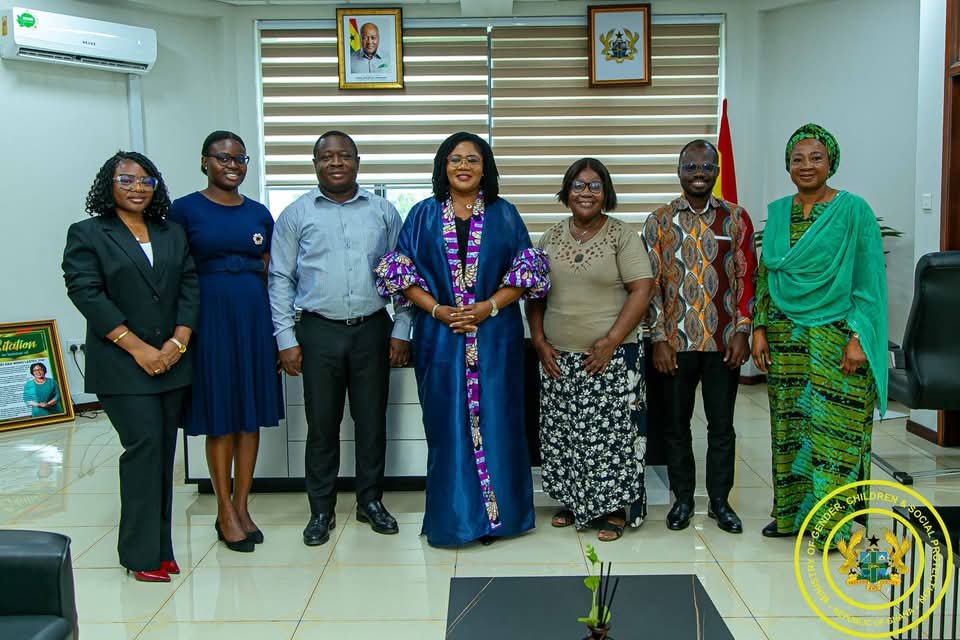
FAWE Ghana, FAWE Africa board meet Gender Minister

- /home/u249204778/domains/spectator.com.gh/public_html/wp-content/plugins/mvp-social-buttons/mvp-social-buttons.php on line 27
https://spectator.com.gh/wp-content/uploads/2025/04/1001660606-960x600.jpg&description=FAWE Ghana, FAWE Africa board meet Gender Minister ', 'pinterestShare', 'width=750,height=350'); return false;" title="Pin This Post">
- Share
- Tweet /home/u249204778/domains/spectator.com.gh/public_html/wp-content/plugins/mvp-social-buttons/mvp-social-buttons.php on line 72
https://spectator.com.gh/wp-content/uploads/2025/04/1001660606-960x600.jpg&description=FAWE Ghana, FAWE Africa board meet Gender Minister ', 'pinterestShare', 'width=750,height=350'); return false;" title="Pin This Post">
Prior to the official launch of the FAWE Ghana Stragetic Plan and the Mastercard Foundation Phase II Programme, the Ghana Chapter of the Forum for African Women Educationalists (FAWE-Ghana), and the FAWE Africa Board Members, engaged the Minister for Gender, Children, and Social Protection, Dr. Agnes Naa Momo Lartey, in discussions on strengthening gender-inclusive education and skills development for marginalized youth.
The team outlined the organization’s long-standing commitment to promoting access to quality education, particularly for girls and disadvantaged groups.
It also highlighted the organization’s decade-long scholarship programme across Africa, which has supported young boys and girls in secondary and tertiary education.
Discussions also touched on the importance of data-driven policy decisions, including tracking gender demographics from birth to better inform future interventions.
The Minister, Dr. Agnes Naa Momo Lartey, commended FAWE’s efforts and reaffirmed the Ministry’s commitment to collaborating on initiatives that enhance educational access for vulnerable groups.
She emphasized the need for gender balance in advocacy efforts, noting that while empowering girls remains a priority, ensuring equal opportunities for boys is equally essential.
She further underscored the government’s commitment to expanding Technical and Vocational Education and Training (TVET) as a key driver of youth employment and economic empowerment.
She noted that under Ghana’s human capital development strategy, enhancing access to quality education especially for marginalized groups is a top priority.
As part of its expanded initiative, FAWE has introduced a bridging programme in collaboration with partner universities, called the FAWE MasterCard Programme, to prepare students for academic and vocational success.
This initiative is a significant advancement in equipping over 1,100 young individuals in Ghana, particularly girls, for leadership roles in a swiftly changing world characterized by innovation and transformation.
Also in attendance was the Chief Director, Dr. Afisah Zakariah, who reiterated the Ministry’s dedication to bridging educational gaps and promoting skills development for all.








A Cardiothoracic Surgeon at the National Cardiothoracic Centre of the Korle Bu Teaching Hospital, has cautioned against the various misconceptions associated with heart diseases in the country, insisting that overcoming these fallacies would go a long way in dealing with the condition.
Chief among these misconceptions, Dr Penelope Adinku, said was the belief that heart related diseases affected only people who have advanced in age.
But that claim, she said was erroneous, explaining that heart diseases are conditions that affect both the young and old.
Consequently, she urged the public not to disregard warning signs associated with heart diseases like chest discomfort or pain, unexplained shortness of breath, unusual tiredness, palpitations, dizziness or fainting, and swelling of the legs.
Speaking with The Spectator in an exclusive interview last week, Dr Adinku, Ghana’s first female cardiothoracic surgeon, said such symptoms, particularly when they are new, persistent or worsening, should not be ignored.
She stressed that although such symptoms did not always mean a person had heart disease, they should be taken seriously and assessed by a health professional when they persisted or became concerning.
This, she explained was the reason Ghanaians must undergo regular health checks to know their blood pressure and other risk factors, adopt healthy lifestyle practices and seek medical attention when they experienced concerning symptoms.
“Prevention and early detection are just as important as treatment,” Dr Adinku added.
She explained that conditions such as high blood pressure, diabetes and high cholesterol could occur without obvious symptoms while significantly increasing a person’s risk of developing heart disease.
The heart surgeon also identified limited access to specialised cardiac care as one of the major challenges facing heart care in the country.
According to her, some patients who require specialised cardiac care report late to health facilities or face financial and other barriers that delay their diagnosis and treatment.
She called for continued efforts to strengthen Ghana’s cardiac care system, from early diagnosis and referral to specialised equipment, sustainable financing and the availability of well-trained multidisciplinary heart teams.
“There is also a need to train and retain more specialised professionals so that our capacity to provide high-quality cardiac care can continue to grow,” she empasised.
Dr Adinku indicated that although Ghana had made significant progress in cardiac care, there was the need to build on the existing foundation by expanding access and strengthening the country’s capacity to provide specialised services.
She said improving cardiac care required a comprehensive approach that linked prevention and early detection with timely diagnosis, referral and specialised treatment.
She further emphasised the importance of investing in the training and retention of specialists, while ensuring that health facilities had the equipment and financial resources required to provide quality cardiac services.
Dr Adinku, who successfully completed her Fellowship training with the West African College of Surgeons and was adjudged the best candidate in Cardiothoracic Surgery at the 2022 Fellowship Examinations, expressed optimism about the future of cardiac care in Ghana.
She said the progress made so far provided a strong foundation for further development and that expanding access, strengthening capacity and making specialised cardiac care sustainable would enable more people who required advanced heart care to receive it in a timely manner.
By Esinam Jemima Kuatsinu
SKIP THE QUEUE, TAP THE NEWS
You can now read the Ghanaian Times and The Spectator newspapers from the comfort of your device via TimesNewsPlus.
Join our WhatsApp Channel: https://whatsapp.com/channel/0029VbBElzjInlqHhl1aTU27
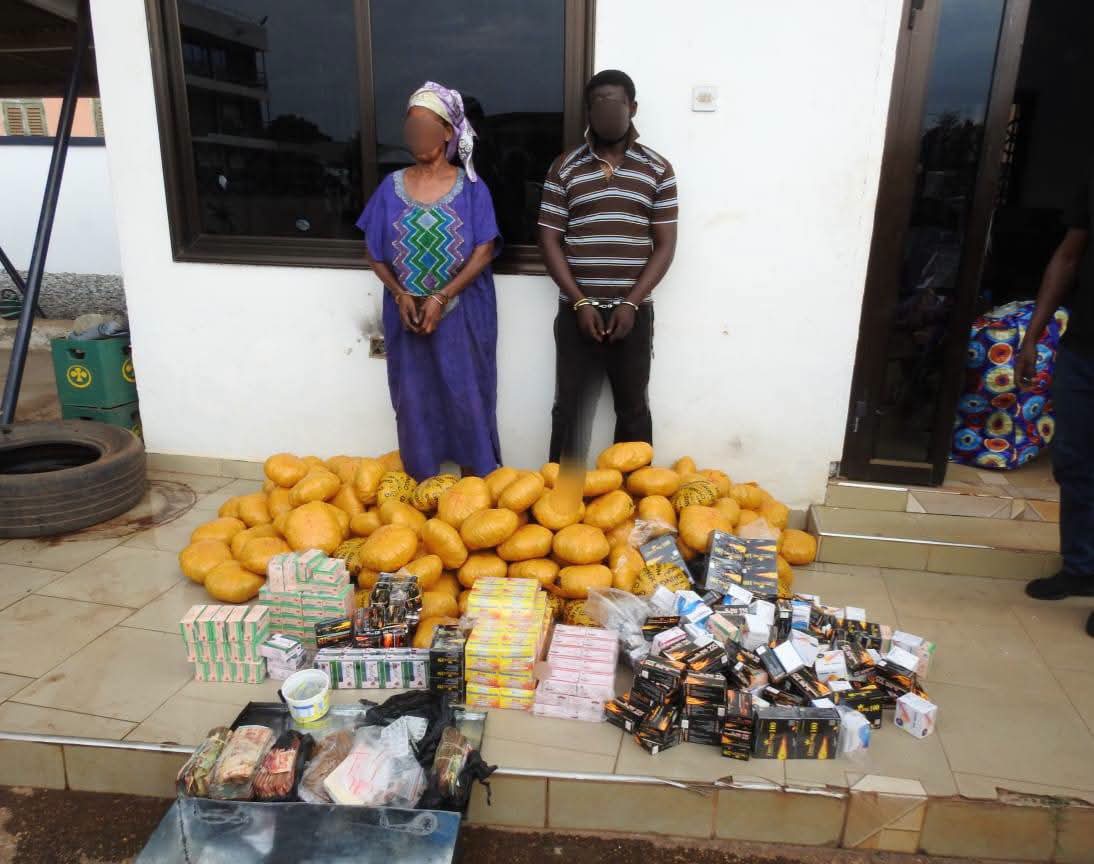
The Bono Regional Drug Law Enforcement Unit has arrested a 66-year-old woman and her 29-year-old son after police allegedly found suspected Indian hemp, Tramadol and other restricted drugs in their rooms at Dormaa Ahenkro.
The suspects, Mary Awuni and Maxwell Akukah, were arrested during an intelligence-led operation at Kumi Daa Street, a suburb of the Dormaa Central Municipality.
According to the Bono Regional Police Command, a search conducted in their rooms led to the recovery of 147 yellow compressed slabs wrapped in sellotape and suspected to be Indian hemp.
Police also retrieved 270 boxes and 329 blisters of assorted Tramadol, 14 blisters of Rohypnol, GH¢87,751 and CFA 2,000.
The police explained that Mary Awuni was found with a metal trunk containing the 14 blisters of Rohypnol, GH¢72,612 and CFA 2,000.
She allegedly told investigators that the items and money had been given to her by a man in Accra to be delivered to another person in Côte d’Ivoire. However, she admitted ownership of the items found in her room.
Her son, Maxwell Akukah, was arrested in a separate room where the suspected Indian hemp, Tramadol and GH¢15,139 were found.
He allegedly claimed that the items belonged to his brother, Anthony, who was said to be outside Dormaa Ahenkro.
In a press release issued on September 4, the Bono Regional Police Command stated that the two suspects remain in custody and are assisting with investigations.
The police added that investigations were ongoing to identify and prosecute all persons found to be involved.
The Command assured the public of its commitment to combating narcotics-related offences and urged residents to provide credible information to help police protect communities and maintain public safety.
By: Jacob Aggrey